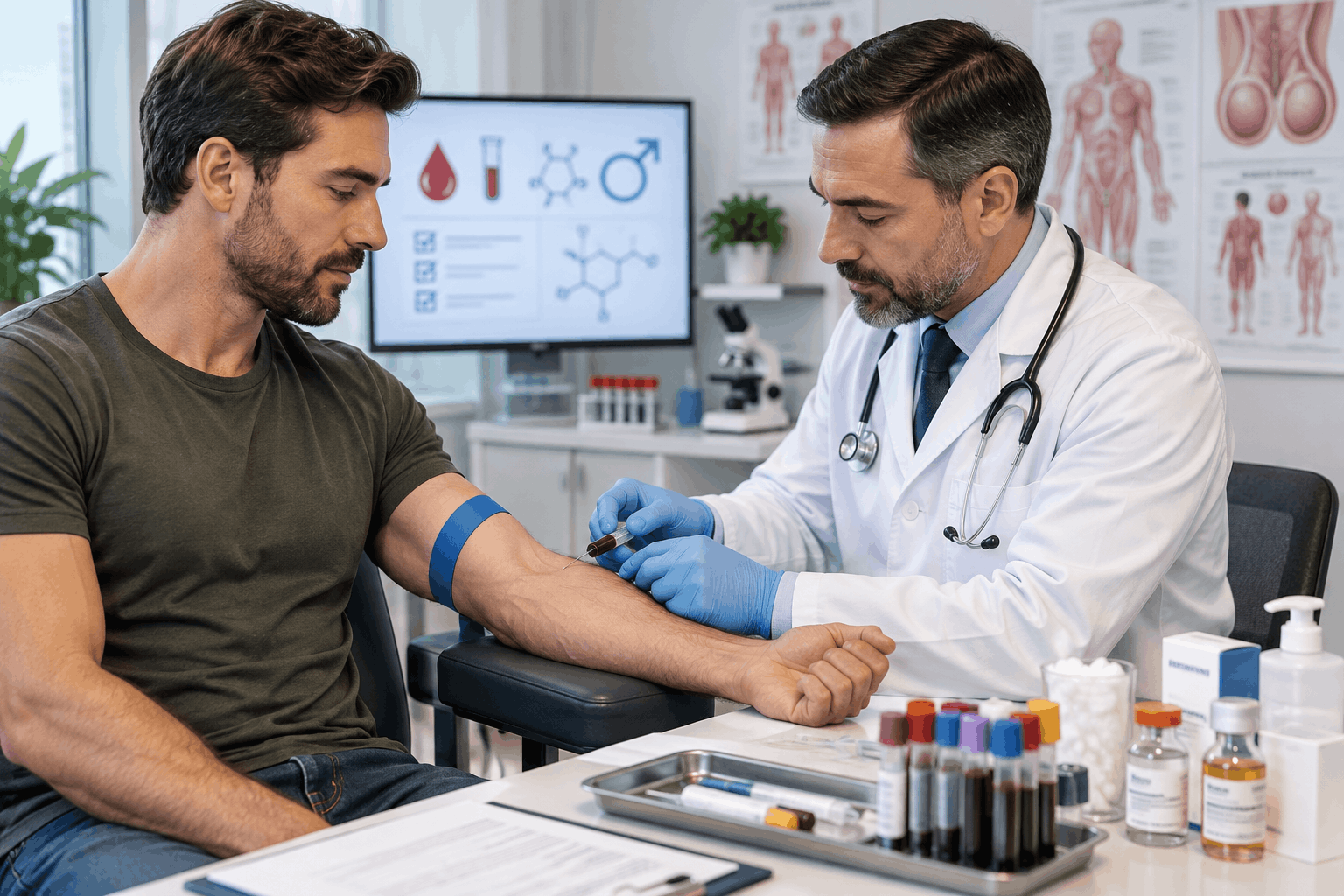
Starting testosterone replacement therapy without proper bloodwork first is a bit like getting behind the wheel of a car with no dashboard. You might be fine for a while, but you have no real way of knowing what is actually happening under the hood until something goes wrong. TRT blood tests exist precisely to prevent that blind spot.
The Quick Answer
Before starting TRT, men should get total and free testosterone, LH and FSH, SHBG, estradiol, PSA with a prostate exam for men over 40, a complete blood count including hematocrit, a comprehensive metabolic panel, and a lipid panel. According to Endocrine Society guidelines, testosterone should be confirmed with at least two separate morning blood draws before diagnosis, and baseline hematocrit and PSA must be checked to rule out conditions that make TRT unsafe to start. Any provider offering TRT Bend should walk you through this full panel before recommending treatment.
The Essential TRT Blood Tests Explained
1. Total And Free Testosterone
Total testosterone measures the overall amount circulating in your blood, while free testosterone measures the portion your body can actually use, since a large share of testosterone is bound to proteins and biologically inactive. Both numbers matter, because a man can have a borderline total testosterone reading while his free testosterone tells a very different story.
2. LH And FSH
Luteinizing hormone and follicle-stimulating hormone come from the pituitary gland and help determine why testosterone is low in the first place. Elevated LH alongside low testosterone usually points to a problem with the testicles directly, while normal or low LH points to an issue with the brain’s signaling system instead. This distinction genuinely changes how treatment should be approached.
3. SHBG
Sex hormone-binding globulin binds to testosterone and controls how much stays free and usable. High SHBG can make total testosterone look adequate while free testosterone runs low, which is exactly why this test matters and why relying on total testosterone alone can miss real deficiencies.
4. Estradiol
Some testosterone naturally converts to estradiol, a form of estrogen, through a process influenced by body fat and other factors. Baseline estradiol testing matters most for men with breast tenderness or other symptoms suggesting hormone imbalance, and it also gives a useful reference point once treatment begins.
5. PSA And Prostate Exam
Prostate-specific antigen testing, combined with a physical prostate exam, is required for men over 40 before starting TRT. Testosterone does not cause prostate cancer, but it can accelerate the growth of existing cancerous cells, so a clean baseline reading matters before treatment starts, and any concerning findings need a urology referral first.
6. Complete Blood Count And Hematocrit
Testosterone stimulates red blood cell production, which is generally beneficial but can become a problem if hematocrit climbs too high, since thicker blood raises clotting risk. Guidelines recommend against starting TRT if baseline hematocrit is already elevated, which is why this test is considered essential rather than optional.
7. Comprehensive Metabolic Panel
This panel checks kidney and liver function, blood sugar, and electrolyte balance, all of which help confirm you are a safe candidate for treatment and establish a baseline for comparison down the road.
8. Lipid Panel
Cholesterol and triglyceride levels provide useful context for cardiovascular risk, particularly since testosterone therapy can influence lipid levels in some men, making this baseline worth having on record before starting.
Why Two Morning Tests Matter
1. Testosterone’s Natural Daily Rhythm
Testosterone follows a daily rhythm, typically peaking in the early morning and gradually declining throughout the day. A test drawn in the afternoon can show artificially low levels in a man whose testosterone is actually normal, which is why morning draws, generally between 7 and 10 a.m., are the standard for accurate results.
2. Lab Variability Between Draws
Even with proper morning timing, testosterone levels can fluctuate somewhat from day to day. That natural variability is exactly why medical guidelines call for at least two separate morning tests before confirming a diagnosis, rather than making a decision based on a single number that might not reflect your typical baseline.
When TRT Should Not Be Started
1. Red Flags On Baseline Labs
Certain lab findings signal that TRT is not appropriate, at least not without further evaluation first. A PSA above 4 ng/mL, elevated hematocrit, or lab evidence suggesting a hormone-producing tumor all require additional workup before treatment can safely proceed.
2. Conditions That Require Extra Caution
Beyond lab values, certain health conditions and circumstances change the calculation entirely. Men with a history of prostate or breast cancer, untreated severe sleep apnea, uncontrolled heart failure, a recent heart attack or stroke, or those actively trying to conceive are generally not good candidates for standard TRT, according to Endocrine Society guidelines, and each of these situations needs individualized discussion with a provider.
What Happens After You Start Treatment
1. Follow-Up Testing Schedule
Once treatment begins, testosterone levels are typically rechecked around 3 to 6 months in, along with hematocrit and PSA for men over 40. After that initial adjustment period, most providers move to annual monitoring, assuming everything remains stable and the dose is not being adjusted.
2. Changes That Should Prompt A Call To Your Provider
A hematocrit rising above 54 percent, a PSA increase of more than 1.4 ng/mL within a 12-month period, or new symptoms like breast tenderness or unusual swelling all warrant a conversation with your provider before your next scheduled check-in, rather than waiting it out.
Getting Tested The Right Way
1. Finding A Provider Who Runs The Full Panel
Not every provider orders a complete baseline panel before recommending TRT. Some rely on a single testosterone number and a quick symptom checklist, which skips several of the safety checks outlined above. A thorough bend testosterone clinic should always include the full set of TRT blood tests, not just the one number that gets the most attention.
2. TRT Bend: What A Thorough Evaluation Looks Like
If you are researching TRT Bend options, it is worth asking upfront whether a provider runs the complete panel described here, including hematocrit, PSA, LH, and SHBG, or whether they rely on a shortcut. At ProActive Choice, Dr. Drew Collins builds every TRT Bend evaluation around the full set of TRT blood tests recommended by current guidelines, since skipping any of these steps genuinely increases risk down the road. Comparing one bend testosterone clinic against another is really a comparison of how thorough their baseline workup actually is, not just what the treatment itself costs, and any bend testosterone clinic worth choosing should be transparent about exactly which tests they run before treatment starts. You can learn more about our testosterone replacement therapy approach or explore our broader men’s health services to see how testing and treatment fit together.
Conclusion
Starting TRT without the right bloodwork first is not a shortcut, it is a gamble. The full set of TRT blood tests exists to confirm you actually need treatment, rule out conditions that make it unsafe, and give your provider a real baseline to track over time. If you are considering treatment through a bend testosterone clinic, insist on the complete picture before starting, not just a single number.
FAQs
1. Can I start TRT with just one testosterone blood test?
No. Guidelines recommend at least two separate morning tests to confirm low testosterone before diagnosis, since a single reading can be misleading due to natural daily fluctuation.
2. Why does hematocrit matter so much before starting TRT?
Testosterone increases red blood cell production, and if hematocrit is already elevated or climbs too high during treatment, it raises the risk of blood clots, which is why it is checked both before and during therapy.
3. Do I need a PSA test if I am under 40?
PSA and prostate exams are specifically recommended for men over 40 before starting TRT, though your provider may still check it earlier depending on your individual risk factors and family history.
4. How soon after starting TRT will my labs be rechecked?
Most providers recheck testosterone levels, hematocrit, and PSA around 3 to 6 months after starting treatment, then move to annual monitoring once levels stabilize.
5. What should I ask a TRT Bend provider before starting treatment?
Ask specifically which tests are included in the baseline panel, whether two morning testosterone tests are required for diagnosis, and how often follow-up labs are scheduled once treatment begins. A trustworthy bend testosterone clinic should answer these questions clearly without hesitation.