📝 Expert Review Note: This guide has been reviewed and updated for 2026 by our certified protection insurance specialists to ensure accuracy, compliance with UK financial regulations, and alignment with the Association of British Insurers (ABI) standards.
When protecting your family’s financial future, two terms frequently come up: life insurance and critical illness cover. But a very common question leaves many UK homeowners and parents confused: Does life insurance cover critical illness?
If you have ever compared quotes, you have probably noticed the option to add “critical illness cover” for a few extra pounds a month. It is a fair question to ask: doesn’t life insurance already do this job?
The Quick Answer
No. A standard life insurance policy does not cover critical illness. Standard life insurance only pays out if you pass away or are diagnosed with a terminal illness (usually with less than 12 months to live). It does not pay out if you survive a serious illness like cancer, a heart attack, or a stroke.
So, Does Life Insurance Cover Critical Illness?
No. A standalone life insurance policy pays a lump sum to your family when you die or become terminally ill with less than 12 months to live. But a serious diagnosis that you go on to recover from is not covered by life insurance on its own.
To be protected against severe, non-terminal illnesses, you must specifically add critical illness cover to your policy or purchase it separately.
What is Critical Illness Cover? (The Simple Definition)
Critical illness cover is a type of insurance policy that pays out a tax-free lump sum if you are diagnosed with a specific severe medical condition listed in the policy.
Unlike life insurance, you do not have to die for the policy to pay out. The money is paid directly to you while you are still alive, so you and your family have financial support to fall back on during treatment, recovery, or lifestyle adaptations (like home modifications).
In the UK, this cover is highly regulated. Most reputable insurers follow the Association of British Insurers’ (ABI) guide to minimum standards, which sets out core conditions that virtually every policy must cover. These typically include:
- Most types of cancer
- Heart attacks (myocardial infarction)
- Strokes
- Multiple sclerosis
- Major organ transplants
What Is Life Cover?
Life cover (also known as life insurance or life assurance) pays a tax-free lump sum to your loved ones if you die during the policy term. It’s designed to replace lost income, clear a mortgage, or leave an inheritance so your family isn’t left in financial difficulty.
On its own, standard life cover does not pay out for illness or injury — only death, and in most cases, terminal illness diagnosed with a short life expectancy.
The Key Difference at a Glance
| Feature | Life Insurance | Critical Illness Cover |
|---|---|---|
| When does it pay out? | On death or terminal illness (<12 months). | On diagnosis of a listed severe illness. |
| Who receives the money? | Your beneficiaries (family/dependants). | You (the policyholder), while you are alive. |
| Primary Goal | Protects your family’s finances after you are gone. | Protects your finances and lifestyle while you recover. |
Many people choose to combine the two, taking out life insurance with critical illness cover as one joint policy, so if either event happens, the same policy responds.
Your Options: How to Get Life and Critical Illness Cover
1. Combined Life and Critical Illness Cover
Also known as a “linked” policy, this is a single policy that includes both protections.
- How it works: It pays out once. If you are diagnosed with a covered critical illness, the policy pays the lump sum and then ends. If you die from an uncovered illness, it pays the lump sum to your family and ends.
- Best for: Those on a tighter budget who want comprehensive, baseline protection in one convenient monthly payment.
2. Standalone Critical Illness Cover
This is when you buy a critical illness cover-only policy, completely separate from your life insurance.
- How it works: It pays out when you get diagnosed with a listed condition. Crucially, your separate life insurance policy remains fully intact.
- Best for: Those who want maximum security. Many people ask, “Can you get critical illness cover without life insurance?” – the answer is yes, and this setup ensures your family’s death benefit is not exhausted by an illness claim.
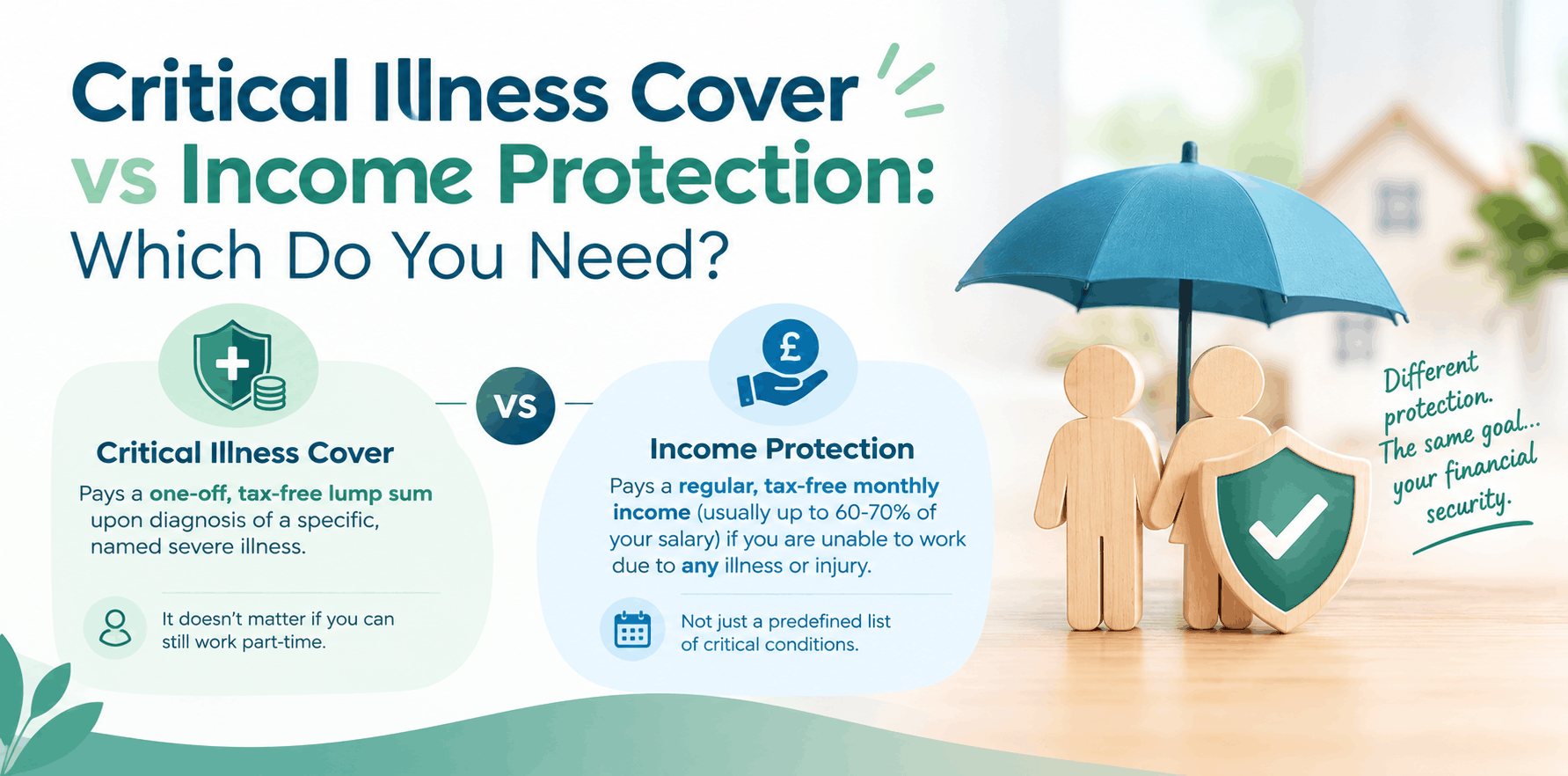
Critical Illness Cover vs. Income Protection: Which Do You Need?
It is easy to confuse these two, but they serve very different purposes:
- Critical Illness Cover: Pays a one-off, tax-free lump sum upon diagnosis of a specific, named severe illness. It does not matter if you can still work part-time; if you meet the policy’s strict medical definition, it pays out.
- Income Protection: Pays a regular, tax-free monthly income (usually up to 60–70% of your salary) if you are unable to work due to any illness or injury, not just a predefined list of critical conditions.
💡 Expert Tip: For complete financial security, many UK families pair a critical illness policy (for large, one-off costs like mortgage clearing or home adaptations) with an income protection policy (to cover monthly living expenses).
Trust & Transparency: Claim Success Rates
When buying insurance, trust is paramount. According to the latest data from the Association of British Insurers (ABI), over 90% of critical illness claims are successfully paid out
wecovr.com. This high success rate demonstrates that when you buy a reputable policy and are honest about your medical history, the system is designed to support you when you need it most.
Why Do Claims Get Rejected?
To ensure your claim is trusted and approved, be aware of the two main reasons for rejection:
- Non-Disclosure: Failing to mention a pre-existing medical condition or lifestyle factor (like smoking) during your application. Always be 100% honest on your application.
- Uncovered Illness: The diagnosis does not meet the specific medical severity criteria outlined in your policy’s terms and conditions.
How Much Critical Illness Cover Do You Actually Need?
Don’t just guess your coverage amount. Use this simple checklist to calculate a realistic lump sum:
- Mortgage/ Rent Balance: Could the payout clear your housing debt entirely?
- Outstanding Debts: Personal loans, credit cards, or car finance.
- Living Expenses: 6–12 months of household bills, groceries, and utilities while you focus on recovery.
- Lifestyle Adaptations: Costs for private medical treatments, wheelchair access, or vehicle modifications.
- Childcare or Education: Ensuring your children’s needs are met without financial stress.
Frequently Asked Questions (FAQs)
1. Does life insurance cover cancer?
Standard life insurance only covers cancer if it is deemed terminal (with less than 12 months to live). To get a payout upon a non-terminal cancer diagnosis, you must have a critical illness policy that specifically includes cancer cover.
2. Can I add critical illness cover to my existing life insurance?
Yes, in many cases. You can contact your provider to add a “rider” or critical illness benefit to your current policy. However, your premiums will be recalculated based on your current age and health.
3. Is the critical illness payout taxable in the UK?
No. Critical illness payouts are generally paid as a tax-free lump sum, meaning you get to keep 100% of the money to use as you see fit.
4. What happens to my combined policy after a critical illness claim?
In a standard combined policy, the policy terminates after the critical illness payout is made. No further life insurance cover will remain in place unless you arrange a new policy.
Protect Your Future, Your Way
Understanding the difference between life insurance and critical illness cover is the first step toward true financial resilience. While life insurance protects your loved ones after you are gone, critical illness cover ensures that a severe health diagnosis doesn’t also become a financial catastrophe while you are still here.
Ready to explore your options?
Speak with a qualified protection adviser today to compare combined and standalone policies tailored to your health, budget, and family’s unique needs.