
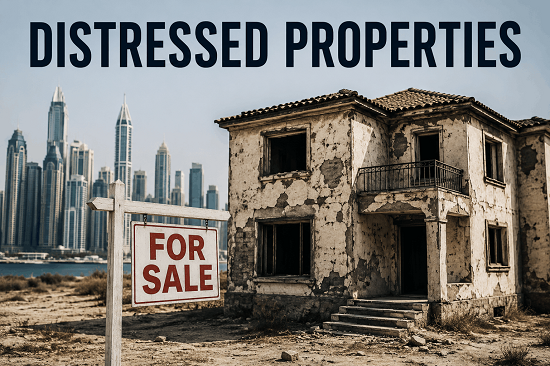
The phrase “distressed properties Dubai” gets searched constantly by investors and buyers looking for a below-market opportunity. And genuine opportunities do exist. But the term gets used loosely in marketing, and not every “urgent sale” or “motivated seller” listing is actually distressed in the true sense. Knowing the difference can save you from overpaying, or worse, buying into a property with hidden legal or financial complications.
This guide explains what distressed properties in Dubai actually are, why they come onto the market, where to find legitimate ones, and how to separate a real deal from a marketing tactic.
What Is a Distressed Property?
A distressed property is one being sold under pressure, usually because the owner needs to exit quickly rather than because the property itself is worth less. That pressure typically comes from one of a few sources:
Financial pressure. The owner is facing cash flow problems, mounting debt, or an inability to keep up with payments and needs to liquidate the asset fast.
Mortgage-related issues. The owner may be behind on mortgage payments, facing a lender’s demand for settlement, or in a position where the bank is close to reclaiming the unit.
Off-plan payment pressure. Some sellers hold off-plan units and want out before the next instalment is due, especially if their financial situation has changed since they signed the purchase agreement.
Life events. Relocation, divorce, inheritance disputes, or a sudden change in personal circumstances can push an owner to prioritize a fast sale over getting full market value.
Auction sales. In some cases, properties are sold through court-supervised or bank-supervised auctions after a default, with the Dubai Land Department overseeing the registration of the sale.
Because the seller’s motivation is speed rather than maximizing price, distressed properties are often priced below typical market value, which is what draws investor interest.
Why Distressed Deals Are Appearing in Dubai’s Market
Dubai’s property market has seen a large wave of off-plan launches in recent years. As those projects reach handover, some buyers who bought purely for short-term flipping find themselves holding a completed unit they can’t or don’t want to keep, especially if financing conditions have tightened since their purchase. Combine that with normal life circumstances, relocation, job changes, financial strain, and it creates a steady, if inconsistent, stream of distressed opportunities across areas like Business Bay, Downtown, Dubai Marina, and JVC.
That said, distressed inventory is not evenly distributed. It tends to cluster around buildings and areas where speculative off-plan buying was heaviest, and around specific timing windows tied to instalment schedules and handover dates.
How to Spot a Genuine Distressed Deal
Not every listing labeled “urgent sale” or “motivated seller” is truly distressed. Some of it is simply marketing language used to attract more inquiries. Here’s how to tell the difference.
1. Compare the Price Against Real Market Data
A genuine distressed deal is meaningfully below recent comparable sales in the same building or area, not just slightly under asking. Pull recent transaction data for similar units before assuming a listing is a real discount.
2. Ask Why the Seller Is Selling
A legitimate answer, such as a payment default, relocation, or a documented need to liquidate, is a good sign. Vague or evasive answers about motivation are a red flag.
3. Check for Encumbrances and Mortgage Status
Before moving forward, verify the property’s title deed status and confirm whether there’s an active mortgage or any legal encumbrance attached to it. The Dubai Land Department offers title deed verification services that let buyers confirm ownership details before committing funds.
4. Understand the Settlement Process if It’s Mortgaged
If the seller has an outstanding mortgage, the sale will need to go through a structured settlement process involving the bank, often requiring a liability letter and a clear plan for how the outstanding balance will be cleared at transfer. Skipping this step, or dealing with a seller who can’t produce clean documentation, is a serious risk.
5. Be Wary of Off-Plan “Distress” That Isn’t
Some off-plan resale listings are marketed as distressed simply because the seller wants a quick exit, even though the discount offered is minimal. Compare the resale price against the original purchase price and current instalment schedule to judge whether it’s actually a discount or just an early exit at close to full value.
6. Have the Property Physically Inspected
Some distressed properties come with deferred maintenance or unfinished work, particularly units tied to unfinished buildings or delayed handovers. A discounted price should reflect the real condition and any work required, not just the seller’s urgency.
Where Distressed Properties in Dubai Typically Surface
Genuine distressed opportunities usually come through a few channels: bank foreclosure listings, Dubai Courts auction processes, direct referrals from brokers who work closely with lenders and developers, and off-market conversations with owners under financial pressure. Public portals do list some distressed inventory, but the strongest deals are frequently found before they’re widely advertised, through brokers and local specialists with direct relationships to motivated sellers.
This is where working with an established, RERA-familiar local partner matters. Someone active in the market day to day is far more likely to hear about a genuine distressed opportunity before it becomes public, and far better equipped to verify that it’s legitimate.
Risks to Keep in Mind
Distressed properties can be excellent opportunities, but they carry more risk than a standard purchase if you skip due diligence:
- Unclear or disputed ownership
- Outstanding service charges or utility arrears tied to the unit
- Active mortgages that haven’t been properly disclosed
- Overstated “discounts” that don’t reflect actual market comparables
- Physical condition issues not visible in listing photos
None of these are reasons to avoid distressed properties altogether. They’re reasons to slow down, verify everything, and work with people who know how to check for them.
Working With a Local Partner You Can Trust
Buying a distressed property Dubai rewards preparation. You need accurate market comparables, a clear view of the property’s legal and financial standing, and someone who can move quickly once a genuine opportunity appears, since the best deals don’t stay available for long.
Takween AlDar works with buyers and investors across Dubai to identify verified opportunities, confirm title and mortgage status, and guide transactions through to a clean, properly registered transfer with the Dubai Land Department. Their local market presence and understanding of how distressed sales actually unfold can help you avoid the pitfalls that catch less prepared buyers.
FAQ
Q: What makes a property “distressed” in Dubai?
A: A property is considered distressed when the seller is under real financial, legal, or personal pressure to sell quickly, such as mortgage default, debt settlement, relocation, or an urgent off-plan exit, and is therefore willing to accept a price below typical market value in exchange for a fast sale.
Q: Are all “urgent sale” listings genuinely distressed?
A: No. Some listings use “urgent sale” or “motivated seller” as marketing language without offering a real discount. Always compare the asking price against recent comparable sales before assuming it’s a genuine distressed deal.
Q: How can I verify a distressed property’s ownership and mortgage status?
A: The Dubai Land Department offers a title deed verification service that lets buyers confirm ownership and check for encumbrances before proceeding with a purchase.
Q: Can I buy a distressed property that still has a mortgage on it?
A: Yes, but it requires a structured settlement process, usually involving a liability letter from the seller’s bank and a clear arrangement for clearing the outstanding balance before or during transfer.
Q: Where do genuine distressed properties in Dubai usually come from?
A: They typically surface through bank foreclosure processes, Dubai Courts auctions, and brokers with direct relationships to motivated sellers, often before the property is widely listed on public portals.
Q: Is buying a distressed property riskier than a standard purchase?
A: It can carry more risk if due diligence is skipped, including issues like unpaid service charges, undisclosed mortgages, or overstated discounts. With proper verification, however, distressed properties can be a legitimate way to buy below typical market value.
Conclusion
Distressed properties in Dubai can offer real value for buyers and investors who know how to identify them and verify the details before committing. The key is separating genuine distress, backed by documented financial or legal pressure and a real price gap versus comparable sales, from listings that simply use urgent language as a marketing hook.
If you’re exploring distressed properties Dubai has to offer, doing careful due diligence and working with a partner who understands the local market will put you in a far stronger position. Takween AlDar helps buyers navigate this process from identifying verified opportunities through to a clean, fully registered transfer.

