
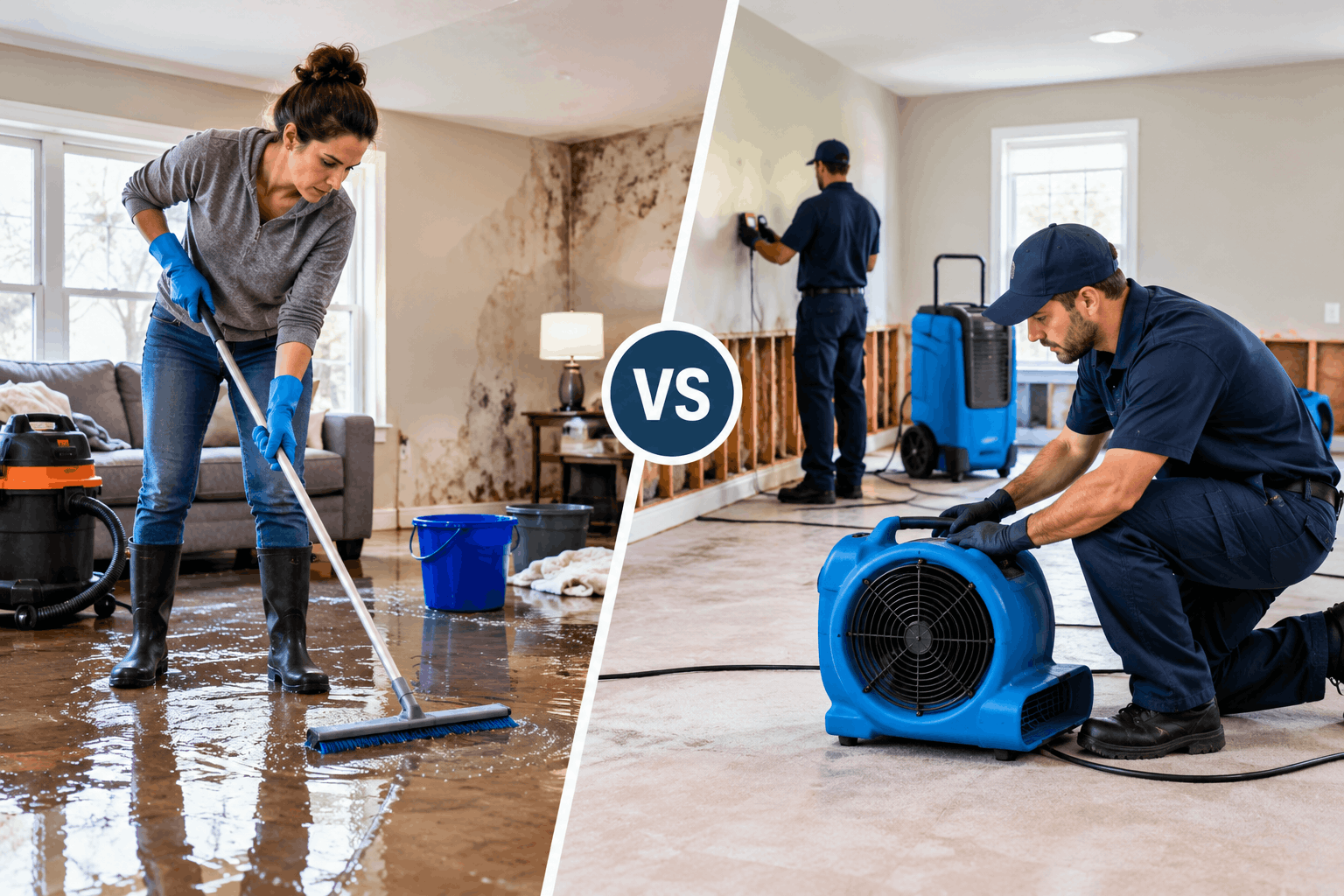
Quick answer first: DIY works fine for small, isolated spills caught within a few hours, but anything involving standing water, saturated flooring, hidden moisture, or a leak that’s been active for more than a day really calls for a professional. The reason isn’t about effort or willingness, it’s about equipment and detection most homeowners simply don’t have access to. Here’s the full breakdown of where that line actually sits.
The Short Answer Before the Full Breakdown
1. When DIY Actually Makes Sense
A knocked-over glass of water, a small overflow from a bathtub caught immediately, or a minor spill on a hard surface floor are all things a homeowner can reasonably clean up alone. These situations involve small amounts of water, minimal absorption time, and no risk of the water reaching hidden cavities behind walls or under flooring.
2. When Professional Help Isn’t Optional
Anything involving a burst pipe, prolonged flooding, sewage backup, or water that’s had hours to soak into carpet, drywall, or subflooring moves well past what a shop vac and a few fans can properly handle. At that point, the risk isn’t just visible damage, it’s what’s happening inside materials you can’t see without the right equipment.
What DIY Cleanup Can Realistically Handle
1. Small Spills and Isolated Leaks
If water is contained to a small area, sits on a non-porous surface, and gets addressed within an hour or two, DIY cleanup is usually enough. Wipe it up, run a fan for good measure, and move on with your day.
2. Tools Most Homeowners Already Have
A wet vac, a couple of box fans, and a portable dehumidifier can handle minor situations reasonably well. These tools work fine for surface-level moisture that hasn’t had time to spread anywhere it shouldn’t.
The Limits of a Shop Vac and a Few Fans
Here’s where the honest limitation shows up. A shop vac removes visible water, but it can’t tell you what’s happening inside a wall cavity or under a subfloor. Fans move air, but they don’t measure whether materials are actually drying at the rate they need to before mold becomes a factor.
Where DIY Cleanup Starts Falling Short
1. Hidden Moisture You Can’t See or Feel
A floor can feel completely dry to the touch while the subfloor underneath is still holding significant moisture. Without a moisture meter, there’s genuinely no reliable way to confirm this, which means DIY cleanup often stops at “looks dry” instead of “actually dry,” and that gap is exactly where problems develop later.
2. Mold Risk That Builds Faster Than People Expect
Mold can begin growing within 24 to 48 hours under the right conditions, and DIY drying attempts frequently miss the window because surface materials appear dry well before deeper materials actually are. By the time a musty smell shows up weeks later, the mold has often spread further than a quick cleaning can address.
3. Structural Damage That Requires Real Assessment
Water that’s reached framing, subflooring, or drywall in significant amounts isn’t just a drying problem anymore, it’s a structural one. Determining whether wood has weakened or whether drywall has broken down internally requires equipment and experience most homeowners don’t have on hand, which is exactly the gap professional water damage restoration St Louis services are built to fill.
What Professional Water Damage Restoration Actually Includes
1. Moisture Mapping and Air Quality Testing
Professionals use moisture meters to map exactly how far water has traveled through flooring, walls, and framing, rather than guessing based on visible signs. This data drives a written scope of work instead of a hunch about what needs to be removed.
2. Proper Drying Equipment and Techniques
Industrial-grade air movers and dehumidifiers dry materials faster and more thoroughly than consumer equipment, often catching moisture in spots a homeowner would never think to check. This matters just as much for a flooded basement as it does for something like attic mold removal after a slow roof leak went unnoticed for weeks.
3. Insurance Documentation Done Correctly
A properly documented restoration job includes photos, drying logs, moisture readings, and a scope that matches what most insurance carriers expect to see. DIY cleanup leaves none of this behind, which can complicate a claim later if damage resurfaces or a related issue like mold develops after the fact.
How to Decide Which Route Fits Your Situation
1. Questions to Ask Before Choosing DIY
Ask yourself how long the water sat before you noticed it, whether it reached carpet padding or drywall, and whether there’s any chance it traveled into a wall cavity or ceiling space. Honest answers to these questions usually make the decision clear without much debate.
2. Signs It’s Time to Make the Call
Standing water that’s been present for more than a few hours, any water near electrical outlets, a musty smell developing after cleanup, or water damage affecting more than one room are all signals that professional help is the safer route. Whether the issue is a flooded basement or something more specific like attic mold removal following a hidden leak, Gateway Water and Mold tests the situation first before recommending any repairs, which protects homeowners from both underestimating and overestimating the actual scope. Choosing professional water damage restoration St Louis services at that point isn’t about admitting DIY failed, it’s about recognizing when the situation genuinely needs equipment a garage toolkit doesn’t have.
Conclusion
DIY cleanup absolutely has its place, and plenty of small water incidents never need anything more than a towel and a fan. The line gets crossed the moment water sits long enough to reach hidden materials, or when mold risk enters the picture within that critical 24 to 48 hour window. Knowing the difference between a manageable spill and a situation that needs real equipment isn’t about giving up too early, it’s about protecting your home from a problem that looks small on the surface but isn’t finished causing damage yet.
Frequently Asked Questions
1. Can I dry out a wet carpet myself without professional help?
If the water was caught quickly and the carpet padding wasn’t significantly saturated, yes. If water sat for several hours or longer, padding often needs professional assessment since it holds moisture much longer than the surface.
2. How do I know if water has reached areas I can’t see?
Without a moisture meter, there’s no reliable way to confirm this. If there’s any doubt, especially after standing water or a slow leak, professional testing is the safer route.
3. Is attic mold removal something a homeowner can handle without professional help?
Generally no. Attic spaces are hard to access safely, and mold there is often tied to a ventilation or roofing issue that needs proper diagnosis before removal will actually solve the problem.
4. What’s the biggest risk of relying only on DIY cleanup?
Missing hidden moisture that leads to mold growth weeks later, often in spots that weren’t checked because they looked dry on the surface.
5. When should I call a water damage restoration St Louis company instead of trying to handle it myself?
Anytime standing water has been present for more than a few hours, when multiple rooms are affected, or when there’s any chance moisture reached drywall, subflooring, or wall cavities.

