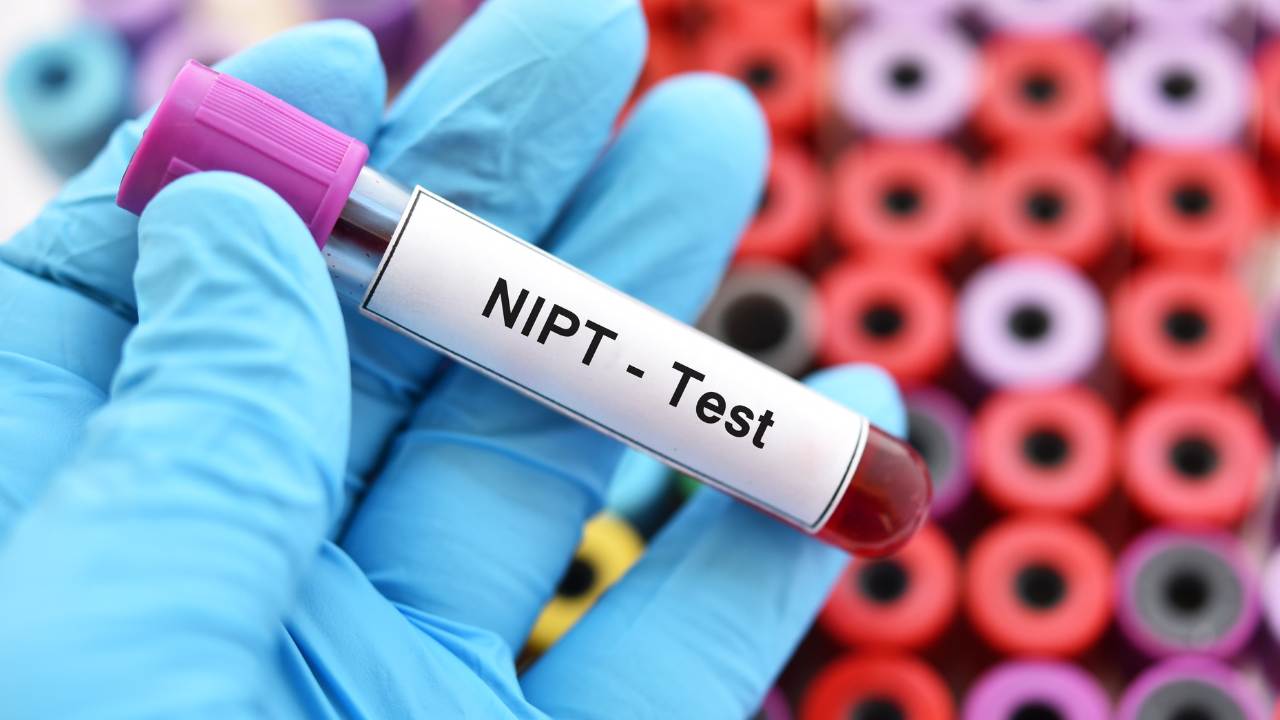
Pregnancy brings many important decisions, and prenatal screening can help expectant parents understand more about their baby’s health. One option that has become increasingly important in modern prenatal care is the nipt test, also known as non-invasive prenatal testing. It is a blood-based screening test that examines cell-free DNA circulating in the mother’s bloodstream to estimate the chance of certain chromosomal conditions in the developing baby.
Unlike invasive prenatal procedures, NIPT only requires a blood sample from the pregnant woman. It does not involve inserting a needle into the uterus, which means it does not carry the procedure-related miscarriage risk associated with invasive tests such as chorionic villus sampling (CVS) or amniocentesis. However, an important point is that NIPT is a screening test, not a diagnostic test. A higher-chance result generally needs appropriate follow-up and, when indicated, diagnostic testing.
What Is an NIPT Test?
An NIPT test is a prenatal screening test that analyzes small fragments of cell-free DNA found in a pregnant woman’s blood. Some of this DNA originates from the placenta and can provide information about the chromosomes of the developing pregnancy.
The primary purpose of NIPT is to screen for common chromosomal differences, particularly trisomy 21 (Down syndrome), trisomy 18 (Edwards syndrome), and trisomy 13 (Patau syndrome). Depending on the laboratory and test panel, additional chromosome or sex-chromosome findings may also be included.
Because NIPT analyzes DNA rather than relying only on traditional biochemical markers, it can provide a more detailed estimate of risk for certain chromosomal conditions. Still, the result represents a probability rather than a definitive diagnosis. Professional genetics guidance emphasizes this distinction because a screening result should always be interpreted alongside the pregnancy history, ultrasound findings, and appropriate clinical advice.
How Does NIPT Work?
The process is relatively straightforward.
A healthcare professional collects a blood sample from the pregnant woman. The laboratory then separates and analyzes cell-free DNA present in the blood. Because the sample contains both maternal and placental DNA fragments, specialized laboratory methods are used to assess whether there is an unusual representation of DNA associated with particular chromosomes.
For example, an increased representation of chromosome 21-derived DNA fragments may indicate a higher chance of trisomy 21.
The test itself does not require a sample to be taken from inside the uterus. This is one of the major reasons NIPT is considered a non-invasive approach to prenatal screening.
When Can NIPT Be Done?
The appropriate timing can vary depending on the specific test, clinical pathway, laboratory, and local guidelines.
Many NIPT services can be performed from around 10 weeks of pregnancy, although the exact timing should be confirmed with the healthcare professional or laboratory providing the test. Some clinical pathways use different minimum gestational ages.
Timing matters because the test relies on enough placental cell-free DNA being present in the maternal bloodstream. If there is not enough DNA available for analysis, the laboratory may be unable to provide a result.
For this reason, pregnant women should discuss the appropriate testing window with their obstetrician, midwife, or qualified healthcare provider rather than choosing a testing date based solely on information found online.
What Conditions Can NIPT Screen For?
The main conditions commonly screened through NIPT are:
- Down syndrome (Trisomy 21)
- Edwards syndrome (Trisomy 18)
- Patau syndrome (Trisomy 13)
Some laboratories offer expanded screening panels that assess additional chromosome abnormalities or sex chromosomes. However, expanded panels are not automatically appropriate for every pregnancy, and the scope and performance of a test can differ between laboratories.
NIPT should therefore be selected based on the individual pregnancy and the advice of an appropriately qualified healthcare professional.
It is also important to understand that NIPT is not a general test for every genetic or developmental condition. A normal NIPT result cannot guarantee that a baby will be free from every possible genetic, structural, or health condition.
Is NIPT a Diagnostic Test?
No. This is one of the most important things to understand before having an NIPT test.
NIPT is a screening test. It estimates whether the pregnancy has a lower or higher chance of specific chromosomal conditions. It does not confirm that the baby definitely has or does not have a particular condition.
If an NIPT result indicates a higher chance, the next step should be discussed with a healthcare professional. Depending on the circumstances, further assessment may include detailed ultrasound, genetic counselling, or a diagnostic procedure such as CVS or amniocentesis.
Professional guidance from the American College of Medical Genetics and Genomics recognizes NIPT as prenatal screening and emphasizes the importance of appropriate follow-up for positive screening results.
What Does a Low-Chance NIPT Result Mean?
A low-chance result is generally reassuring because it means the screening found a lower probability of the targeted chromosomal conditions.
However, it does not mean that every possible pregnancy complication has been ruled out.
Pregnancy screening is only one part of prenatal care. Ultrasound examinations, routine maternal health checks, medical history, and other recommended assessments remain important throughout pregnancy. The NHS also explains that screening tests can identify a lower or higher chance of certain conditions but cannot guarantee that a baby does not have a health condition.
What Does a High-Chance Result Mean?
A high-chance result can naturally cause anxiety, but it should not automatically be interpreted as a diagnosis.
There are situations in which the DNA profile detected in the placenta does not perfectly represent the baby’s chromosomes. This can contribute to false-positive screening results. For that reason, a healthcare professional may recommend additional evaluation and diagnostic testing before any major decisions are made.
If you receive a high-chance result, ask your doctor or genetic counsellor:
- What exactly has been detected?
- What is the estimated chance that the result represents a true condition?
- Is additional ultrasound assessment recommended?
- Should diagnostic testing be considered?
- What options are available for further counselling and support?
Taking time to understand the result is important.
What Are the Benefits of NIPT?
One of the biggest advantages is that NIPT requires only a maternal blood sample.
Other potential benefits include:
Non-invasive procedure:
The test does not require a sample from inside the uterus, unlike CVS or amniocentesis.
Early screening:
NIPT can be available relatively early in pregnancy, depending on the test and local clinical pathway.
Useful chromosome screening:
It can provide screening information for common trisomies, including Down syndrome, Edwards syndrome, and Patau syndrome.
No procedure-related miscarriage risk:
Because the test is performed using maternal blood, it does not carry the small miscarriage risk associated with invasive sampling procedures.
Are There Limitations to NIPT?
Yes. Understanding the limitations is just as important as understanding the benefits.
NIPT does not screen for every genetic disorder or birth defect. It can also occasionally produce a false-positive or false-negative result, and sometimes the laboratory may not be able to provide a result at all.
The test can also be affected by factors related to the pregnancy, maternal health, placental biology, and the amount of available cell-free DNA.
This is why an NIPT result should never be interpreted in isolation. A qualified healthcare professional can explain what the specific result means in the context of the pregnancy.
NIPT vs. Diagnostic Prenatal Testing
The key difference is simple:
NIPT: Screening test that estimates the chance of selected chromosomal conditions.
CVS or amniocentesis: Diagnostic procedures that can be used to investigate whether a chromosomal or genetic condition is actually present.
NIPT is attractive because it is non-invasive, but diagnostic testing may be recommended when a definitive answer is clinically necessary.
For example, following a higher-chance screening result, a healthcare professional may discuss CVS or amniocentesis as possible next steps.
Who Should Consider an NIPT Test?
The decision to have NIPT should be individualized.
It may be discussed as part of prenatal screening based on factors such as pregnancy history, previous screening results, maternal age, ultrasound findings, family history, or personal preferences. Current prenatal screening pathways differ between countries and healthcare systems.
Rather than assuming that NIPT is necessary for every pregnancy—or unnecessary for a low-risk pregnancy—it is better to discuss the available options with your obstetrician or qualified prenatal care provider.
What Happens After the Test?
After the blood sample is collected, it is sent to a laboratory for analysis. The time required to receive results depends on the laboratory and healthcare service.
When the report is available, a healthcare professional should explain the result and its significance. If the result is low chance, routine prenatal care and recommended screening generally continue. If the result is high chance or inconclusive, further evaluation may be recommended.
An inconclusive or no-result outcome does not necessarily mean that something is wrong. Sometimes there simply is not enough usable DNA for the laboratory to generate a reliable result, and your healthcare provider can advise whether repeat testing or another assessment is appropriate.
Frequently Asked Questions About NIPT
Is NIPT safe during pregnancy?
NIPT uses a blood sample from the pregnant woman and does not require an invasive procedure involving the uterus. It therefore avoids the procedure-related miscarriage risk associated with invasive prenatal sampling.
Is NIPT 100% accurate?
No prenatal screening test should be described as 100% diagnostic. NIPT is highly informative for the conditions it targets, but it remains a screening test. A higher-chance result may require diagnostic confirmation.
Does NIPT detect every birth defect?
No. NIPT focuses on specific chromosomal conditions and does not replace ultrasound or other recommended prenatal assessments.
How early can NIPT be performed?
The minimum gestational age depends on the specific test and clinical pathway. Many services begin testing at approximately 10 weeks, but patients should confirm the appropriate timing with their healthcare provider.
What should I do if my NIPT result is high chance?
Do not assume that the result is a confirmed diagnosis. Speak with your obstetrician, maternal-fetal medicine specialist, or genetic counsellor about the result and whether diagnostic testing is appropriate.
Final Thoughts
The NIPT test has become an important option in modern prenatal screening because it provides information about the likelihood of certain chromosomal conditions using a simple maternal blood sample. Its non-invasive nature makes it different from diagnostic procedures such as CVS and amniocentesis.
At the same time, NIPT should be understood for what it is: a screening test, not a definitive diagnosis. The most useful approach is to consider the result alongside ultrasound findings, medical history, other prenatal screening, and professional medical advice. If a result indicates a higher chance of a chromosomal condition, appropriate follow-up and, when recommended, diagnostic testing can provide greater certainty.