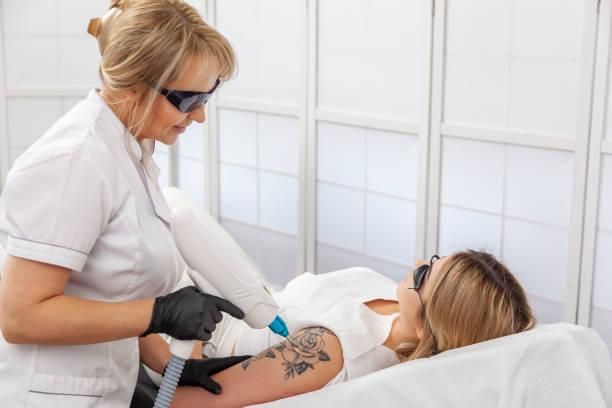
People with sensitive skin often take extra care when considering cosmetic treatments, particularly procedures involving laser technology. Laser tattoo removal can be suitable for sensitive skin when the treatment is carefully customized according to the person’s skin characteristics and the tattoo itself. For those considering Laser Tattoo Removal in Abu Dhabi understanding how laser energy interacts with sensitive skin can make the process easier to approach with realistic expectations. The treatment is designed to target tattoo pigment beneath the skin while treatment parameters can be adjusted according to skin type, tattoo color, density, depth, and location.
What Makes Skin Sensitive?
Sensitive skin can react more readily to environmental conditions, skincare products, temperature changes, or cosmetic procedures. However, sensitivity varies considerably between individuals.
When considering laser tattoo removal, it is important to distinguish general skin sensitivity from a specific skin condition or an active issue affecting the treatment area. The condition of the skin at the time of assessment can influence whether laser treatment is appropriate.
A professional evaluation provides an opportunity to examine the tattoo and surrounding skin before selecting the appropriate treatment approach.
How Does Laser Tattoo Removal Work on Sensitive Skin?
Laser tattoo removal uses controlled pulses of laser energy to target tattoo pigment. The ink absorbs the selected energy, causing pigment particles to break into smaller fragments.
The body then gradually processes these fragmented particles over time. The laser is intended to focus primarily on the tattoo pigment rather than treating the surrounding skin unnecessarily.
For sensitive skin, treatment settings can be selected with the individual’s pigmentation and skin characteristics in mind. This individualized approach is important because no two people respond to laser treatment in exactly the same way.
Can Sensitive Skin Be Treated With Lasers?
Sensitive skin does not automatically mean that laser tattoo removal is unsuitable. Many people with sensitive skin can be considered for treatment following an appropriate assessment.
The key consideration is selecting an appropriate laser wavelength and treatment setting. Tattoo color, pigment density, depth, size, and location are evaluated alongside the person’s skin characteristics.
A personalized approach allows the treatment strategy to be adapted rather than applying identical settings to everyone.
Why Is Laser Selection Important?
Different laser wavelengths interact with different tattoo pigments. Black ink can respond differently from red, blue, green, yellow, or pastel pigments.
Laser selection is therefore based not only on the tattoo color but also on the individual’s skin characteristics. This is particularly relevant for sensitive skin because natural pigmentation and skin response need to be considered when selecting treatment parameters.
Modern laser systems can provide different wavelength options, giving professionals greater flexibility when treating tattoos on a range of skin types.
Does Skin Tone Matter for Sensitive Skin?
Skin tone is an important consideration during laser tattoo removal. Natural melanin can absorb laser energy, so treatment parameters need to account for the individual’s pigmentation.
This is especially relevant for people with darker skin tones, where careful laser selection can help distinguish tattoo pigment from natural skin pigmentation.
Sensitive skin and darker skin are not the same characteristic, but they can occur together. When they do, both factors should be considered during treatment planning.
Does Tattoo Color Affect Treatment?
Yes. The color of the tattoo can influence the laser wavelength selected for treatment.
A black tattoo may respond differently from a multicolored design. Some pigments absorb specific wavelengths more effectively, while lighter or certain bright colors can require a more specialized approach.
For sensitive skin, the goal is to choose an appropriate treatment strategy that considers both the tattoo pigment and the surrounding skin. Multicolored tattoos may therefore require individualized wavelength selection for different sections of the design.
Does Tattoo Density Influence Treatment?
Tattoo density describes how concentrated the ink is within the skin. A lightly shaded design contains less pigment than a heavily saturated tattoo with solid fills or bold outlines.
Dense tattoos can require a more gradual treatment approach because there is a greater concentration of pigment to address.
For someone with sensitive skin, treatment planning can take pigment density into account when determining appropriate laser settings and the overall treatment schedule.
Does Tattoo Location Matter?
Yes. The location of a tattoo can influence treatment planning because different areas of the body have different skin characteristics and levels of daily movement or exposure.
Facial tattoos, neck tattoos, hand tattoos, and tattoos in areas subject to frequent friction may require particularly careful assessment.
Sensitive skin in a highly visible or frequently exposed area can also require additional planning. The tattoo’s location is therefore considered together with its size, pigment, depth, and the individual’s skin characteristics.
Can Facial Tattoos Be Treated on Sensitive Skin?
Facial tattoos can sometimes be treated when the surrounding skin is suitable for laser treatment. However, the face requires particularly careful planning because of its visibility and proximity to sensitive anatomical structures.
The exact location of the tattoo matters. Areas close to the eyes require appropriate protective measures and careful laser application.
Sensitive facial skin does not automatically prevent treatment, but an individualized assessment is particularly important before proceeding.
Can Large Tattoos Be Treated on Sensitive Skin?
Large tattoos can often be considered for laser removal even when the surrounding skin is sensitive. However, a larger tattoo involves a greater treatment area and may contain varying pigment densities and multiple colors.
The treatment can be planned progressively according to the characteristics of the design and the individual’s skin.
Large tattoos may therefore require more extensive treatment planning than small designs, but size alone does not determine suitability.
Does Tattoo Age Affect Sensitive Skin Treatment?
Tattoo age does not automatically determine whether laser removal is appropriate for sensitive skin. Older tattoos may have naturally faded, while some can retain significant pigment beneath the skin.
The tattoo’s current condition is more relevant than its age alone. Ink color, depth, density, composition, size, and location all contribute to treatment planning.
Sensitive skin is assessed separately so that the treatment approach can take both the tattoo and the surrounding skin into account.
How Many Sessions Are Needed?
There is no standard number of laser tattoo removal sessions for sensitive skin. The required treatment course varies according to the tattoo and individual characteristics.
A small, lightly pigmented tattoo may respond differently from a large, dense, multicolored design. Tattoo depth, ink composition, location, age, skin tone, and sensitivity can all influence the treatment plan.
Laser tattoo removal is generally progressive, allowing the body time between sessions to process fragmented pigment.
Can Treatment Settings Be Customized?
Yes. Customization is an important part of laser tattoo removal, particularly when treating sensitive skin.
Treatment parameters can be selected according to tattoo pigment, skin tone, tattoo density, depth, size, and location. As treatment progresses and the tattoo becomes lighter, the approach can also be reassessed.
This allows treatment to remain responsive to the individual’s skin and the changing characteristics of the tattoo.
Why Is Professional Assessment Important for Sensitive Skin?
Sensitive skin can vary significantly from person to person. What one individual considers sensitive may differ from another person’s experience.
A professional assessment can evaluate the condition of the treatment area and consider the tattoo’s characteristics at the same time. This helps determine whether laser tattoo removal is appropriate and how the treatment should be customized.
An individualized approach is more useful than relying on a standard treatment plan because laser response depends on the interaction between the tattoo pigment and the person’s skin.
What Should You Expect During the Treatment Process?
Laser tattoo removal on sensitive skin is generally approached as a gradual process. Each session targets tattoo pigment, while the body continues processing fragmented ink between treatments.
The tattoo may progressively become lighter, and different colors or sections can fade at different rates. This is particularly common with multicolored or densely pigmented designs.
The treatment schedule can be adapted according to the individual’s skin characteristics and the tattoo’s response. Following professional aftercare guidance is an important part of managing the treatment process.
Is Laser Tattoo Removal Safe for Sensitive Skin?
Laser tattoo removal can be suitable for sensitive skin when the treatment is properly assessed and customized. Sensitive skin does not automatically prevent someone from undergoing tattoo removal, but it makes individualized treatment planning particularly important.
Laser wavelength, energy settings, tattoo color, pigment density, depth, size, location, skin tone, and overall skin condition all need to be considered.
With an appropriate assessment and carefully selected treatment approach, many people with sensitive skin can pursue progressive tattoo fading. The most suitable strategy depends on the specific relationship between the tattoo and the individual’s skin.
Frequently Asked Questions
Is laser tattoo removal safe for sensitive skin?
Laser tattoo removal can be suitable for sensitive skin when treatment is carefully customized. Skin characteristics, tattoo pigment, color, density, location, and laser settings should all be considered during planning.
Can people with sensitive skin undergo laser tattoo removal?
Yes. Sensitive skin does not automatically make laser tattoo removal unsuitable. A professional assessment can determine whether the skin and tattoo are appropriate for treatment.
Does sensitive skin require different laser settings?
Treatment settings can be customized according to individual skin characteristics and tattoo pigment. This individualized approach is particularly important when working with sensitive skin.
Can colored tattoos be removed from sensitive skin?
Many colored tattoo pigments can be targeted with laser technology. Different colors may require different wavelengths, so multicolored tattoos generally require customized treatment planning.
How many sessions are needed for sensitive skin?
There is no fixed number of sessions. The treatment course depends on tattoo color, density, depth, size, location, age, ink composition, skin tone, and individual response.