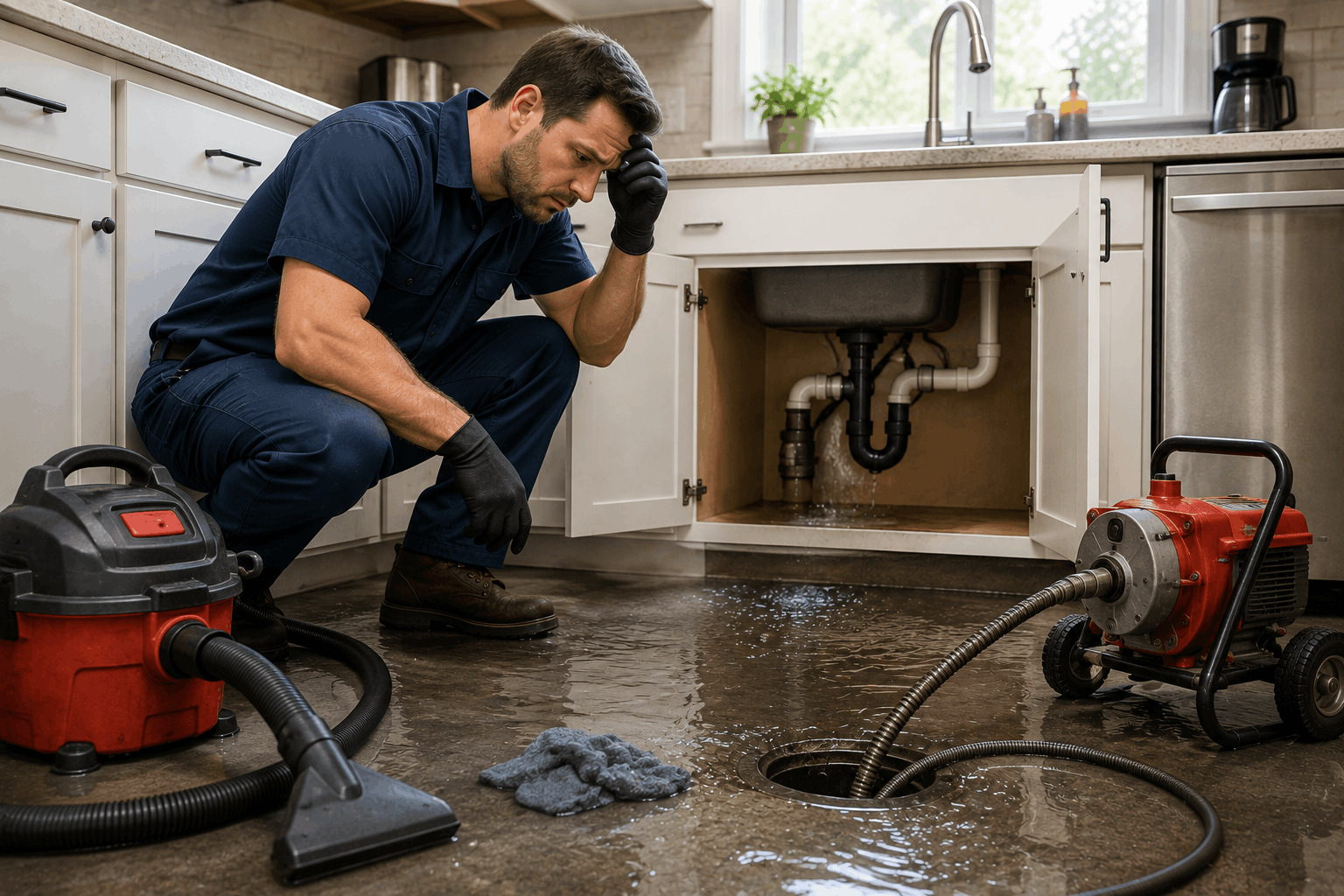
Water sitting in the sink, not moving an inch no matter how long you wait, is one of those moments that makes you want to just start pouring things down the drain and hoping something works. Totally understandable. But a fully blocked drain is a bit different from a slow one, and the wrong first move can turn a fixable problem into a genuinely messy one.
Here’s exactly what to do, in order, so you’re not just guessing while standing over a sink full of water, and you know when it’s time to search for drain cleaning in Orange County instead of continuing to troubleshoot.
First Things First: Stay Calm and Stop Making It Worse
Summary Box: What to Avoid Right Away
| Don’t Do This | Why It Backfires |
| Keep running water hoping it’ll “push through” | Adds volume to an already full pipe, increasing the risk of overflow |
| Reach for a chemical drain cleaner immediately | Caustic chemicals can sit in standing water and damage pipes without clearing a full blockage |
| Use a plunger without covering the overflow hole | Air escapes through the overflow instead of building the pressure needed to clear the clog |
| Force a wire hanger deep into the pipe | Can scratch or puncture pipe walls, turning a clog into a leak |
| Ignore a bad smell coming from the drain | Can signal a deeper blockage or venting issue that needs prompt attention |
A completely blocked drain means water has nowhere to go, so the first instinct to just keep flushing it with more water almost always backfires.
Step-by-Step: What to Try When a Drain Is Fully Blocked
1. Stop Adding Water
Turn off the faucet and resist the urge to run more water hoping it’ll eventually break through. A full pipe with nowhere to drain just means more standing water, and potentially an overflow onto your floor or countertop.
2. Try a Proper Plunge
For sinks, cover the overflow hole (that small opening usually near the top of the basin) with a wet cloth first, since an open overflow lets air escape instead of building the pressure a plunger needs to work. Make sure there’s enough water in the basin to fully cover the plunger cup, then push down slowly to force air out before using firm, quick strokes.
3. Check for a Visible Obstruction
If the blockage is near the drain opening, sometimes you can see it, a wad of hair, food debris, or even a small object that fell in. Removing it by hand (with gloves) can solve the problem instantly without needing any tools at all.
4. Use a Zip-It Tool or Drain Snake
A plastic zip-it tool or a hand-crank drain snake reaches further into the pipe than a plunger ever could. Insert it, twist gently, and pull. This is especially effective for hair clogs in bathroom drains and shower fixtures.
5. Try Boiling Water in Stages
For kitchen drains where grease is the likely culprit, pour boiling water down the drain in two or three stages, waiting about 30 seconds between pours. This helps melt solidified grease enough for it to move along with the water. Skip this step if you suspect the blockage is severe, since standing hot water against a compromised pipe joint can occasionally make things worse.
When a Full Blockage Means More Than a Simple Clog
Sometimes a completely blocked drain isn’t just a local issue, it’s a sign that something bigger is going on further down the line.
Comparison Table: Single Fixture vs. Whole-House Blockage
| Sign | What It Suggests |
| Only one sink or tub is blocked | Localized clog, likely near the drain opening or trap |
| Multiple drains are blocked at once | Main line blockage affecting the whole system |
| Toilet backs up when you run the shower | Shared line issue, points to a blockage deeper in the plumbing |
| Gurgling sounds from other fixtures | Air trapped due to a blockage elsewhere in the system |
| Foul sewage smell throughout the house | Possible venting issue or significant blockage in the main line |
If more than one fixture is affected, stop trying to plunge your way through it. That pattern points to a shared line problem that DIY tools generally can’t reach, and it’s usually the moment homeowners start searching for drain cleaning orange county ca providers with camera inspection equipment.
Q&A: Common Questions About Fully Blocked Drains
Q: I plunged for ten minutes and nothing happened. What now? A: At that point, switch to a zip-it tool or drain snake if you haven’t already. If those don’t work either, the blockage is likely further down the pipe than household tools can reach, and it’s time to call for help.
Q: Is it ever okay to use a chemical drain cleaner on a fully blocked drain? A: It’s best avoided. If the blockage doesn’t fully clear, the caustic liquid sits in standing water against your pipe, which can cause damage and creates a safety hazard for whoever ends up servicing the drain next.
Q: My toilet is also backing up now. Is that related to my blocked sink? A: Very possibly, yes. If fixtures on the same line are affected together, that points to a blockage in a shared section of pipe rather than two separate, unrelated clogs.
Q: Can a fully blocked drain cause water damage if I leave it overnight? A: Yes, especially if the fixture continues to be used or if there’s any risk of overflow. It’s worth addressing a full blockage the same day rather than letting it sit.
Q: How do I know if I need drain cleaning in Orange County versus just trying another DIY method? A: If you’ve tried plunging, a zip-it tool, and boiling water without success, or if multiple fixtures are affected, that’s the point where professional equipment becomes the more efficient option rather than continuing to guess.
When to Call for Professional Drain Cleaning in Orange County
If you’ve worked through the basic steps and the drain is still fully blocked, or if the problem has spread to more than one fixture, that’s your cue to bring in a professional rather than keep experimenting. A motorized drain snake or hydro jetting equipment can clear blockages that sit well beyond where household tools can reach, and a camera inspection can confirm exactly what’s causing the issue before any further work begins. For anyone searching for reliable drain cleaning orange county ca services, look for a provider that offers camera inspection alongside standard snaking, since that combination identifies the real cause instead of just treating the symptom.
If your drain is still blocked after trying everything above, SJ Plumbing’s drain cleaning service page covers the equipment and process used to clear stubborn blockages properly.
Conclusion
A completely blocked drain feels urgent, and it often is, but the right response is methodical rather than panicked. Stop adding water, try a proper plunge with the overflow covered, check for a visible obstruction, and work your way through a zip-it tool or boiling water depending on the fixture involved. If none of that clears it, or if more than one drain in the house is affected, that’s the signal to stop troubleshooting and bring in professional drain cleaning in Orange County rather than risking further damage with repeated DIY attempts. Acting early, before standing water becomes an overflow or a bigger main line issue, almost always saves you time, money, and a genuinely stressful afternoon.
FAQs
1. Why does covering the overflow hole matter when plunging a sink? An open overflow lets air escape instead of building pressure inside the pipe, which means the plunger can’t create the suction needed to dislodge the clog.
2. Can a fully blocked drain be caused by something other than hair or grease? Yes, small objects, buildup of soap scum, or even a structural pipe issue like a sag or root intrusion can cause a complete blockage, especially if it’s a recurring problem.
3. Is it safe to run the garbage disposal if the kitchen sink is fully blocked? No, running the disposal against standing water strains the motor and won’t clear a blockage located past the disposal itself, so it’s better to address the clog first.
4. How urgent is a fully blocked drain compared to a slow one? More urgent, since a full blockage risks overflow and water damage if left unaddressed, whereas a slow drain typically allows more time to try different fixes.
5. Will a plumber need to cut into my pipes to clear a full blockage? Rarely, for a standard clog. Most full blockages are cleared with snaking or hydro jetting without any cutting, unless a camera inspection reveals a structural issue underneath.