
Customers form opinions about a business long before they judge the quality of the actual work. A plumber’s van, the tidiness of a technician’s toolkit, the way an invoice is written out, even the state of a business card left on the kitchen counter. All of these small details add up to an impression, and that impression sticks around long after the job is finished.
One detail that gets overlooked far more often than it should is packaging. If your business hands over replacement parts, maintenance kits, cleaning products, samples, or accessories, the box or bag those items arrive in says something about you, whether you’ve thought about it or not. A crushed plastic bag or an unmarked cardboard box tells a very different story than a neat, branded box with your logo on the lid.
This isn’t about turning every local tradesperson into a packaging designer overnight. It’s about recognising that packaging is a genuine, low-effort opportunity to reinforce professionalism and make customers remember who did the work.
Why Packaging Matters for Local Home Service Businesses
Home service businesses live and die by reputation. Word of mouth, repeat bookings, and online reviews carry far more weight than a flashy advert ever could. Trust is built through small, consistent signals, and packaging is one of those signals that customers notice even if they never mention it out loud.
Think about the last time you received something poorly wrapped versus something that arrived in a proper box with a bit of care put into how it was presented. The contents might have been identical, but the second one felt more trustworthy. That same psychology applies whether you’re a heating engineer dropping off a replacement thermostat or a landscaping company delivering a set of plant feed samples.
Good packaging also signals consistency. A business that pays attention to how a small box is put together tends to be assumed to pay similar attention to bigger jobs too. It’s a shortcut customers use, fairly or not, to judge how seriously a company takes its own standards.

Creating a More Professional Customer Experience
There’s a noticeable difference between handing a customer a part in a supermarket carrier bag and presenting it in a clean box with the company name on it. The product itself hasn’t changed, but the experience around it has.
For businesses that supply maintenance kits, filters, spare parts, or seasonal servicing items, custom packaging can turn a routine handover into something that feels considered rather than rushed. It also makes life easier on a practical level. Items that are boxed and labelled properly are less likely to get mixed up in a van, dropped, or damaged before they reach the customer.
Smaller details help too. A short printed card inside the box explaining how to fit a part, or a simple checklist for seasonal maintenance, adds real value without costing much to produce. Customers remember businesses that make things easier for them, and this is one of the simplest ways to do that.

Protecting Products During Delivery and Storage
Packaging isn’t only about appearances. It has a practical job to do as well, particularly for businesses that transport parts, tools, or products between vans, storage units, and customer properties.
Cardboard and corrugated boxes offer a level of protection that loose bags simply can’t match. They reduce the risk of items shifting around, getting crushed under other equipment, or being exposed to damp conditions, which is a genuine concern for anyone working outdoors in the UK for large parts of the year.
For businesses dealing with anything fragile or moisture-sensitive, such as electrical components, sealants, or certain cleaning chemicals, sturdier packaging isn’t a luxury. It’s what stops a product turning up damaged and turning a simple job into a complaint.
Building Brand Recognition Beyond the Service Call
Once a technician leaves a property, most of the direct interaction ends. What stays behind, though, is whatever was left with the customer, and that includes packaging.
A branded box sitting on a kitchen counter or in a utility cupboard keeps a company’s name visible long after the invoice has been paid. If a neighbour spots it, or a customer needs the same service again in six months, that visual reminder does quiet work in the background that a business card tucked into a drawer simply can’t match.
This is especially useful for businesses that rely on repeat custom, such as cleaning companies, HVAC servicing firms, and maintenance providers. A recognisable box becomes part of the overall brand experience, not just a container.
Practical Packaging Ideas for Different Home Service Businesses
Every trade has its own version of this opportunity. A few examples:
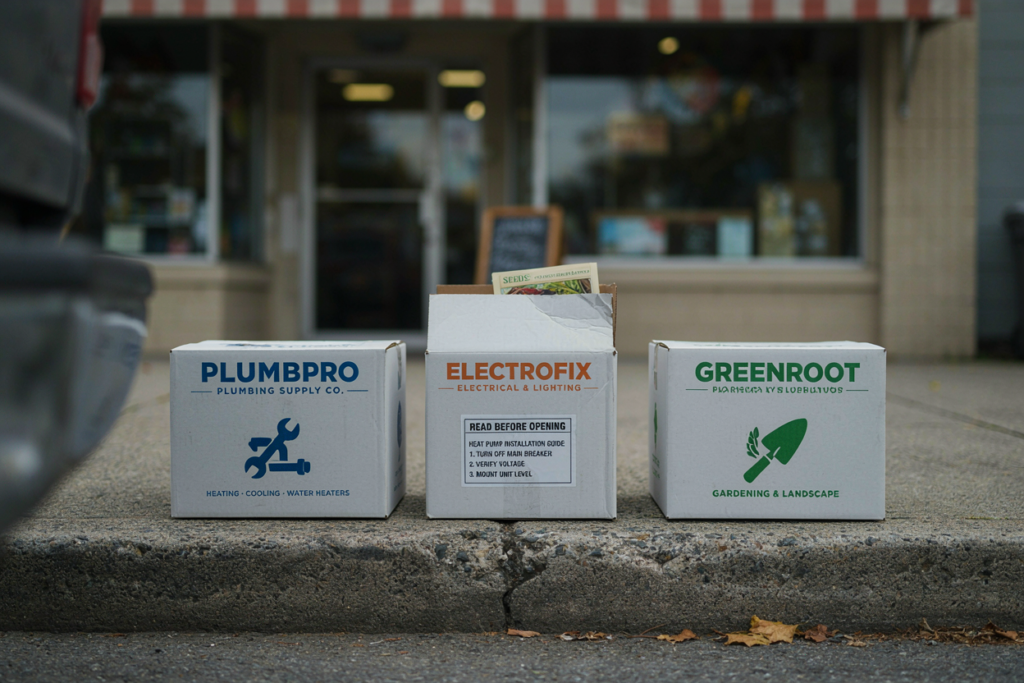
Plumbing businesses can use branded boxes for replacement parts such as taps, valves, or fittings, along with basic care instructions for the customer to keep.
Electrical contractors might package smart home devices, sockets, or safety equipment in a way that reflects the professionalism of the installation itself.
Cleaning companies often supply products directly to clients. Branded packaging for eco-friendly cleaning kits or top-up supplies adds a retail-style feel that many customers respond well to.
Landscaping and gardening businesses can use custom boxes for seed kits, plant feed, or small tools, turning a simple drop-off into something that feels like a proper product.
HVAC businesses frequently hand over filters and seasonal maintenance kits. Boxing these clearly, with servicing dates printed inside, adds genuine practical value.
Home repair and maintenance companies can package spare parts or tool kits so customers can store and find them easily later.
Builders and renovation businesses sometimes leave behind sample materials, paint swatches, or finishing hardware. Presenting these properly reflects the same standard as the finished renovation work.
Choosing the Right Packaging Material
There isn’t a single correct packaging choice for every business. It depends on what’s being packaged, how it will be handled, and what budget makes sense.
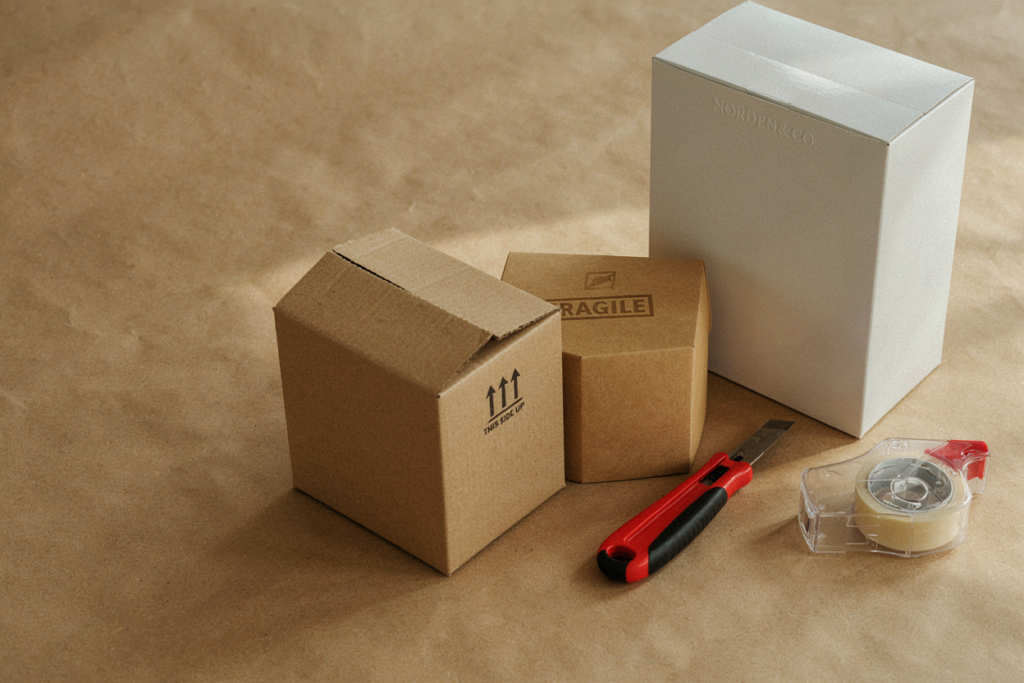
- Cardboard boxes work well for lightweight items and everyday use, offering a simple, cost-effective option.
- Corrugated boxes suit heavier or more fragile products, since the extra layer provides added strength during transport.
- Kraft boxes give a more natural, understated look, which suits businesses wanting an eco-conscious or artisanal feel.
- Rigid boxes are better suited to premium products or gift-style presentation, where durability and appearance both matter.
For businesses exploring options beyond generic stock boxes, working with a supplier offering custom packaging solutions makes it easier to match the packaging to the product, the brand, and the budget, rather than settling for something that only half fits the job.
Turning Packaging Into a Marketing Opportunity
Packaging can carry more than a logo. Printed contact details, a QR code linking to a booking page, care instructions, or a short thank you note all turn a plain box into another point of contact with the customer.
This matters because most home service businesses don’t get many natural touchpoints with a client outside the job itself. A well-thought-out box, even a modestly designed one, is a chance to remind the customer how to get in touch again, without it feeling like an advert.
Some businesses include a small discount code for future bookings printed inside the lid. Others use the space for basic safety or maintenance tips relevant to the product inside. Either approach adds a bit of extra value that a generic box never could.
Making Custom Packaging Practical for Small Businesses
None of this requires a complete rebrand or a large upfront investment. The most sensible approach for a small local business is to start with whichever product or part gets handed over most often, and improve the packaging for that one item first.
A few practical points worth keeping in mind:
- Choose box sizes that actually fit the product, rather than oversized boxes that waste material and look sloppy.
- Avoid over-packaging small or inexpensive items, since this can feel wasteful rather than premium.
- Order in reasonably small batches to begin with, so the packaging can be adjusted if something isn’t quite right.
- Balance cost against how often the packaging will actually be used. A product handed out weekly deserves more attention than one given out twice a year.
The goal isn’t perfection from day one. It’s steady, sensible improvement that fits the size and pace of the business.
Final Thoughts
Local home service businesses often put enormous effort into the actual work: the fitting, the wiring, the cleaning, the building, while overlooking the small physical details that customers interact with directly. Packaging sits quietly in that gap, doing more for a brand’s image than most businesses give it credit for.
It doesn’t need to be elaborate. A clean, well-labelled box, chosen with a bit of thought, can protect the product, reflect the standard of the work, and leave a small but lasting impression long after the van has driven off. For a trade built on trust and repeat custom, that’s a detail worth getting right.