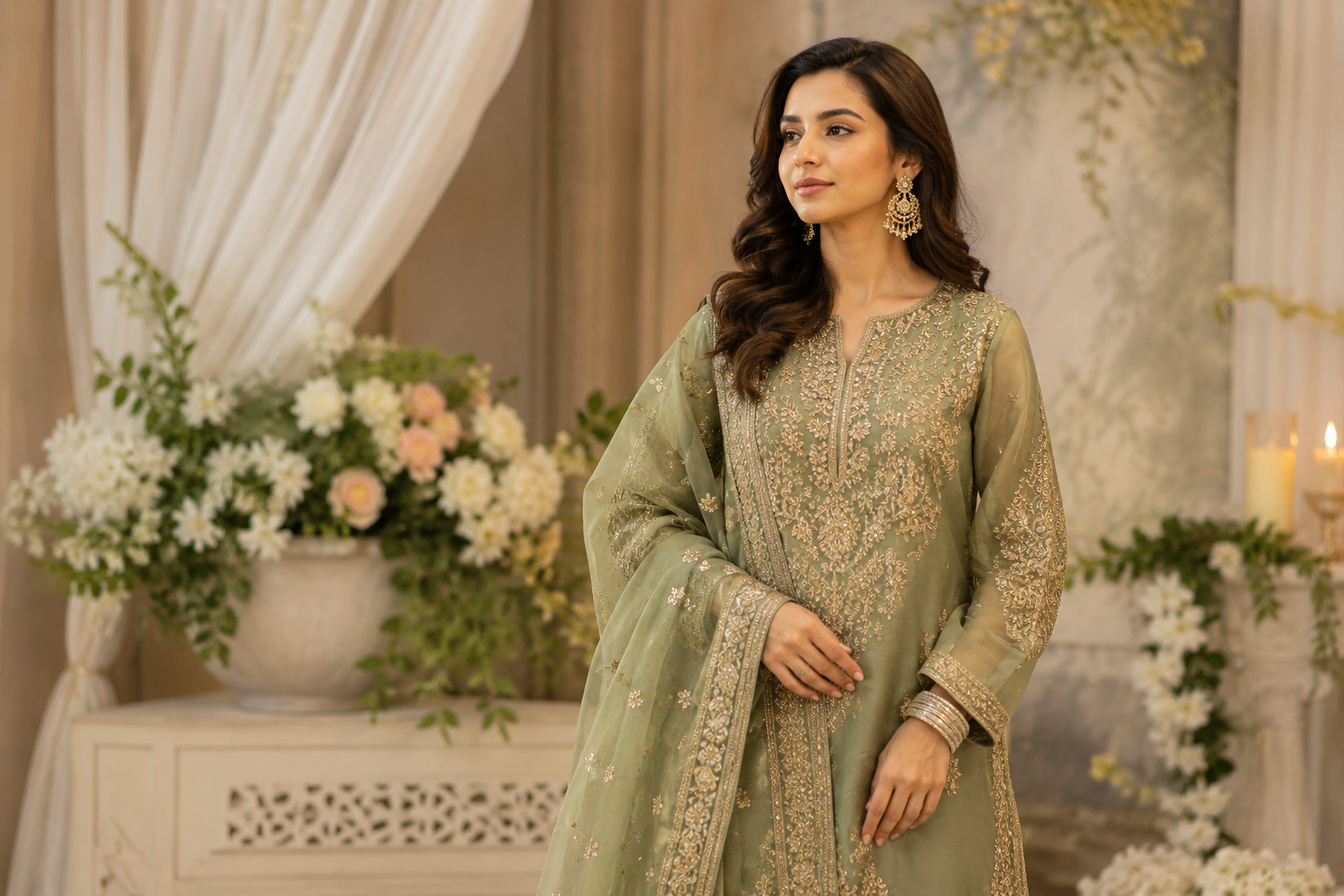
There is a particular kind of dress that looks wonderful at a wedding and then becomes difficult to wear anywhere else. It may have a very specific color combination, layers of heavy embroidery, or a dupatta that only seems to work with that one shirt. Pakistani wedding outfits do not have to fall into that category. A wedding is a special occasion, but the clothes you wear to it can still have a life after the event.
A useful way to think about Pakistani formal dresses is to separate the outfit in your head. Look at the shirt, trousers and dupatta individually. A straight embroidered shirt might work with a shalwar at a wedding and with cigarette pants at a family dinner. A printed dupatta may work with another plain suit later. These little possibilities are often more useful than a dress that looks impressive only as a complete set.
Start With the Part You’ll Probably Wear Again
The shirt is usually the safest place to start.
Imagine taking away the dupatta. Does the shirt still look like something you would wear? Can you put it with a different pair of trousers? Could you wear it with smaller earrings and less formal shoes without feeling overdressed?
A long straight shirt is a good example. At a wedding, it can be worn with a matching shalwar, embroidered khussas and traditional jewelry. For another event, switch to straight trousers, a plain chiffon dupatta and smaller earrings. It is still the same shirt, but the overall look has changed.
This is one reason simple cuts can be surprisingly useful. They leave you somewhere to go with the styling.
Don’t Let the Function Decide the Entire Outfit
Mehndi outfits are an easy example.
The setting is usually full of color. There may be yellow and green decorations, flowers, bright lights and plenty of colorful clothes around you. Picking an outfit in the same bright combination can look lovely on the day. But a yellow-and-green suit with multicolored embroidery and a heavily worked dupatta can feel very specific to a mehndi when you pull it out of the wardrobe later.
You don’t have to avoid bright colors. Just don’t make every part of the outfit depend on them.
A fuchsia shirt with gold embroidery, for instance, can be worn with colorful bangles and a bright dupatta for a mehndi. Later, pair it with an ivory dupatta and simple jewelry. The shirt hasn’t become less beautiful; it has simply lost the styling that made it look like a mehndi outfit.
Look Closely at the Embroidery
The amount of embroidery isn’t the only thing worth noticing. Its position matters too.
A neckline with detailed work can look beautiful in photographs because it frames the face. Embroidery on the cuffs or sleeves becomes noticeable when your hands are visible. A border at the hem gives a full-length photograph some detail without covering the whole dress.
Now compare that with a shirt where the front, sleeves, neckline and hem all have heavy embellishment. Add a heavily embroidered dupatta and decorated trousers, and there is very little left to change.
For Pakistani wedding outfits, a little breathing room in the design can be useful. You can still have zari, threadwork, sequins or other traditional details without making every inch of the outfit compete for attention.
And if you’re attending as a guest, there is no need to make every part of the dress look ceremonial.
Fabric Should Match More Than One Part of Your Calendar
Think about when you’ll actually wear the outfit.
Velvet has a natural place at winter weddings. It gives an outfit a rich, heavier appearance and works well when the weather allows it. But it probably won’t become your first choice for a summer family dinner.
Chiffon is more flexible, particularly for dupattas. Organza can give a shirt or dupatta some structure without making the complete outfit feel excessively heavy. Lawn and cotton make more sense for warm-weather events, particularly daytime gatherings.
There isn’t a “best” fabric for repeat wear. The useful fabric is the one that fits the occasions you are likely to attend.
If most of your family weddings happen in winter, a winter fabric isn’t a bad choice just because it has fewer summer uses. The point is to choose according to your actual life.
You Don’t Need to Choose a Neutral Color
Reusable doesn’t mean boring.
Navy, bottle green, teal, plum, deep pink, rust and dusty rose can all work for formal clothing without looking as if they belong to one particular function.
Bottle green is a good example. Pair it with antique-gold embroidery and traditional jewelry and it can look quite formal. Take away the elaborate jewelry, change the dupatta to ivory and wear simpler shoes, and it becomes much easier to use at another gathering.
The color isn’t the problem. Sometimes it is the combination around the color.
This is worth remembering when choosing Pakistani wedding outfits because wedding collections often show a complete look with matching accessories. You are not required to copy the whole combination.
Give the Dupatta Some Freedom
A dupatta can completely change the appearance of a suit.
If your shirt is already embroidered, try imagining it with a plain chiffon dupatta. If the original outfit comes with a plain dupatta, think about whether a printed one from your existing wardrobe could give it more personality.
This is particularly handy when you already own several formal clothes. You don’t necessarily need a new complete combination every time you attend an event. A different dupatta can make an old shirt feel considerably less familiar.
The drape matters too. A dupatta pinned neatly over one shoulder gives a more formal appearance. Wearing it loosely can make the same outfit feel relaxed.
When looking through Pakistani wedding outfits, it helps to look beyond the finished styling and notice which pieces could work separately. That is where some of the most useful repeat-wear options are found.
Jewelry Is Part of the Repeat-Wear Plan
A dress can look completely different simply because of the jewelry.
Heavy jhumkas, bangles, a necklace and embellished footwear may be exactly what you want for a wedding. You don’t have to bring all of that back out when wearing the same shirt to dinner.
Try smaller earrings. Leave the necklace out. Wear simple bangles or one bracelet. Change the shoes.
The difference can be quite noticeable.
The same applies to your hair. A formal updo and carefully arranged dupatta create one kind of look. Loose hair and a simpler drape create another.
This is why buying an outfit as a complete, fixed look can sometimes be limiting. You want pieces that still look good after some of the extras have been removed.
Try Sitting in It
This sounds obvious, but it is easy to forget.
At a wedding, you aren’t going to stand in front of a mirror all evening. You’ll sit at a dinner table, squeeze onto a sofa with cousins, get up for photographs and move from one part of the venue to another.
Try sitting down in the dress before the event.
Look at what happens to the shirt. Does the embroidery fold in an awkward place? Does the dupatta slide off? Are the sleeves difficult to manage? Does the hem gather too much?
This matters with long shirts, wide silhouettes and layered outfits in particular. A dress that behaves well while standing will generally be easier to wear again because you’re not restricted to one formal setting.
Ask What Happens After the Wedding
Before choosing the outfit, name one occasion where you might wear it again.
Maybe it is Eid. Maybe your cousin’s engagement. Maybe a family dinner where everyone dresses up.
Now imagine the outfit without the original dupatta.
Then without the heavy jewelry.
Then with a different pair of trousers.
If you can keep finding combinations, the dress has possibilities. If removing one piece makes the whole thing fall apart, it may be too dependent on its original styling.
That little test can save a lot of wardrobe space.
A Wedding Outfit Can Still Feel Special
Choosing for repeat wear doesn’t mean taking all the fun out of wedding dressing.
You can still choose embroidery, rich colors, interesting sleeves, a beautiful dupatta or a traditional silhouette. The difference is that you leave yourself a few options.
A formal shirt can be dressed up heavily once and styled quietly later. A wedding dupatta can be paired with another outfit. Trousers can be exchanged for a shalwar. Jewelry can change the mood completely.
Good Pakistani wedding outfits have enough character for the wedding but aren’t so tied to one styling that they become impossible to use again.
The best test is simple: after the wedding is over, can you look at the outfit and think of another way to wear it?
If you can, you’ve probably chosen well.
FAQ
What makes Pakistani wedding outfits easy to repeat?
A versatile shirt, a useful color, manageable embroidery and separate pieces that can be mixed with other clothes make an outfit easier to wear again.
Can heavily embroidered outfits be repeated?
Yes. Change the dupatta, trousers, jewelry or footwear. The heavier the original styling, the more useful it can be to remove or replace some of those elements.
Which colors work well for repeat wear?
Navy, bottle green, teal, plum, deep pink, rust and dusty rose are good options to consider because they can be paired with both traditional and simpler accessories.
Can a wedding suit be worn for Eid?
Many can. A different dupatta and lighter jewelry can make a formal shirt feel more appropriate for an Eid gathering.
Is a matching dupatta necessary?
No. A contrasting, plain or printed dupatta can give the same shirt a completely different appearance.
How can I tell if a dress is too specific to one occasion?
Imagine wearing the main shirt without its original accessories. If you can picture it at an engagement, Eid gathering, dinner or another family event, it probably has good repeat-wear potential.