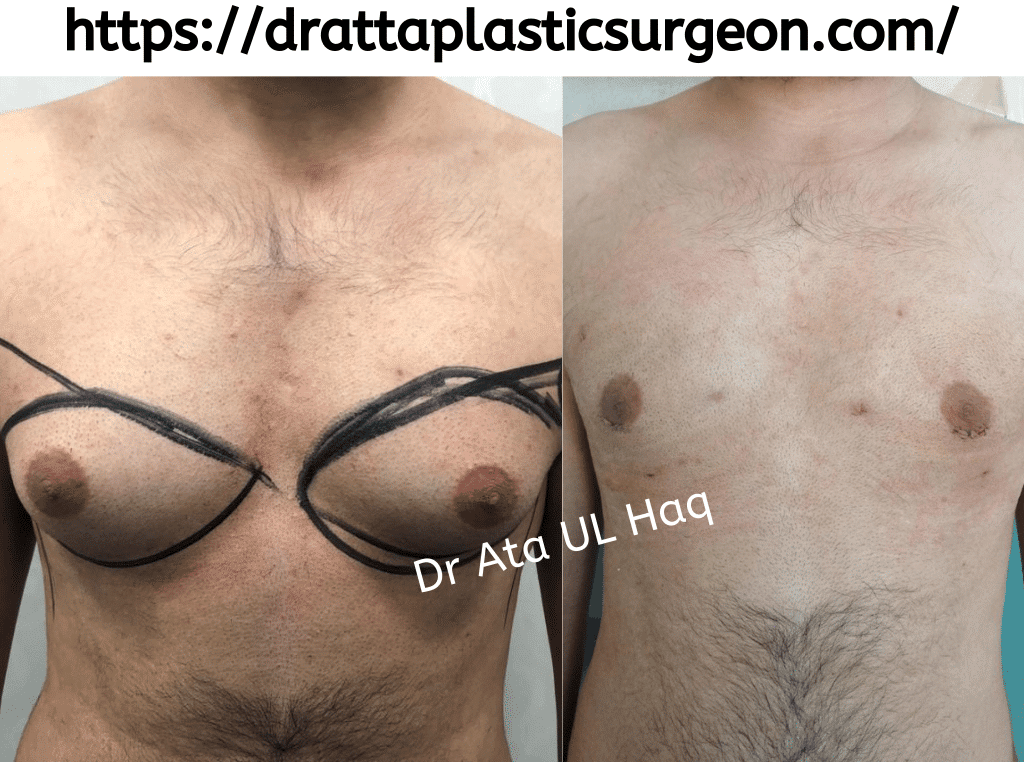
Gynecomastia surgery in Lahore is a male chest-contouring procedure designed to reduce enlarged breast tissue and create a flatter, more masculine chest profile. The procedure, commonly called male breast reduction surgery, may involve removing excess fat, glandular breast tissue, loose skin, or a combination of these tissues depending on the individual’s condition.
For men who have persistent gynecomastia that does not improve with weight management or treatment of an underlying cause, surgery can provide a long-term solution. The exact surgical approach is determined after a physical examination and consultation with a qualified plastic surgeon.
What Is Gynecomastia?
Gynecomastia refers to the development of enlarged breast tissue in males. It can affect one or both sides of the chest and may occur during adolescence or adulthood. Hormonal changes, genetics, obesity, certain medications, and some medical conditions can contribute to its development.
It is important to distinguish true gynecomastia from pseudogynecomastia, in which the enlargement is primarily caused by excess fatty tissue rather than an increase in glandular breast tissue. This distinction is particularly important when planning surgery because the treatment technique can differ.
Some men experience tenderness or sensitivity, while others are mainly concerned about the appearance of their chest. Gynecomastia can also affect confidence, clothing choices, exercise, and willingness to participate in activities where the chest is exposed.
How Does Gynecomastia Surgery in Lahore Work?
The surgical plan depends on the amount and type of tissue present. A surgeon may use liposuction, surgical excision, or a combination of both techniques.
1. Liposuction for Excess Fat
When chest enlargement is primarily caused by excess fatty tissue, liposuction may be sufficient. During this technique, the surgeon makes small incisions and inserts a thin cannula beneath the skin. The cannula is used to loosen and remove unwanted fat through controlled suction.
Liposuction can help refine the chest contour while keeping incisions relatively small. However, it does not remove firm glandular breast tissue, which is why it may not be appropriate as the only treatment for every patient.
2. Excision of Glandular Tissue
When firm glandular tissue is responsible for the enlargement, excision may be necessary. The surgeon makes an incision, often around the edge of the areola, to access and remove the unwanted breast tissue. The exact incision depends on the patient’s anatomy and the amount of tissue that needs to be removed.
Excision may also be necessary when there is excess skin or when the nipple or areola needs to be repositioned to achieve a more balanced chest contour.
3. Liposuction and Excision Combined
Many patients have both excess fat and glandular tissue. In these situations, liposuction and excision may be performed together.
This combination allows the surgeon to remove unwanted fatty tissue while also addressing the firmer glandular component. The objective is not simply to make the chest smaller but to create a smooth, proportionate contour.
What Happens During a Gynecomastia Surgery Consultation?
A detailed consultation is an important part of gynecomastia surgery in Lahore. Before recommending surgery, the surgeon should assess the patient’s overall health, medical history, medications, previous procedures, and goals.
The chest is examined to determine the amount of fatty tissue, glandular tissue, skin laxity, nipple position, and overall chest shape. Depending on the patient’s circumstances, additional diagnostic evaluation may be recommended to investigate the potential cause of breast enlargement.
Patients should also provide accurate information about medications, supplements, smoking, alcohol use, and anabolic steroid use because these factors can affect surgical planning and healing.
A consultation is also the right time to discuss expected results, incision placement, potential scarring, anesthesia, recovery, complications, and aftercare.
Who May Be a Suitable Candidate?
Gynecomastia surgery may be considered for men who have persistent breast enlargement and are physically healthy enough to undergo surgery.
Common characteristics of suitable candidates include:
- Stable breast development
- Relatively stable body weight
- Good general health
- Realistic expectations
- Persistent gynecomastia that has not adequately improved with other appropriate treatments
- A desire to improve chest appearance
- An understanding of the potential risks and recovery requirements
The American Society of Plastic Surgeons notes that suitable candidates should generally be healthy, have realistic expectations, and have relatively stable breast development.
Surgery is not necessarily the first step for every person with enlarged male breasts. If an underlying medication, hormonal issue, weight change, or other medical condition is contributing to the enlargement, addressing that factor may be considered before surgery.
How Should Patients Prepare for Gynecomastia Surgery?
Preparation varies according to the patient’s health and the surgeon’s instructions. A medical evaluation or laboratory testing may be recommended before surgery.
Patients may be advised to stop smoking and to avoid certain medications, aspirin, anti-inflammatory medicines, or herbal supplements that can increase bleeding risk. However, prescription medications should never be stopped without discussing them with the treating physician.
Patients should also arrange transportation home and appropriate assistance during the initial recovery period if required.
Following the surgeon’s preoperative instructions carefully can help reduce avoidable complications and support a smoother recovery.
What Type of Anesthesia Is Used?
The anesthesia approach depends on the procedure, the extent of correction, the patient’s health, and the surgeon’s preference.
Gynecomastia surgery may be performed using general anesthesia or intravenous sedation, depending on the circumstances. The appropriate option should be discussed during the preoperative consultation.
The surgical team will monitor the patient throughout the procedure to maintain comfort and safety.
How Long Does Gynecomastia Surgery Take?
The duration of surgery varies according to the amount of tissue being removed and whether liposuction, excision, skin removal, or a combination of techniques is required.
The procedure is often performed as an outpatient operation, although the appropriate setting depends on the individual case and the surgeon’s assessment.
After surgery, dressings or bandages are typically applied, and a compression or support garment may be recommended to support the healing chest and help manage postoperative swelling. In some cases, a temporary drain may be used to remove excess blood or fluid.
What Is Recovery Like After Male Breast Reduction Surgery?
Recovery is an important part of the overall treatment. Patients commonly experience some degree of swelling, bruising, tenderness, or temporary changes in sensation during the early healing period.
A compression garment may be recommended during recovery. The surgeon will provide instructions regarding wound care, medications, bathing, sleeping positions, physical activity, and follow-up appointments.
Strenuous exercise and heavy lifting should generally be avoided until the surgeon determines that the tissues have healed sufficiently. Returning to exercise too quickly can interfere with healing.
Every patient’s recovery is different, so the surgeon’s individualized instructions should take priority over generalized recovery timelines.
When Will the Results Become Visible?
The improvement in chest contour can often be seen relatively soon after surgery, but swelling can temporarily obscure the final appearance.
As healing progresses, swelling decreases and incision lines gradually become less noticeable. The American Society of Plastic Surgeons notes that final gynecomastia surgery results may take approximately three to six months to become fully apparent.
The goal is a flatter, more proportionate chest rather than simply removing as much tissue as possible. A skilled surgeon must consider the relationship between the chest, nipples, areolas, surrounding muscles, skin quality, and overall body proportions.
Will Gynecomastia Surgery Leave Scars?
Because gynecomastia surgery involves surgical incisions, some scarring is unavoidable. The location and visibility of scars depend on the technique used and the amount of tissue or skin requiring removal.
When appropriate, incisions may be positioned in less conspicuous areas or around the natural border of the areola. More extensive cases involving significant loose skin can require larger incisions.
Scars generally change and fade as they mature, but surgical scars are permanent. Patients should discuss their tolerance for scarring and the expected incision pattern with their surgeon before treatment.
What Are the Risks of Gynecomastia Surgery?
Like any surgical procedure, male breast reduction has potential risks. These can include bleeding, infection, scarring, asymmetry, changes in nipple or skin sensation, contour irregularities, fluid accumulation, and dissatisfaction with the cosmetic result.
The possibility of complications depends on factors such as the patient’s health, the extent of surgery, surgical technique, and postoperative care.
Patients should receive a clear explanation of potential complications before consenting to surgery and should promptly contact their surgical team if they develop concerning symptoms during recovery.
Can Gynecomastia Come Back After Surgery?
Gynecomastia surgery can provide long-lasting improvement, but results are influenced by the underlying cause and future changes in the body.
Significant weight gain, certain medications, anabolic steroid use, or other factors associated with breast enlargement can affect the long-term result. ASPS notes that maintaining a stable weight and addressing contributing factors can help preserve results.
For this reason, identifying and addressing the potential cause of gynecomastia is an important part of treatment planning.
How to Choose a Gynecomastia Surgeon in Lahore
Choosing the right surgeon is one of the most important decisions when considering gynecomastia surgery in Lahore. Patients should verify the surgeon’s qualifications, surgical training, experience with male breast reduction, operating facility, and approach to patient safety.
It is also useful to ask:
- How frequently do you perform gynecomastia surgery?
- Which technique would you recommend for my chest?
- Will I need liposuction, excision, or both?
- Where will the incisions be placed?
- What type of anesthesia will be used?
- How long should I expect to recover?
- What restrictions will I have after surgery?
- What complications should I watch for?
- What results can realistically be achieved in my case?
A qualified plastic surgeon should be willing to explain the procedure clearly and provide realistic expectations rather than promising a guaranteed result.
Final Thoughts on Gynecomastia Surgery in Lahore
Gynecomastia surgery in Lahore involves much more than simply removing excess chest tissue. The procedure is carefully planned according to whether enlargement is caused by fat, glandular tissue, loose skin, or a combination of these factors.
Depending on the patient’s anatomy, treatment may involve liposuction, glandular tissue excision, skin removal, or combined techniques. A thorough consultation helps determine the appropriate approach, while proper preparation and postoperative care support the healing process.
For men who continue to experience enlarged breasts despite appropriate non-surgical measures, male breast reduction can provide a significant improvement in chest contour. The safest approach is to have the condition properly evaluated and discuss the potential benefits, limitations, risks, scarring, recovery, and expected results with a qualified plastic surgeon before making a decision.