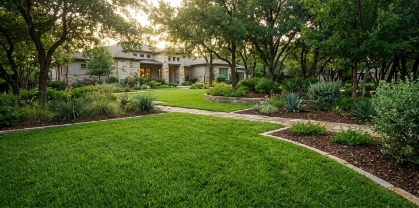
A green lawn can make a home look well cared for, but healthy grass is only one part of the picture. The condition of the soil, watering habits, mowing routine, drainage, shade, and surrounding landscape all influence how well a yard performs.
That is why lawn care Little Elm homeowners rely on should go beyond simply keeping grass short. A better approach looks at what is happening beneath and around the lawn, then builds a maintenance routine that supports healthier growth over time.
A Lawn Can Look Fine While Problems Are Already Developing
One of the easiest mistakes to make is judging lawn health entirely by appearance. Grass can remain green for a while even when its roots are struggling or the soil is becoming compacted.
Thin areas, uneven growth, standing water, and recurring weeds are often signs that something deeper needs attention. Simply mowing more frequently will not solve those issues.
Little Elm’s local landscape standards also recognize the importance of proper maintenance. Landscaping is expected to be kept neat and healthy, including mowing, edging, pruning, fertilizing, watering, and weeding.
Look for Patterns Instead of Isolated Problems
When one part of a lawn repeatedly struggles, homeowners should look for a reason.
A bare patch near a fence might receive too little sunlight. Grass beside a driveway might suffer from heat and reflected sunlight. A low section of the yard could stay wet after rain, while a raised area may dry out quickly.
Paying attention to these patterns makes lawn maintenance more productive because it allows homeowners to address causes rather than repeatedly treating symptoms.
Start With What Is Happening Beneath the Grass
Healthy turf begins below the surface. Roots need suitable soil, air, moisture, and room to develop. When soil becomes heavily compacted, water may have difficulty moving through it and roots may struggle to establish properly.
Check the Soil Before Changing the Lawn
Before replacing grass or adding large amounts of fertilizer, homeowners should consider the condition of the soil.
A simple inspection can reveal useful information:
- Does water soak into the ground or remain on the surface?
- Does the soil feel extremely hard when dry?
- Are roots shallow or poorly developed?
- Are some areas noticeably different from others?
These observations can point toward problems with compaction, drainage, grading, or soil quality.
In larger projects, soil preparation should happen before new turf is installed. A recent Town of Little Elm landscape plan, for example, specifies topsoil preparation for sod areas before installation, illustrating how much attention the growing surface can require before grass is placed.
Watering Is a Strategy, Not Just a Routine
Water is essential, but more water does not automatically mean healthier grass. Overwatering can be just as unhelpful as underwatering.
Little Elm currently has outdoor watering requirements that limit sprinkler or irrigation watering to twice per week during the April 1–October 31 conservation period, with no watering from 10 a.m. to 6 p.m. under the listed conservation stage. The town also provides a variance process for newly installed sod and plants that need additional water during establishment.
This makes efficient irrigation especially important for homeowners planning new lawn work.
Watch the Lawn and the Weather
A fixed watering schedule may not make sense throughout the year. Rainfall, temperature, wind, soil condition, and grass growth can all change the amount of moisture a lawn needs.
Homeowners should regularly inspect their irrigation system for broken heads, uneven coverage, overspray, or water pooling in one area.
An efficient system should put water where it is needed rather than spraying sidewalks, driveways, or areas that already remain wet.
The Right Grass Matters More Than Most People Think
Not every type of grass performs equally well in every location. Sun exposure, shade, soil conditions, traffic, and maintenance expectations all affect which turf is appropriate.
Choosing grass simply because it looks attractive in a photograph can create problems later.
Match Turf to the Property
A lawn receiving full sunlight has different needs from one growing beneath mature trees. Likewise, a backyard used heavily by children and pets may need a different approach from a decorative front lawn.
Before selecting turf, consider:
- Amount of direct sunlight.
- Typical foot traffic.
- Irrigation availability.
- Soil and drainage conditions.
- Expected maintenance level.
Little Elm’s landscape regulations identify turf grasses such as Bermuda, St. Augustine, and certain fescue or ryegrass blends among commonly recognized turf types.
The important point is not to choose a particular grass simply because it is popular. The better choice is the one suited to the specific conditions of the property.
Sod Installation Is More Than Laying Down Grass
When a lawn has extensive damage, homeowners may decide that repairing small sections is no longer worthwhile. In that situation, Sod installation can create a fresh, established lawn much faster than starting from seed.
But sod is not a shortcut around preparation.
Prepare the Site First
The old vegetation should be removed where necessary, the soil should be prepared, and grading should be corrected before the new turf is installed.
Poor preparation can leave the new lawn with the same drainage, compaction, or unevenness problems that affected the previous grass.
New sod also needs careful attention during establishment. Watering requirements can be different from those of an established lawn, which is one reason Little Elm specifically provides a process for requesting a watering variance for new sod when additional irrigation is necessary.
Give New Sod Time to Establish
A newly installed lawn may look finished immediately, but its root system still needs time to develop.
Avoid unnecessary traffic during the early stage and monitor the edges and seams for signs of drying. Proper establishment creates a much stronger foundation for later maintenance.
Mowing Should Protect the Grass, Not Just Shorten It
Mowing is one of the most visible parts of lawn maintenance, but the goal should not simply be to make the grass shorter.
Cutting too aggressively can stress turf, while allowing grass to become excessively tall can create another set of problems.
Keep the Cutting Routine Consistent
The ideal mowing frequency depends on growth rate, grass type, weather, and season. During periods of rapid growth, the lawn may need more frequent attention.
Mower blades should also be kept sharp. A clean cut is preferable to tearing the grass blades with dull equipment.
For homeowners searching for lawn mowing Little Elm TX, the important consideration is whether the mowing routine supports overall turf health rather than simply providing a quick weekly cut.
Little Elm also expects residential lawns to be maintained to the edge of the roadway, and its Good Neighbor Guide notes that grass and weeds above 12 inches are prohibited.
Edges and Borders Change the Whole Appearance
A lawn can be healthy and still look unfinished if the edges are poorly defined.
Clean transitions between turf, sidewalks, driveways, planting beds, and fences give the property a more organized appearance.
Make Edging Practical
Edging should create a clear boundary without unnecessarily damaging the grass. It is especially useful where lawn meets hardscape because it prevents grass from gradually spreading into pathways.
Defined planting beds can also reduce the amount of time spent trimming around individual plants.
The result is not only better curb appeal. It can also make future mowing and maintenance easier.
Landscaping and Lawn Care Should Work Together
A lawn should not be treated as an isolated feature. Trees, shrubs, planting beds, pathways, drainage, and turf all influence one another.
For example, a tree can provide valuable shade but eventually create conditions where grass struggles. A planting bed can improve the appearance of a yard but may also alter how water moves through the soil.
Give Every Area a Purpose
Not every square foot of a property needs to be grass.
Some difficult areas may work better as planting beds, groundcover, decorative stone, or another suitable landscape treatment. Little Elm’s landscape code allows groundcover and other landscape elements in certain applications while emphasizing vegetation coverage and erosion control.
A practical yard might include:
- Open lawn for recreation.
- Planting beds around the home.
- Trees for shade and structure.
- Walkways for regular foot traffic.
- Groundcover or other treatments in difficult lawn areas.
The objective is to put grass where grass can perform well instead of forcing turf into every available space.
Shade Can Change a Lawn’s Entire Strategy
One of the most common reasons homeowners struggle with grass is changing sunlight.
A young tree may initially have little effect on the lawn beneath it. Years later, its canopy can significantly reduce the amount of sunlight reaching the ground.
Plan Around Mature Trees
Before removing an established tree because the grass beneath it is struggling, consider whether the area could be redesigned.
A shaded planting bed, groundcover area, or seating space may be more practical than constantly trying to force turf to grow where conditions are no longer suitable.
Trees can also provide valuable cooling and visual structure, so preserving healthy mature trees may be an important part of long-term landscaping.
Drainage Problems Should Never Be Hidden
A new lawn can temporarily make a property look better, but it cannot solve poor drainage by itself.
If water repeatedly collects in the same location, homeowners should investigate why.
Watch the Yard After Heavy Rain
Take a walk around the property after rainfall and look for unusual water movement.
Pay attention to:
- Standing water near the house.
- Muddy areas that remain wet.
- Runoff cutting through lawn sections.
- Soil erosion near slopes.
- Areas where grass repeatedly dies.
Little Elm’s landscaping standards emphasize erosion control and proper landscape coverage, and the town’s regulations also address irrigation and drainage-related considerations.
Correcting the underlying water problem before installing new turf can save homeowners from repeating the same repair.
Fertilizer Should Have a Reason Behind It
Fertilizing simply because the lawn looks less green can sometimes create more problems than it solves.
Grass needs nutrients, but the amount and timing should reflect actual conditions.
Avoid Guesswork
Before applying fertilizer, homeowners should consider whether poor color is really a nutrient issue. Water stress, compacted soil, disease, shade, or mowing problems can create similar symptoms.
Applying more fertilizer will not fix an irrigation problem or make unsuitable grass thrive in deep shade.
A balanced lawn care plan uses fertilization as one tool rather than treating it as the answer to every lawn problem.
Weeds Often Point to Weak Turf
Weeds are easier to manage when the underlying lawn is dense and healthy.
If grass becomes thin, bare soil creates opportunities for unwanted plants to establish.
Treat the Cause Along With the Weed
Instead of focusing only on visible weeds, ask why the grass is struggling in that location.
Possible reasons include:
- Insufficient sunlight.
- Poor watering.
- Compacted soil.
- Heavy traffic.
- Incorrect mowing.
- Seasonal stress.
Improving the conditions for healthy grass can make long-term weed management easier.
Professional Maintenance Can Bring Consistency
Some homeowners enjoy doing their own yard work. Others would rather spend their weekends doing something else.
Professional lawn care can be useful when regular mowing, edging, seasonal maintenance, irrigation concerns, and landscaping tasks become difficult to keep up with.
The Grounds Guys of little elm can help homeowners maintain their outdoor spaces through professional lawn and landscape services. The real advantage of professional assistance is often consistency: regular attention can make it easier to notice changes before small lawn problems become expensive renovation projects.
A Good Lawn Care Plan Should Change With the Seasons
There is no reason to treat the lawn exactly the same way every month.
Growth rates change, temperatures shift, rainfall varies, and trees may create different levels of shade throughout the year.
Adjust the Routine When Conditions Change
A useful seasonal approach might include:
Spring: Check irrigation, inspect winter damage, address weeds, and prepare the lawn for active growth.
Summer: Pay close attention to heat stress, mowing practices, irrigation efficiency, and areas receiving heavy traffic.
Fall: Clean up leaves, monitor turf condition, and prepare the landscape for cooler weather.
Winter: Reduce unnecessary mowing and focus on protecting the lawn and landscape from avoidable damage.
The exact schedule will vary by property, but the principle remains the same: maintenance should respond to the lawn instead of forcing the lawn to follow an identical routine all year.
Think About Maintenance Before Making Improvements
A common mistake is designing a landscape that looks fantastic but is difficult to maintain.
A yard with dozens of tiny planting beds, narrow lawn strips, inaccessible corners, and plants requiring different care can quickly become a burden.
Design for the Future
Before adding a new feature, consider how it will affect maintenance five years from now.
Will the tree block the pathway when mature? Will the shrub overtake the planting bed? Will the lawn become difficult to mow? Will irrigation still reach the area after plants grow?
These questions may seem minor during installation, but they can make a significant difference over time.
Consistency Beats Occasional Rescue Work
A lawn does not become healthy because it receives one major cleanup each year. Consistent maintenance usually provides better long-term results.
Regular mowing, timely watering adjustments, early weed management, irrigation checks, and seasonal observation can prevent many problems from becoming severe.
This does not mean homeowners need to spend every weekend working outside. It means the lawn should receive appropriate attention before problems have a chance to grow.
Common Lawn Care Mistakes to Avoid
Even homeowners with good intentions can make choices that gradually weaken the lawn.
Some of the most common include:
- Mowing much shorter than necessary.
- Watering without checking soil moisture or rainfall.
- Ignoring drainage problems.
- Planting turf in unsuitable shade.
- Applying fertilizer without understanding the cause of poor growth.
- Waiting until large sections of grass die before taking action.
None of these mistakes is difficult to understand. The challenge is recognizing that lawn health is connected to several different factors at once.
Consider the Yard as a Long-Term System
The best lawn is not necessarily the greenest lawn for one particular week. It is the lawn that remains attractive and manageable as conditions change.
Trees mature. Families use yards differently over time. Irrigation systems age. Soil can become compacted. Landscape plants expand.
A long-term approach allows homeowners to adapt rather than constantly start over.
Build Around What the Property Can Sustain
A landscape should fit the conditions of the property and the amount of maintenance the homeowner can realistically provide.
If a large lawn requires more water and work than the household wants to manage, reducing difficult turf areas may make sense. If a backyard is heavily shaded, redesigning part of it may be more practical than repeatedly replacing grass.
Good lawn care is ultimately about making informed choices rather than chasing perfection.
Conclusion
There is much more to lawn care Little Elm than keeping grass green and cutting it regularly. A healthy yard depends on what happens beneath the turf, how water is managed, how mowing is performed, which plants surround the lawn, and whether the overall landscape fits the property.
For some homeowners, improving existing soil and maintenance habits may be enough. Others may benefit from Sod installation, irrigation improvements, landscape changes, or professional maintenance. The right solution depends on the actual condition of the yard.
The biggest difference comes from looking beyond the surface. When homeowners understand why their lawn behaves the way it does, they can make smarter decisions about watering, mowing, planting, soil, and long-term maintenance.
A truly successful lawn is not simply one that looks green after a fresh cut. It is one that has been planned, maintained, and adapted to the property over time.
Frequently Asked Questions
What does lawn care include besides mowing?
Lawn care can involve watering, edging, weed management, fertilization, soil improvement, seasonal cleanup, irrigation checks, and monitoring turf health. The exact needs depend on the property and grass type.
Is Sod installation a good option for a damaged lawn?
It can be. Sod is particularly useful when large areas are severely damaged or when homeowners want an established lawn faster than growing grass from seed. Proper soil preparation remains essential.
How often should a Little Elm lawn be mowed?
There is no universal schedule because grass growth changes with season, weather, and turf type. Mowing should be based on growth rather than cutting the lawn extremely short on a fixed schedule.
Why does my grass struggle beneath trees?
Reduced sunlight is a common reason. As trees mature, their canopies can significantly change the growing conditions underneath them, so a shaded area may eventually need a different landscape treatment.
How can I reduce water waste?
Inspect irrigation regularly, correct overspray and broken sprinkler heads, adjust watering according to weather, and choose plants and turf that fit the property’s conditions. Little Elm also publishes current watering requirements that homeowners should check.
When should I consider professional lawn care?
Professional help can make sense when regular maintenance becomes difficult, the lawn has recurring problems, irrigation needs attention, or a property requires several landscaping services to work together.