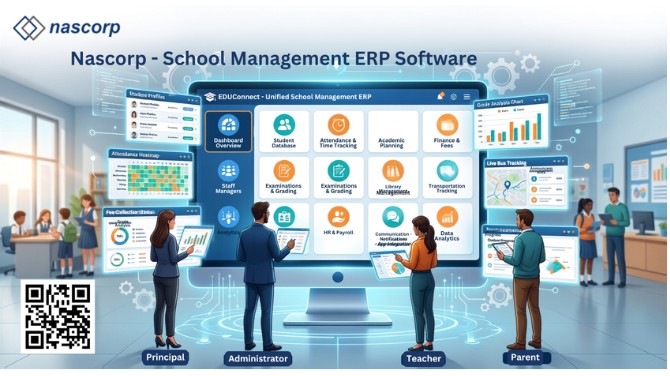
Managing student information is one of the most important responsibilities of every educational institution. From admission details and parent information to attendance, academic performance, examination results, documents, and fee records, schools handle a large amount of student data throughout the academic year. When this information is maintained through paper files, registers, and multiple spreadsheets, finding accurate information can become time-consuming and difficult.
An Online Student Record Management System for Schools provides a centralized digital environment where schools can organize, update, and access student information efficiently. Modern student information systems are designed to bring student profiles, attendance, academic records, documents, communication, and other relevant information together in one searchable platform.
What Is an Online Student Record Management System?
An Online Student Record Management System is a software solution that allows schools to digitally store and manage student information. Instead of maintaining separate physical files for every student, authorized school staff can access relevant information through a centralized database.
A complete student profile may include personal details, admission information, parent or guardian contacts, class and section, attendance history, academic performance, examination results, documents, fee information, and other school-related records.
Because information is maintained digitally, authorized users can search and retrieve records without spending valuable time looking through physical registers or disconnected files.
Why Schools Need Digital Student Record Management
As schools grow, student data becomes increasingly difficult to manage manually. A school with hundreds or thousands of students may need to maintain records across multiple departments. When information is stored in separate registers or spreadsheets, staff may have to repeatedly enter or verify the same information.
A centralized system helps create a single source of student information. This can improve consistency, make information easier to retrieve, and reduce repetitive administrative work. Student information systems are increasingly used to connect records such as admissions, attendance, academic history, fees, and communication.
For private schools, this can be particularly useful because administrators need quick access to accurate information for daily operations, parent queries, academic reviews, reporting, and administrative decision-making.
Key Features of an Online Student Record Management System
1. Centralized Student Profiles
A digital system can maintain a comprehensive profile for every student. Administrators can store personal information, admission details, parent contacts, class information, photographs, documents, and academic history in one location.
This eliminates the need to search through multiple files whenever information about a student is required.
2. Digital Admission Records
Student information can be captured during the admission process and subsequently used across different school departments. This reduces duplicate data entry and helps maintain consistency throughout the student’s academic journey.
Digital admission workflows can also make it easier for schools to organize applications, enrollment information, and supporting documents.
3. Attendance Records
Attendance is an essential part of student records. A digital system can maintain daily, monthly, and yearly attendance information and connect it with the student’s profile.
Teachers and administrators can access attendance information when required, while management can use reports to identify attendance patterns and support appropriate follow-up.
4. Academic Performance Management
An effective student record system can maintain academic information including examination marks, assessments, report cards, and performance history.
Keeping academic information connected to the student’s main profile gives teachers and administrators a more complete view of student progress.
5. Digital Document Management
Schools handle numerous documents during a student’s academic lifecycle. These may include admission documents, identification records, certificates, photographs, transfer documents, and other supporting files.
Digital document storage can help schools organize these records and make them easier for authorized staff to retrieve when required.
6. Class and Section Management
Student records can be organized according to classes and sections. When students move to the next academic year, their historical information can remain connected to their profile.
This helps schools maintain continuity instead of creating completely new records every academic year.
7. Reports and Analytics
School administrators frequently need reports for internal management, parent meetings, academic reviews, and administrative requirements.
A digital student management platform can make it easier to generate reports based on available student information. Centralized data also supports better visibility into student and school operations.
Benefits of an Online Student Record Management System
Saves Administrative Time
Searching through paper files and updating multiple spreadsheets can consume significant administrative time. A centralized digital system allows authorized staff to find student information through searches and organized profiles.
Reduces Paperwork
Digital records can reduce dependency on physical registers and files. Schools can maintain important information electronically while reducing the amount of paper required for routine record management.
Improves Data Organization
When student information is stored in a structured database, staff can access relevant details without searching through multiple sources. This creates a more organized approach to record management.
Supports Better Decision-Making
School management can use centralized student information to understand academic performance, attendance, and other relevant trends. Having complete information available can support more informed administrative decisions.
Improves Parent Communication
When student information is maintained centrally, school staff can respond to parent queries more efficiently. Digital systems can also connect student records with communication features, depending on the platform being used.
Provides Better Accessibility
Online systems can allow authorized users to access relevant information from supported devices and locations. Role-based access can help ensure that users only see information appropriate to their responsibilities.
Student Record Management for Private Schools
Private schools often manage a wide range of academic and administrative responsibilities simultaneously. As enrollment increases, manual student record management can become increasingly difficult.
An online system can help private schools create a structured digital environment for managing student information. Administrators can maintain centralized records while teachers and other authorized staff can access the information needed for their roles.
For schools planning broader digital transformation, student record management can also become an important component of a complete School ERP. A full School ERP can connect student information with attendance, fee management, examinations, communication, administration, and other operational modules.
Choosing the Right Student Record Management System
Before selecting an online student record management solution, schools should evaluate their specific requirements. The system should be easy for administrators and teachers to use and should support the school’s existing workflows.
Important factors to consider include:
- Centralized student database
- Easy student search and filtering
- Attendance integration
- Academic record management
- Digital document storage
- Class and section management
- Reporting capabilities
- Role-based access
- Data security
- Backup and recovery
- Mobile or web accessibility
- Integration with other school modules
- Data migration support
- Technical assistance and training
- Scalability for future growth
Schools should also consider whether they need a standalone Student Information System or a complete School ERP that connects student records with other school operations.
How Digital Records Improve School Administration
The value of digital student records goes beyond simply replacing paper. When student information is connected across different processes, schools can create more efficient workflows.
For example, information entered during admission can become part of the student’s ongoing profile. Attendance can be connected to the same student record, while academic results and other relevant information can be maintained throughout the student’s time at school.
This connected approach can reduce duplicate data entry and help staff work with consistent information. A centralized student record can effectively become a single source of information for authorized school users.
Data Security and Access Control
Student records contain important personal and academic information, so schools should pay close attention to security when selecting a digital platform.
A suitable system should provide controlled access so that administrators, teachers, and other users can only access information relevant to their roles. Secure authentication, appropriate permissions, backups, and responsible data-management practices should be considered during implementation.
Schools should also establish clear internal policies regarding who can access, update, export, and manage student information.
Conclusion
An Online Student Record Management System for Schools can help educational institutions move away from scattered paper files and spreadsheets toward a more organized digital approach. By centralizing student profiles, admissions, attendance, academic records, documents, and other information, schools can improve accessibility, organization, and administrative efficiency.
For private schools looking to modernize their operations, a digital student record system can be an important first step toward broader school automation and digital transformation. When integrated with a complete School ERP, student information can become connected with fees, examinations, communication, attendance, administration, and other essential school functions.
The right solution should be secure, scalable, easy to use, and aligned with the school’s operational requirements. With an effective digital platform, schools can spend less time managing paperwork and more time focusing on students, teachers, and delivering a better educational experience.
Take the Next Step Toward Digital Student Management
If your school is still managing student records through paper files or multiple spreadsheets, it may be time to explore a centralized digital solution.