A small living room does not mean you have to compromise on comfort or style. The key is choosing furniture that fits the available space while still giving you enough room to relax and move around comfortably.
From compact two-seater sofas to reclining designs and occasional armchairs, there are plenty of options for smaller homes. However, the sofa that looks compact online may feel quite different once it is in your living room. This is why measurements, layout and everyday use should all be considered before making a decision.
Whether you are furnishing a flat, updating a cosy lounge or making better use of a smaller sitting room, this guide will help you choose seating that works for your space.
Quick Answer: What Sofa Works Best in a Small Living Room?
The best sofa for a small living room is one that fits comfortably within your available floor space without restricting movement. Start by measuring the room and checking the sofa’s overall width, depth and height.
A compact two-seater is often a practical choice, while a 2 seater recliner sofa can provide additional comfort if you have enough room for the reclining mechanism. You can also pair a sofa with a small leather armchair when you need extra seating without adding another large sofa.
For larger rooms, a 2 and 3 seater sofa set can provide more seating while keeping the overall arrangement coordinated.
Start With Your Room Measurements
Before looking at colours, fabrics or styles, measure the space available for your new sofa.
Measure the length and width of the room and make a note of anything that could affect where the sofa can go. This includes doors, windows, radiators, fireplaces, television units and existing furniture.
It is also worth marking the sofa’s footprint on the floor using masking tape. This simple step can show whether there is enough space for people to walk around it and whether your coffee table or other furniture will still fit comfortably.
Remember that a sofa should not simply fit into the room. It should leave enough usable space around it for everyday movement.
Look Beyond the Two-Seater Label
A two-seater sofa can be a good option for a compact living room, but the term does not tell you how much floor space the sofa actually requires.
Two sofas with the same seating capacity can have very different dimensions. One may have slim arms and a relatively shallow seat, while another may have wide arms, deep cushions and a larger frame.
When comparing sofas, check:
- Overall width
- Overall depth
- Overall height
- Seat depth
- Seat width
- Arm width
- Back height
- Clearance required around the sofa
Depth is particularly important in a smaller room. A deep sofa can extend further into the living area and reduce the space available for a coffee table or walkway.
Consider a 2 Seater Recliner Sofa for Everyday Comfort
If you enjoy putting your feet up while watching television or relaxing after a long day, a 2 seater recliner sofa can be a practical choice.

Unlike a standard sofa, a recliner needs additional space when the footrest and backrest are extended. This means you need to consider both the sofa’s normal footprint and the space it occupies when fully reclined.
Before choosing one, check:
- Closed dimensions
- Fully reclined dimensions
- Wall clearance
- Footrest extension
- Space between the sofa and coffee table
- Manual or powered operation
- Power socket position for electric models
If you are considering a recliner for a compact room, mark the extended footprint on the floor before ordering. This will give you a better idea of whether people can still move comfortably around it.
Add an Armchair Without Overcrowding the Room
A second sofa is not always necessary when you need more seating. An armchair can give you another comfortable seat while taking up less space than a full-sized sofa.
A small leather armchair can work particularly well beside a compact sofa or in an unused corner. It can also introduce a different texture to the room while complementing your main seating.
When choosing an armchair, look at its actual measurements rather than assuming that every armchair is suitable for a small room.
Consider where it will be placed and leave enough room around it for people to sit down and move between the different seating areas.
Would a 2 and 3 Seater Sofa Set Work?
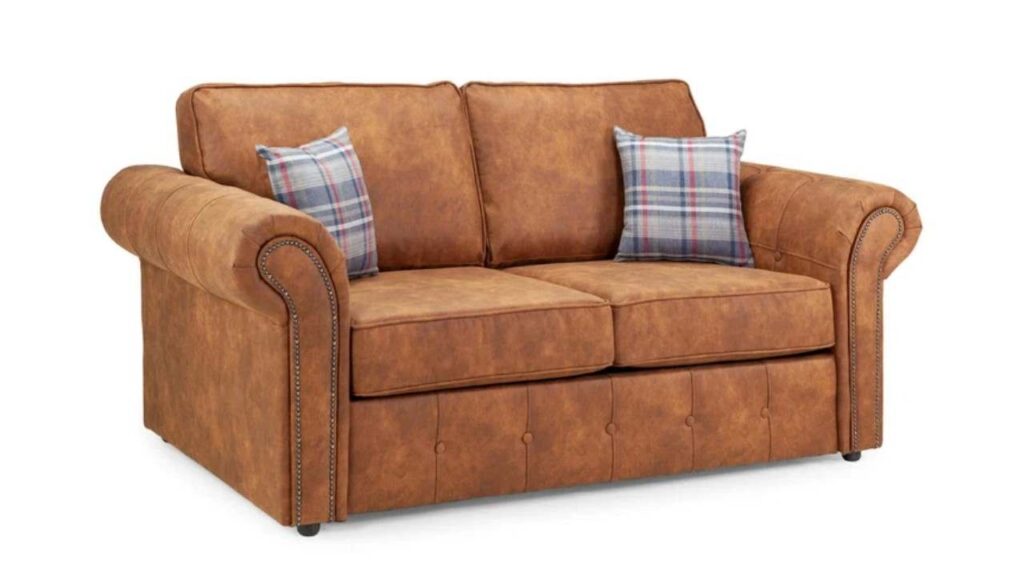
If you have a little more room available, a 2 and 3 seater sofa set can be a useful way to create a coordinated seating arrangement.
A three-seater can work well along the longest wall, while the two-seater can sit at an angle or opposite it. However, this type of arrangement needs more planning than simply checking whether both sofas fit individually.
Measure the combined footprint of the sofas and consider the space between them.
| What to consider | Why it matters |
|---|---|
| Combined width | Ensures both sofas fit comfortably |
| Sofa depth | Prevents the room feeling cramped |
| Gap between sofas | Allows easy movement |
| Coffee table space | Keeps the seating area practical |
| Door access | Prevents blocked entrances |
| Walkways | Maintains comfortable movement |
If your room is particularly narrow, a two-seater combined with an armchair may provide a better balance between seating and available floor space.
Choose the Right Sofa Shape
The shape of your living room should influence the type of sofa you choose.
A straight sofa can work well against a long wall and is often easier to position in a compact room. A corner sofa can make good use of an available corner, but it requires you to measure both sides carefully.
Reclining sofas need additional consideration because their usable footprint changes when the seats are extended.
Think about the room first, then choose the sofa shape that works with it rather than trying to make the room work around the sofa.
Choose Upholstery Based on Your Lifestyle
Once you have found a suitable size and shape, consider the upholstery.
Fabric, leather, velvet and textured finishes can all create different looks and have different care requirements. Your choice should depend on how you use the sofa as well as the appearance you want.
For example, a busy household may prioritise easy everyday maintenance, while someone furnishing a formal sitting room may place more emphasis on texture and appearance.
Before purchasing, check the manufacturer’s care instructions for the specific material. Do not assume that every upholstery type can be cleaned in the same way.
Think Carefully About Colour
Colour can change the character of your living room, even though it does not change the physical size of the space.
Neutral shades such as beige, cream, warm grey and taupe can work with a wide range of interiors. Darker shades can provide stronger contrast, while richer colours can make the sofa a focal point.
Rather than choosing a colour simply because it is recommended for small rooms, consider the rest of your décor.
Look at your:
- Walls
- Flooring
- Curtains
- Rugs
- Existing furniture
- Lighting
If possible, view upholstery samples in natural and artificial light before making your final decision.
Plan the Complete Seating Layout
A sofa may fit against a wall but still make the room awkward to use if the rest of the furniture is not considered.
Think about where your coffee table, television, side tables and other furniture will go. Make sure doors can open fully and that the main walking routes remain clear.
For example, a compact sofa and armchair can create a comfortable seating area without filling every wall with furniture.
In an open-plan space, a sofa can also help separate the living area from the dining or kitchen area. However, floating a sofa away from the wall uses more floor space, so this arrangement may not suit every compact room.
Check Delivery Access Before Ordering
One detail that is easy to overlook is getting the sofa into your home.
Measure the complete route from the outside entrance to the room where the sofa will be placed. This may include:
- Front door
- Internal doorways
- Hallways
- Stairs
- Landings
- Lift doors
- Narrow corners
- Final access into the living room
Also check the packaged dimensions where they are available.
Do not assume that the sofa can be dismantled to make delivery easier. Feet, arms and backs may or may not be removable depending on the individual model.
Should You Buy Online or Visit a Furniture Store?
When viewing furniture, you can check the seat depth, cushion support, arm height and overall proportions before making your decision.
If you visit a showroom, take your room measurements with you. This allows you to compare the furniture’s actual dimensions with the space available at home.
For online purchases, pay close attention to the product specifications rather than relying only on photographs.
Test Comfort Before Making Your Decision
A sofa is something you are likely to use every day, so comfort should be just as important as appearance.
If you are visiting a showroom, sit on the sofa in your usual position. Check whether your feet rest comfortably, whether the seat feels supportive and whether the back provides the level of support you prefer.
For reclining furniture, test the mechanism if possible. Check how easily it operates and make sure the fully extended position works within your room layout.
A sofa can look perfect but still not feel right once you sit on it.
A Simple Sofa-Buying Checklist
Before placing your order, work through these points:
- Measure the available room space.
- Check the sofa’s overall width and depth.
- Consider the seat depth and arm width.
- Plan where your other furniture will go.
- Check reclining clearance if buying a recliner.
- Choose upholstery that suits your lifestyle.
- Compare colours with your existing décor.
- Measure doorways and the complete delivery route.
- Check packaged dimensions where available.
- Test the sofa for comfort if possible.
- Review the product specifications carefully.
Final Thoughts
Choosing a sofa for a small living room is about finding the right balance between comfort, size and practicality. Instead of choosing furniture based only on its appearance or seating capacity, consider how it will work within your entire room.
A 2 seater recliner sofa can be an excellent option when comfort is a priority and there is enough space for the reclining mechanism. A small leather armchair can provide additional seating without taking up the room required by another sofa. If you have more space available, a 2 and 3 seater sofa set can create a coordinated and comfortable seating area.
At Furniture Island, take time to compare your options, check the measurements and think about how you will use the room every day. The right sofa should not just fit your living room; it should fit naturally into your lifestyle.
FAQs
What size sofa is best for a small living room?
There is no single ideal size because every room is different. Measure the available area first and compare the sofa’s complete width and depth with your layout.
Is a 2 seater recliner sofa suitable for a small room?
It can be, provided there is enough space for the seats to recline fully. Always check both the closed and extended dimensions before buying.
Can I use an armchair with a two-seater sofa?
Yes. A compact armchair can provide additional seating while keeping the overall furniture arrangement more flexible.
Is a 2 and 3 seater sofa set too large for a small living room?
It depends on the room’s dimensions. Measure both sofas together and make sure there is still sufficient space for walkways, tables and access.
What should I measure before ordering a sofa?
Measure the available floor space as well as the complete delivery route, including doors, hallways, stairs, corners and lifts where applicable.