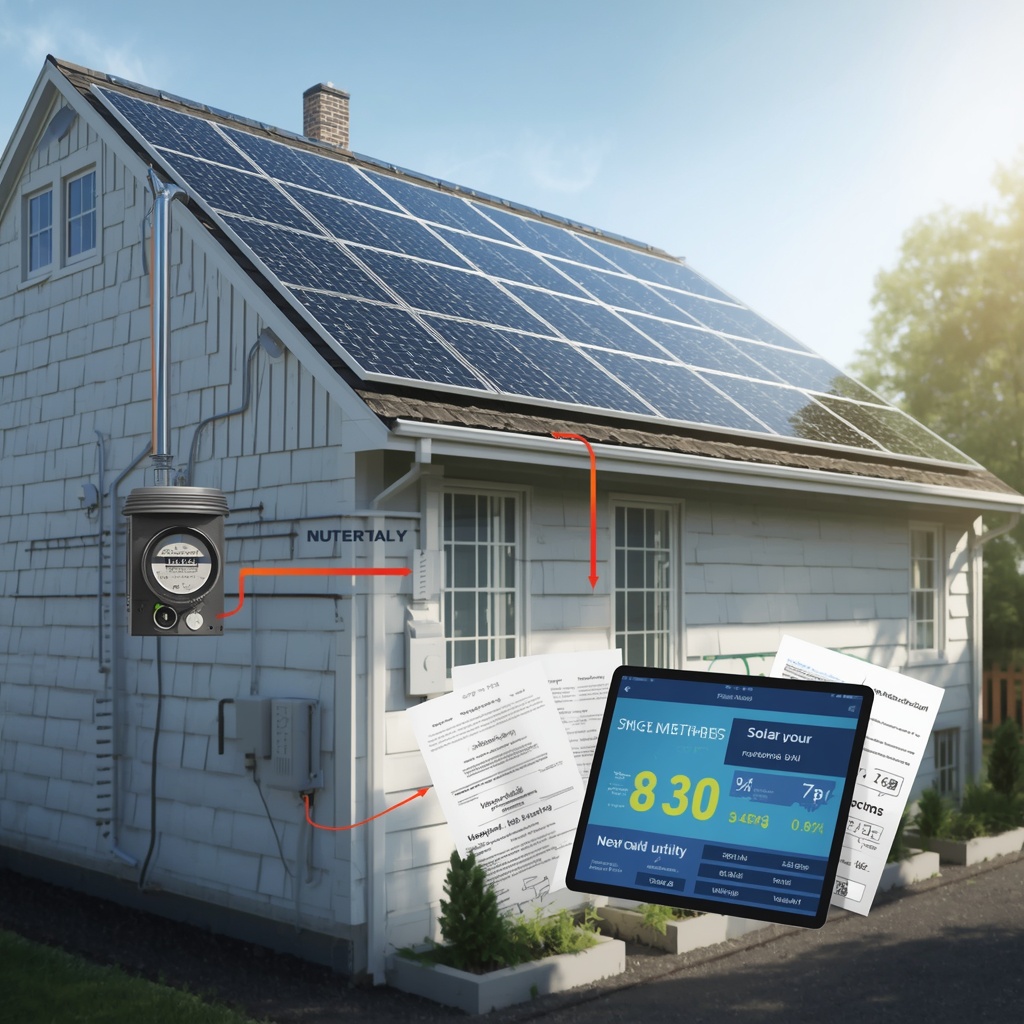
Before a single panel goes on a roof, a solar project already has a fate decided by paperwork that most homeowners never see. That paperwork starts with solar plan sets, and how carefully they are built often determines whether a project sails through review or sits stuck for weeks. Because reviewers compare these documents line by line against code requirements, even a small inconsistency can send an entire submission back to square one. Something as minor as a mismatched panel count between the site plan and the electrical diagram is often enough to trigger a formal rejection notice. This is exactly the kind of friction that PTOEdge was built to remove, since a project’s timeline should depend on installation quality, not paperwork errors.
In the sections ahead, we will unpack why plan accuracy matters so much, how permitting expectations shift from one city to the next, and what installers can do to keep utility approval on track from the very first submission. We will also look at how documentation, engineering review, and final authorization all connect as one continuous process rather than separate hurdles to clear individually. Understanding that connection early tends to save installers far more time than treating each stage as an isolated task to check off.
Frustrated by plans that keep bouncing back from reviewers? Get PTOEdge’s team on your next submission and stop losing weeks to avoidable corrections.
What Makes a Plan Set Genuinely Reliable
A reliable plan is not just a set of drawings; it is a precise translation of an actual roof, an actual electrical panel, and an actual utility connection. Consequently, when solar plan sets are copied from a previous job instead of drafted for the specific site, small mismatches creep in that reviewers are trained to catch. Because these documents drive everything from permit approval to final inspection, treating them as a formality rather than a foundation tends to backfire quickly. Reviewers are not looking for perfection in a stylistic sense; they are checking whether the numbers, layouts, and calculations genuinely hold up under code. Well-prepared pv plan sets show exact module placement, conduit runs, and structural load calculations that match precisely what crews install in the field. Furthermore, since equipment specifications change frequently, plans built around outdated datasheets can trigger rejections even when the underlying design is otherwise sound. Manufacturers update inverter and module specifications more often than many installers expect, so a plan drafted even a few months earlier can reference equipment that no longer matches what actually ships to the job site.
How Solar Plan Sets Shape Everything Downstream
Once a plan set reaches a reviewer’s desk, its quality determines almost everything that happens next in the solar plan sets approval chain. A clean, code-compliant submission tends to move through permitting quickly, while a rushed one usually triggers comments that add days or weeks to the timeline. Therefore, installers who invest extra time upfront on plan accuracy typically save far more time later by avoiding resubmission cycles entirely. That upfront investment often feels slower in the moment, yet it consistently proves faster once the full project timeline is measured start to finish. Because permit approval feeds directly into inspection scheduling, an early mistake can quietly ripple all the way through to a delayed authorization to operate. What looks like a minor drafting error on day one can easily become a multi-week setback by the time it reaches the utility’s final review stage. This is precisely why experienced teams treat plan review as a critical checkpoint rather than a box to check quickly on the way to installation.
Because reviewers are trained to catch even small inconsistencies, a document that looks complete at first glance can still contain the kind of mismatch that triggers a full round of revisions.
Every City Plays By Different Rules
No two permitting departments interpret solar codes identically, and that inconsistency catches many installers off guard. For example, a general submission checklist built for solar permit services san diego projects may not satisfy a reviewer working a few counties over. Meanwhile, pto solar approvals hinge on utility-specific interconnection standards, which vary based on system size, meter configuration, and available grid capacity. Two neighboring homeowners on different utility accounts can face entirely different interconnection timelines even when their systems are nearly identical in size and design. Similarly, permission to operate services must be tailored to whichever utility governs a given address, since there is no universal template that satisfies every provider. Long before construction begins, a well-structured solar sales proposal helps homeowners understand that installation day is not the same as authorization day, which prevents frustration later in the process. Setting this expectation clearly at the point of sale also reduces the number of follow-up calls installers field once a project reaches the permitting stage.
Once panels are mounted, Solar panel stamping from a licensed structural engineer often becomes the next required step, confirming the roof can safely handle the added load. Skipping or rushing this review is one of the most common reasons a completed installation still cannot move forward toward final sign-off. Homeowners rarely see this part of the process, yet it directly protects them and the installer if any structural questions come up later.
Where Solar Plan Sets Meet Local Code Requirements
At this stage, it becomes clear why solar plan sets cannot be treated as generic paperwork; they have to reflect the exact code cycle and interpretation used by the reviewing jurisdiction. Because some cities adopt updated fire, structural, or electrical codes faster than others, a plan built for last year’s standard can be rejected outright even if it would have passed twelve months earlier. As a result, staying current on local requirements is not optional for anyone who wants predictable turnaround times. Installers who track code changes as they happen, rather than discovering them mid-review, consistently see fewer surprise rejections across their project pipeline.
Getting Permit Design & AHJ Compliance Right
Authorities Having Jurisdiction, or AHJs, each apply their own standards for setbacks, rapid shutdown requirements, and structural documentation. Therefore, Permit Design & AHJ Compliance has to be handled on a jurisdiction-by-jurisdiction basis rather than through a one-size-fits-all approach. Since amendments to fire and electrical codes happen on a rolling basis across different regions, keeping documentation current takes deliberate, ongoing attention. Subscribing to code update notices or working with a partner who tracks these changes can prevent a plan from becoming outdated without anyone noticing. A submission that satisfies AHJ requirements on the first attempt avoids the resubmission loop that so often adds unnecessary weeks to a project. Even a single overlooked setback requirement can be enough to trigger a full round of revisions, so double-checking these details before submission is always worth the extra effort. In the long run, this discipline is what separates installers who move quickly through permitting from those who repeatedly get stuck at the review counter. Building that discipline into a standard workflow, rather than relying on individual staff memory, makes the process far more resilient as teams grow and turn over.
Where Projects Commonly Get Stuck
Even well-run solar companies hit predictable snags, and recognizing them early makes a real difference. Homeowners associations, for instance, frequently maintain their own placement and aesthetic rules, so reviewing hoa solar panel guidelines before submitting plans helps avoid pushback that has nothing to do with code compliance. Homeowners also want clarity on how their bill will change, which makes explaining solar net metering and solar panels net metering policies part of an honest sales conversation from day one. Battery-equipped systems introduce yet another layer, since battery energy storage permitting usually requires separate fire safety and clearance documentation beyond the standard solar package. Because these issues surface so often, addressing them before submission rather than after a rejection keeps projects moving on a predictable schedule. Installers who walk homeowners through these details during the sales conversation tend to face far less pushback once the project actually reaches installation and inspection.
Want a second set of eyes before your next submission goes out? Send your project details to PTOEdge and catch potential rejections before a reviewer ever sees them.
Documentation Practices Behind Sustainable Growth
Scaling a solar installation business depends less on closing more deals and more on processing approvals without letting quality slip. A dependable PTO application process, paired with thorough pv permit services, lets growing companies handle higher volume without a corresponding spike in rejections. Because Solar Installer Growth depends on repeatable systems, a consistent approach to plan sets, permitting, and engineering stamps removes guesswork as a company expands into new markets. A trustworthy solar stamping service keeps structural sign-off from becoming a seasonal bottleneck when installation volume peaks. During high-demand months, having a dependable engineering partner on call can be the difference between a same-week turnaround and a frustrating multi-week wait. At the same time, reliable solar permit service support and accurate plan documentation reduce friction earlier in the process, meaning fewer projects sit stalled waiting on paperwork corrections. Fewer stalled projects also means a more predictable revenue cycle, since cash flow tends to depend heavily on how quickly completed installations move to final authorization. Together, plan accuracy, engineering review, and pto services form the foundation that lets installers scale without compromising on quality or turnaround time. Companies that build this foundation early tend to grow far more predictably than those forced to fix documentation gaps after volume has already increased.
For further reading, PTOEdge’s guide on whether a permit is required for solar installation covers the basics clearly, and it pairs well with their explainer on HOA rules for solar panels, their breakdown of battery backup permitting, and their overview of how net metering actually works across different utility territories. Reviewing these resources ahead of time helps installers anticipate common homeowner questions instead of fielding them for the first time mid-project.
Ready to make plan set errors a thing of the past? Schedule a walkthrough with PTOEdge and see what a clean, code-ready submission process actually looks like.
Frequently Asked Questions
Why do solar plan sets matter more than most homeowners realize?
Because reviewers approve or reject projects based on how accurately these documents reflect the actual site and equipment.
How does solar permit services san diego work differ from other regions?
Local reviewers apply their own formatting and documentation standards, so regional familiarity helps avoid preventable rejections.
Is Solar panel stamping always required before final approval?
Most jurisdictions require a licensed engineer’s stamp confirming the mounting structure can safely support the array’s weight.
What extra documentation does battery energy storage permitting typically need?
It usually requires separate fire safety and clearance paperwork that standard solar-only permits do not include.
Can hoa solar panel guidelines cause delays even after a city permit is approved?
Yes, an HOA can still reject panel placement on aesthetic grounds even after full city permit approval.