

Building a commercial property requires careful planning, strong financial management, and access to suitable funding. Commercial real estate construction loans can help businesses and property developers finance projects such as office buildings, retail spaces, warehouses, and other commercial developments. These loans are designed to support construction-related expenses while allowing borrowers to manage their cash flow throughout the project. Understanding how this type of financing works can help you make informed decisions, estimate costs accurately, and choose a funding structure that aligns with your business objectives.
Why Choose Commercial Real Estate Construction Loans?
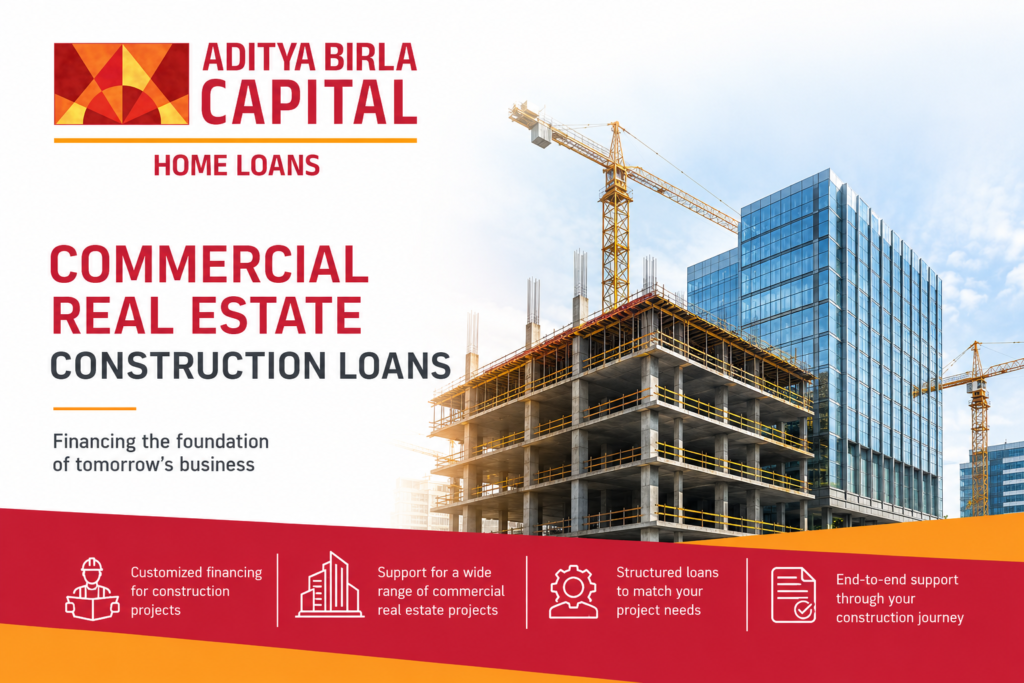
Commercial construction projects often involve substantial expenses, including land development, labour, materials, equipment, professional fees, permits, and infrastructure work. Using personal or regular business funds for all these costs can place considerable pressure on working capital.
A dedicated construction loan provides structured financing for eligible project expenses. It can help developers maintain liquidity and allocate their available capital toward other business requirements. Depending on the lender and project, funding may be released in stages based on construction progress.
How Construction Financing Works?
Before approving funding, lenders generally assess several aspects of a proposed project. These may include the borrower’s financial profile, business experience, estimated project cost, repayment capacity, property details, and expected project value.
Once approved, the loan may be disbursed according to predetermined construction milestones. This approach allows funds to be used as different stages of development are completed. It can also help borrowers monitor expenses and maintain better control over their construction budget.
A detailed project report can strengthen the application. It should clearly outline the development plan, estimated costs, expected completion timeline, and potential revenue or returns. Accurate documentation can make the assessment process more efficient.
Key Benefits of Commercial Real Estate Construction Loans
One important benefit is access to substantial capital for large-scale development. Instead of using all available business reserves, borrowers can use financing to cover eligible construction expenses while preserving funds for operational needs.
Another advantage is better cash-flow planning. Since construction spending occurs over several stages, structured disbursement can make it easier to align funding with actual project requirements.
These loans may also support businesses seeking to expand their physical presence. A new office, commercial facility, warehouse, or income-generating property can contribute to long-term business growth when planned carefully.
What Borrowers Should Consider?
Before applying, it is important to calculate the total cost of the project rather than focusing only on construction expenses. Costs related to approvals, consultants, utilities, taxes, insurance, labour, materials, and contingencies should also be considered.
Borrowers should review the loan amount, interest rate, repayment terms, processing charges, security requirements, and applicable conditions. Understanding these factors can help avoid unexpected financial pressure later.
It is equally important to evaluate the project’s timeline. Construction delays can increase expenses and affect projected cash flows. Maintaining an adequate contingency reserve can provide additional flexibility if unforeseen costs arise.
Making the Right Financing Decision
Choosing commercial real estate construction loans should be based on the project’s financial requirements, repayment capacity, and long-term objectives. A well-prepared application supported by clear financial records and realistic project estimates can improve the overall financing process.
Businesses should compare available financing options and understand the terms before making a commitment. Professional guidance can also help borrowers assess their requirements and structure funding appropriately.
Conclusion
Commercial property development can create valuable opportunities for businesses, but successful execution depends heavily on financial preparation. The right construction financing can provide the capital needed to move a project from planning to completion while supporting effective cash-flow management. By evaluating costs, timelines, repayment obligations, and project viability in advance, borrowers can approach financing with greater confidence and build a stronger foundation for sustainable commercial growth.