
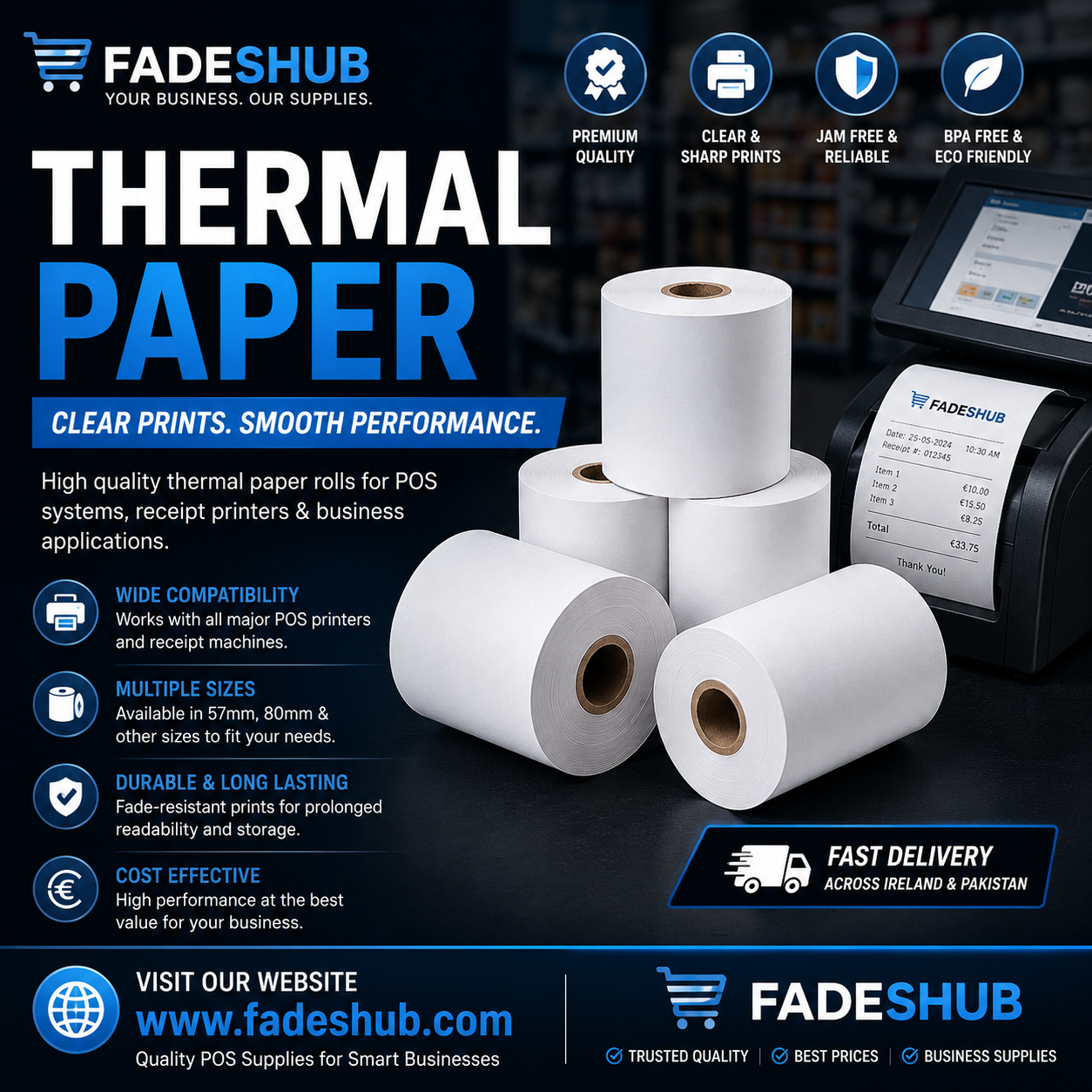
Why Thermal Paper Is Still the Preferred Choice for Modern Printing
Thermal paper is widely used by businesses that require fast, clean, and dependable printing throughout the day. From supermarkets and retail stores to restaurants, hospitals, banks, and courier services, thermal printing paper has become an essential supply for producing receipts, invoices, tickets, and transaction records. Unlike conventional paper that depends on ink or toner, thermal paper reacts to heat from a thermal print head, allowing printers to create sharp text and graphics quickly without additional consumables. This efficient printing method helps businesses save time while maintaining consistent print quality. As commercial printing needs continue to grow, thermal paper remains one of the most practical solutions for businesses that value speed, reliability, and low operating costs.
The Science Behind Thermal Printing
Thermal paper is manufactured with a heat-sensitive coating that changes colour when exposed to controlled heat.
Instead of transferring ink onto paper, a thermal printer activates selected areas of the coating to create:
- Receipts
- Text
- Numbers
- QR codes
- Barcodes
- Logos
- Payment details
This direct printing process removes the need for ink cartridges, ribbons, or toner, making everyday printing much simpler.
Because fewer consumables are required, businesses can spend less time replacing supplies and more time serving customers.
Businesses That Depend on Thermal Paper Every Day
Thermal paper supports a wide range of industries that require accurate printed records.
Retail Stores
Retail businesses print customer receipts, refund slips, discount vouchers, and transaction summaries using thermal printers.
Restaurants and Cafés
Food service businesses use thermal paper for customer bills, kitchen tickets, takeaway orders, and delivery receipts.
Banking Services
Banks, ATMs, and payment terminals rely on thermal printing to generate transaction confirmations and payment records.
Healthcare Facilities
Hospitals, pharmacies, and clinics use thermal paper for queue numbers, invoices, prescriptions, and appointment slips.
Logistics and Delivery
Shipping companies use thermal printing to produce dispatch notes, parcel information, barcode labels, and delivery documentation.
Its versatility makes thermal paper suitable for businesses of every size.
Advantages of Choosing Thermal Paper
Many companies continue using thermal printing because it provides practical operational benefits.
Some of the most important advantages include:
- Fast printing speed
- Quiet printer operation
- No ink replacement
- Low maintenance
- Sharp barcode printing
- Consistent print quality
- Simple paper replacement
- Reliable daily performance
These benefits become particularly valuable in busy environments where every second matters.
Selecting the Correct Thermal Paper
Choosing the right paper involves more than purchasing the correct roll width.
Before ordering, businesses should verify:
- Roll width
- Roll diameter
- Core size
- Paper length
- Printer compatibility
- Maximum roll capacity
Using the wrong specifications may cause paper feeding issues, printer jams, or reduced print quality.
To ensure compatibility, review the printer manual or check the installed thermal paper rolls before purchasing replacements.
Factors That Affect Print Quality
Even the best printer cannot perform well with poor-quality paper.
Several characteristics influence printing performance.
Coating Quality
An even thermal coating allows the printer to create darker and more consistent images across the receipt.
Smooth Surface
Smooth paper reduces friction against the print head and supports cleaner printing.
Accurate Cutting
Neatly cut rolls produce less paper dust, helping keep printers cleaner during continuous operation.
Consistent Thickness
Uniform paper thickness allows smooth feeding while reducing the chance of wrinkles or paper jams.
High-quality paper also contributes to longer print-head life.
Maintaining Thermal Printers
Proper printer care helps improve reliability and extend equipment lifespan.
Businesses should regularly:
- Clean the print head
- Remove paper dust
- Replace damaged rolls
- Keep the printer dry
- Store spare rolls correctly
- Inspect moving components
Preventive maintenance helps minimise unexpected interruptions during busy working hours.
Proper Storage Preserves Paper Quality
Thermal paper performs best when stored under suitable conditions.
Rolls should be kept:
- Away from direct sunlight
- In cool environments
- Protected from humidity
- Away from oils and chemicals
- Inside clean storage areas
Heat and excessive moisture can affect the thermal coating before the paper is even used.
Printed receipts intended for accounting or warranty purposes should also be stored away from excessive light and heat to help preserve printed information.
Thermal Paper and Environmental Responsibility
Many manufacturers now produce thermal paper using responsibly sourced raw materials and improved manufacturing practices.
Businesses seeking environmentally responsible supplies often consider:
- Sustainable paper sourcing
- Efficient packaging
- Reduced production waste
- Quality manufacturing standards
- Longer-lasting printer performance
Choosing reliable products can reduce unnecessary waste while improving printing efficiency.
Purchasing Thermal Paper for Commercial Use
Businesses should evaluate their daily printing volume before placing an order.
Important purchasing considerations include:
- Printer compatibility
- Roll quantity
- Product quality
- Supplier reputation
- Packaging protection
- Storage capacity
- Delivery reliability
Buying from a trusted supplier helps ensure consistent quality across every order.
If you want to read more then go here
Businesses with frequent printing requirements often benefit from bulk purchasing, reducing interruptions caused by low inventory.
Frequently Asked Questions
What is thermal paper?
Thermal paper is a specially coated paper that produces printed text and images when exposed to heat from a thermal printer.
Does thermal paper require ink?
No. Thermal printers use heat instead of ink, toner, or ribbons to create printed information.
Where is thermal paper commonly used?
It is widely used in retail stores, restaurants, banks, pharmacies, warehouses, logistics companies, and payment terminals.
How can I choose the correct thermal paper?
Check the printer’s required roll width, diameter, core size, and compatibility before purchasing.
Why do thermal receipts sometimes fade?
Exposure to heat, sunlight, moisture, and certain chemicals can gradually reduce print visibility over time.
Is thermal paper suitable for barcode printing?
Yes. High-quality thermal paper produces clear barcodes that can be scanned accurately using compatible barcode readers.


