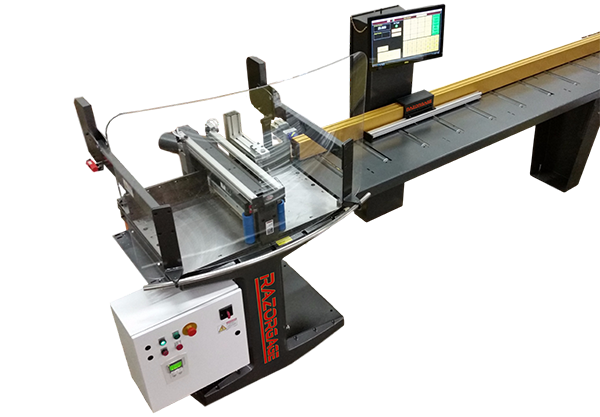
The glass fabrication industry has undergone a dramatic transformation over the past decade, driven by rapid advancements in automation and precision engineering. Modern manufacturing facilities are no longer relying solely on manual labor to cut, position, and process glass panels. Instead, automated material positioning has emerged as a game-changing solution that is helping commercial glass fabricators achieve higher accuracy, faster production speeds, and significantly reduced material waste. This shift is not just a trend but a fundamental change in how the industry operates at every level.
The Challenge of Precision in Glass Fabrication
Working with glass in a commercial setting can prove to be particularly challenging, which is why this aspect of the glass industry is particularly unique. Glass is delicate, heavy, and incredibly fragile, and the room for human error is exceedingly small. Even the slightest miscalculation can lead to wasted materials and, by extension, losses for the fabrication company, which is why working with glass requires a high degree of precision and accuracy.
What You Need to Know About Automated Positioning
In essence, automated positioning describes technologies that can position objects without requiring direct human input. Various mechanical and electronic devices can be used in order to automate the process of placing materials in specific positions so that they can be processed further. In many cases, such technology can be critically useful, as it can perform consistently accurate work without tiring over extended periods of time.
Speed and Efficiency Gains
One of the most evident benefits of using automated positioning for commercial glass fabricating comes in the form of increased speed and efficiency. The ability to position glass without requiring direct human input means that tasks can be performed faster, and the need for extensive manpower is greatly reduced. Additionally, automated equipment can operate without breaks, which means that it can be used around the clock in some cases. This leads to dramatically increased productivity gains for the glass fabrication facility, which can take on bigger jobs and produce more products in less time.
Fewer Material Losses and Costs
When it comes to glass fabrication, material losses are always catastrophic, as they always involve wasted time, money, and effort. This is why minimizing errors is critically important, and it is one area where automated positioning can be incredibly valuable. The elimination of inaccuracies leads to reduced material losses, and the ability to ensure that each sheet of glass is placed in exactly the right position enables the fabricator to maximize yield and minimize expenses. Over the long term, these benefits translate directly into increased profits for the commercial glass fabrication business.
Enhanced Employee Safety
When it comes to working with glass, employee safety is always of paramount importance. Large sheets of commercial glass can present serious hazards, which is why such materials should only be handled when proper precautions are in place. Automated positioning reduces the need for direct human interaction with the glass, which means that fabrication workers can avoid potentially dangerous situations. Additionally, by reducing the risks and dangers presented by the job, automated equipment can reduce employee turnover while also reducing the likelihood of injuries and subsequent insurance costs.
Superior Software Integration and Reduced Human Error
Automated positioning equipment is often compatible with various software systems that are used to manage commercial glass fabrication facilities. This means that such equipment can be utilized to its maximum potential right from the start, as it can be used in conjunction with the existing software in an automated manner. Thus, the potential for human error is greatly reduced, as the software can be used to make calculations directly, without requiring additional human input.
Consistency and Enhanced Quality Control
In many ways, automated positioning can be seen as a tool that enables superior quality control mechanisms. After all, when dealing with delicate and fragile materials such as glass, the potential for inconsistencies due to human error is incredibly high. Thus, any opportunity to reduce human involvement while also ensuring that the final output is up to standard should be utilized. Not only that, but automated positioning can also enable enhanced quality control in other areas by introducing new standardized procedures.
Greater Scalability Opportunities
As the demand for commercial glass fabrication services continues to rise, companies that utilize automated positioning equipment can scale their operations with greater ease. By using automated equipment, glass fabricators can scale their operations without having to dedicate excessive resources to the endeavor. Thus, the ability to scale becomes a significant financial advantage, as the company is not required to proportionally increase its overhead costs in order to accommodate a higher volume of work.
Conclusion
The future of commercial glass fabrication belongs to those who embrace precision, efficiency, and intelligent design. Automated systems are no longer optional additions but essential components of any serious fabrication operation. From reducing waste to improving worker safety and enabling rapid scaling, the advantages are clear and measurable. Paired with innovations like a programmable saw stop, modern fabrication facilities can achieve levels of control and accuracy that were simply impossible just a generation ago. Investing in automation today is investing in the long-term strength and sustainability of your fabrication business.
Frequently Asked Questions
How does automated positioning improve cutting accuracy in glass fabrication?
Automated systems use sensors and computer algorithms to align glass panels with extreme precision before any cutting begins, eliminating the small errors that naturally occur with manual positioning and ensuring every cut meets exact specifications.
Is automated positioning suitable for small glass fabrication businesses?
Yes, automation solutions are available in different scales and price points, making them accessible to smaller operations that want to improve accuracy and efficiency without investing in large industrial setups all at once.
How long does it take to see a return on investment after implementing automation?
Most fabrication businesses begin seeing measurable returns within the first year through reduced material waste, faster production times, and lower labor costs, though the exact timeline depends on the scale of the operation and volume of work.
Does automation completely replace human workers in glass fabrication?
No, automation shifts the role of workers rather than eliminating them entirely. Employees transition into supervisory, quality control, and technical maintenance roles that require skill and judgment rather than physical repetitive labor.
Can automated systems handle different sizes and thicknesses of glass panels?
Modern automated positioning systems are highly adaptable and can be programmed to handle a wide variety of glass sizes, shapes, and thicknesses, making them versatile enough for most commercial fabrication needs.