Have you ever watched a child’s face light up when they discover a playground? Can you imagine how heartbreaking it must be for a child who can’t join in because the equipment wasn’t designed with them in mind? What if every playground could welcome every child, regardless of their abilities?
These questions sit at the heart of a growing movement across Australia. Accessible playground designers are transforming the way we think about play spaces. They’re creating environments where children of all abilities can climb, swing, spin, and explore together. It’s not just about adding a ramp here or there—it’s about reimagining play from the ground up.
In this article, we’ll explore what makes a playground truly inclusive and why it matters now more than ever. You’ll discover the role these specialist designers play, the core principles guiding their work, and the equipment that makes inclusion possible. We’ll also look at costs, Australian standards, and how to choose the right designer for your project. Whether you’re a council planner, community group leader, or simply a parent who believes every child deserves to play, this guide is for you.
What Is an Accessible Playground?
Defining Inclusive Play Design
An accessible playground goes beyond simply meeting minimum requirements. It’s a space thoughtfully designed so children with physical, sensory, cognitive, and social differences can play alongside their peers. The goal isn’t to create a separate “special needs” area—it’s to build one unified space where everyone belongs.
Inclusive play design considers the full spectrum of abilities. This includes wheelchair users, children with vision or hearing impairments, those on the autism spectrum, and kids with developmental delays. Every element, from surfacing to equipment layout, gets careful consideration.
How Do Accessible Playgrounds Differ from Traditional Playgrounds?
Traditional playgrounds often feature equipment that assumes a certain level of physical ability. Think towering climbing frames with narrow steps or swings that require core strength to use independently. These designs unintentionally exclude many children.
Accessible playgrounds, on the other hand, incorporate features like:
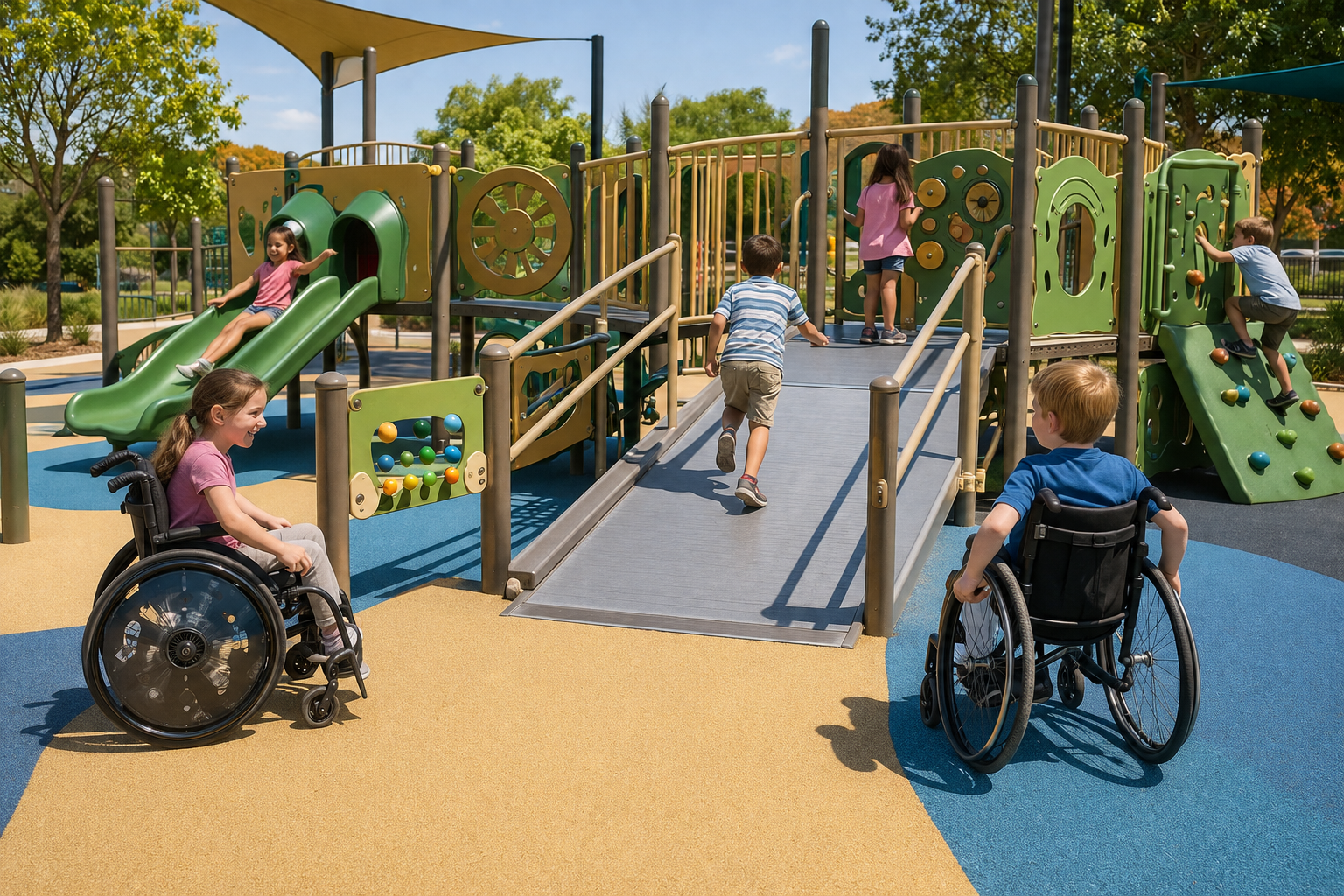
– Ramps and transfer platforms for wheelchair access
– Ground-level play activities
– Sensory panels for tactile and auditory exploration
– Quiet zones for children who become overwhelmed
– Wide pathways that accommodate mobility aids
The difference isn’t just structural—it’s philosophical. Accessible playgrounds prioritise dignity, independence, and togetherness.
The Role of Accessible Playground Designers
What Do Inclusive Playground Designers Actually Do?
Accessible playground designers are specialists who blend creativity with technical knowledge. They assess sites, consult with communities, and create designs that meet both regulatory requirements and the real needs of local families.
Their work begins with listening. They engage with parents, carers, therapists, and children themselves to understand what the community truly needs. From there, they develop concepts that balance fun, safety, and accessibility.
These designers also coordinate with landscape architects, equipment suppliers, and builders. They oversee installations to make sure every detail aligns with the original vision. It’s a collaborative process from start to finish.
Key Skills and Qualifications to Look For
When choosing a designer, look for relevant qualifications in landscape architecture, occupational therapy, or playground design. Experience with Australian Standards compliance is essential. Plus, they should demonstrate genuine understanding of disability inclusion—not just tick-box awareness.
Strong communication skills matter too. The best designers translate complex requirements into engaging play experiences that communities embrace.
Core Principles of Inclusive Play Space Design
Universal Design and Why It Matters
Universal design means creating spaces usable by everyone, regardless of age or ability. Rather than retrofitting accessibility features, universal design builds them in from the start. This approach creates more natural, integrated environments.
In playgrounds, universal design might include varied entry points to equipment, multiple ways to engage with play features, and intuitive layouts that help all children navigate independently.
Sensory Play Elements for All Abilities
Sensory play supports children with autism, sensory processing differences, and visual or hearing impairments. Elements like musical instruments, textured surfaces, and scented gardens engage multiple senses.
These features benefit all children, not just those with identified needs. Sensory-rich environments encourage exploration and discovery for everyone.
Physical Accessibility Features
Physical accessibility encompasses more than ramps. It includes rubberised surfacing that supports wheelchair movement, transfer platforms at appropriate heights, and equipment with supportive seating. Shade structures and seating for carers also contribute to an accessible experience.
Social and Cognitive Inclusion
Inclusive playgrounds facilitate social interaction. Equipment designed for cooperative play helps children develop friendships across ability levels. Clear visual cues, predictable layouts, and quiet retreat spaces support children with cognitive differences.
What Equipment Is Used in Accessible Playgrounds?
Wheelchair-Accessible Play Structures
Modern accessible structures feature ramps integrated into climbing frames, wide platforms, and activities positioned at wheelchair height. Inclusive designs ensure children using wheelchairs aren’t limited to watching from below.
Sensory Panels and Interactive Features
Sensory panels offer tactile, visual, and auditory experiences. Spinning wheels, mirrors, musical elements, and textured surfaces create engagement opportunities for children with varying abilities.
Inclusive Swings, Spinners and Ground-Level Play
Inclusive swings accommodate wheelchair users or those needing additional support. Spinners with accessible entry points and ground-level play features ensure children who cannot climb still enjoy active play.
How Much Does It Cost to Build an Inclusive Playground?
Factors That Influence Playground Design Costs
Costs vary significantly based on size, equipment choices, site conditions, and customisation level. A small community playground might start around $150,000, while larger destination playgrounds can exceed $1 million.
Surfacing represents a significant expense—accessible rubber surfacing costs more than traditional bark or sand but is essential for wheelchair users.
Budgeting Tips for Councils and Community Groups
Start by identifying grant opportunities. Many Australian councils access federal and state funding for accessible infrastructure. Phased construction allows communities to build over time as funds become available.
Prioritise equipment that offers the greatest inclusion impact. Sometimes fewer, better-chosen pieces create more value than cramming in equipment that compromises accessibility.
Australian Standards and Compliance for Accessible Playgrounds
Meeting AS 4685 and Disability Discrimination Act Requirements
Australian Standard AS 4685 governs playground equipment safety. Accessible playgrounds must also comply with the Disability Discrimination Act 1992, which prohibits discrimination in access to public facilities.
Designers should demonstrate familiarity with these requirements and incorporate compliance from the earliest planning stages. Non-compliant playgrounds can face legal challenges and costly retrofitting.
Benefits of Investing in Inclusive Play Spaces
Community and Social Benefits
Inclusive playgrounds become community hubs. They bring together families who might otherwise feel isolated. Children learn empathy and acceptance through everyday play interactions.
These spaces also increase foot traffic to local areas, benefiting nearby businesses and creating vibrant public spaces.
Developmental Benefits for Children of All Abilities
Play supports physical, cognitive, social, and emotional development. When children with disabilities access quality play experiences, they develop skills, confidence, and independence. Their typically developing peers gain understanding and compassion.
How to Choose the Right Accessible Playground Designer
Questions to Ask Before Hiring
Ask potential designers about their experience with inclusive projects. Request examples of completed playgrounds and references from previous clients. Enquire about their consultation process—do they genuinely engage with the disability community?
Check their understanding of Australian Standards and ask how they balance accessibility with creative, engaging design.
Red Flags to Avoid
Be wary of designers who treat accessibility as an afterthought or offer only basic compliance solutions. Avoid those unwilling to consult with families of children with disabilities. Cheap quotes that seem too good often result in compromised outcomes.
Building Play Spaces Where Every Child Belongs
Creating truly inclusive playgrounds requires more than good intentions—it demands expertise, genuine consultation, and thoughtful design. Accessible playground designers bring together technical knowledge, creative vision, and deep understanding of what inclusion really means.
The benefits extend far beyond individual children. Inclusive play spaces strengthen communities, foster understanding, and send a powerful message about belonging. Every child deserves the joy of play, and every family deserves spaces where their children are welcomed.
If you’re planning a playground project, take the time to find a designer who shares your vision. Ask the tough questions, involve your community, and aim for excellence. The children in your community—all of them—are worth it. Together, we can build play spaces where every child truly belongs.