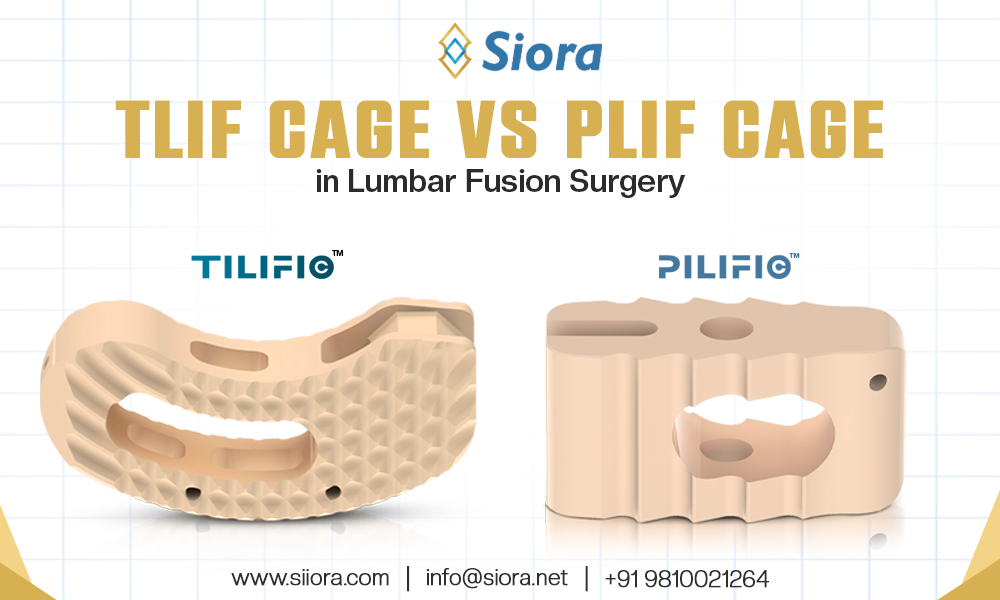
Lumbar fusion surgery is a widely performed procedure for treating chronic lower back pain, spinal instability, degenerative disc disease, and certain spinal deformities. One of the critical components used during spinal fusion is an interbody cage, which helps maintain disc height, restore spinal alignment, and promote bone fusion between vertebrae. Among the commonly used options are TLIF cages and PLIF cages. While both serve a similar purpose, they differ significantly in terms of surgical approach, placement, and clinical advantages.
What Is a TLIF Cage?
A TLIF (Transforaminal Lumbar Interbody Fusion) cage is used during a transforaminal approach to lumbar fusion. In this procedure, the surgeon accesses the spinal disc space from one side of the spine through the neural foramen. This approach allows the damaged disc to be removed and replaced with a cage filled with bone graft material.
TLIF cages are designed to be inserted through a relatively narrow pathway while minimizing disruption to the surrounding nerves and soft tissues. They are commonly used in both open and minimally invasive spinal fusion procedures.
What Is a PLIF Cage?
A PLIF (Posterior Lumbar Interbody Fusion) cage is utilized in a posterior approach to lumbar fusion. During this procedure, the surgeon accesses the spine directly from the back and typically places two cages into the disc space after removing the damaged disc.
PLIF cages have been used for decades and remain an effective option for achieving spinal stability and fusion. The technique provides direct visualization of the disc space and allows for thorough disc removal before cage placement.
Key Differences Between TLIF and PLIF Cages
Surgical Approach
The most notable difference lies in the surgical pathway.
TLIF procedures approach the spine from one side, reducing the need for excessive nerve retraction. In contrast, PLIF procedures require a central posterior approach, often involving greater manipulation of spinal nerves to access the disc space.
Number of Cages Used
TLIF surgery generally involves the placement of a single cage positioned diagonally within the disc space. PLIF procedures commonly use two smaller cages inserted from both sides of the spinal canal.
The choice depends on the patient’s anatomy, pathology, and the surgeon’s preference.
Risk to Neural Structures
Because TLIF requires less retraction of nerve roots and the dural sac, it is often associated with a lower risk of nerve-related complications. PLIF procedures may involve greater exposure of neural structures, which can increase the technical complexity of the surgery.
Suitability for Minimally Invasive Surgery
TLIF cages are widely favored in minimally invasive spine surgery due to their insertion pathway and reduced tissue disruption. This can contribute to smaller incisions, less blood loss, and potentially faster recovery.
PLIF can also be performed using advanced techniques, but it is traditionally associated with a more extensive posterior exposure.
Advantages of TLIF Cages
Reduced Tissue Trauma
The unilateral approach helps preserve important spinal structures and minimizes soft tissue damage.
Lower Nerve Retraction
Less manipulation of neural elements may reduce the likelihood of nerve irritation during surgery.
Faster Recovery Potential
Patients undergoing minimally invasive TLIF procedures often experience shorter hospital stays and quicker return to daily activities.
Advantages of PLIF Cages
Excellent Disc Space Access
The direct posterior approach allows comprehensive disc removal and endplate preparation.
Strong Bilateral Support
The use of two cages can provide broad support across the disc space and help distribute loads effectively.
Long Clinical History
PLIF has a well-established track record with extensive clinical evidence supporting its effectiveness.
Choosing the Right Cage
There is no universal answer when selecting between a TLIF cage and a PLIF cage. The decision depends on several factors, including the patient’s spinal condition, anatomical considerations, surgical goals, and the surgeon’s experience. Both techniques have demonstrated successful fusion outcomes when appropriately indicated.
Conclusion
TLIF and PLIF cages are valuable tools in lumbar fusion surgery, each offering distinct benefits. TLIF cages are often preferred for their minimally invasive potential and reduced nerve manipulation, while PLIF cages provide excellent access to the disc space and strong bilateral support. Understanding the differences between these two approaches helps surgeons choose the most suitable option for achieving stable fusion and improved patient outcomes.
To become a distributor of an advanced range of spine implants and instruments, contact Siora Surgicals Pvt. Ltd., a leading orthopedic implants company in India.