Have you ever wondered how plumbers run pipes through solid concrete walls? Or how electricians create perfectly round holes for cabling in reinforced floors? Perhaps you’re planning a renovation and need to know the best way to cut through concrete without causing a mess or damaging your structure?
Concrete core drilling is the answer to all these questions, and it’s become an essential service in modern Australian construction. Whether you’re working on a small residential project or a large-scale commercial development, understanding how core drilling works can save you time, money, and a whole lot of headaches. This specialised technique creates clean, precise circular holes through concrete, masonry, and other hard materials with remarkable accuracy.
In this guide, we’ll explore everything you need to know about concrete core drilling services. You’ll discover how the process works, what equipment professionals use, and the many applications across residential and commercial projects. We’ll also break down costs, safety considerations, and what to look for when hiring a contractor. By the end, you’ll have a solid understanding of why professional core drilling is often the smartest choice for your construction needs.
What Is Concrete Core Drilling?
Concrete core drilling is a precise cutting method that removes cylindrical sections from concrete, brick, stone, or asphalt surfaces. Unlike traditional demolition methods that can be messy and imprecise, core drilling creates clean, exact holes ranging from small diameters to large openings.
How Does Concrete Core Drilling Work?
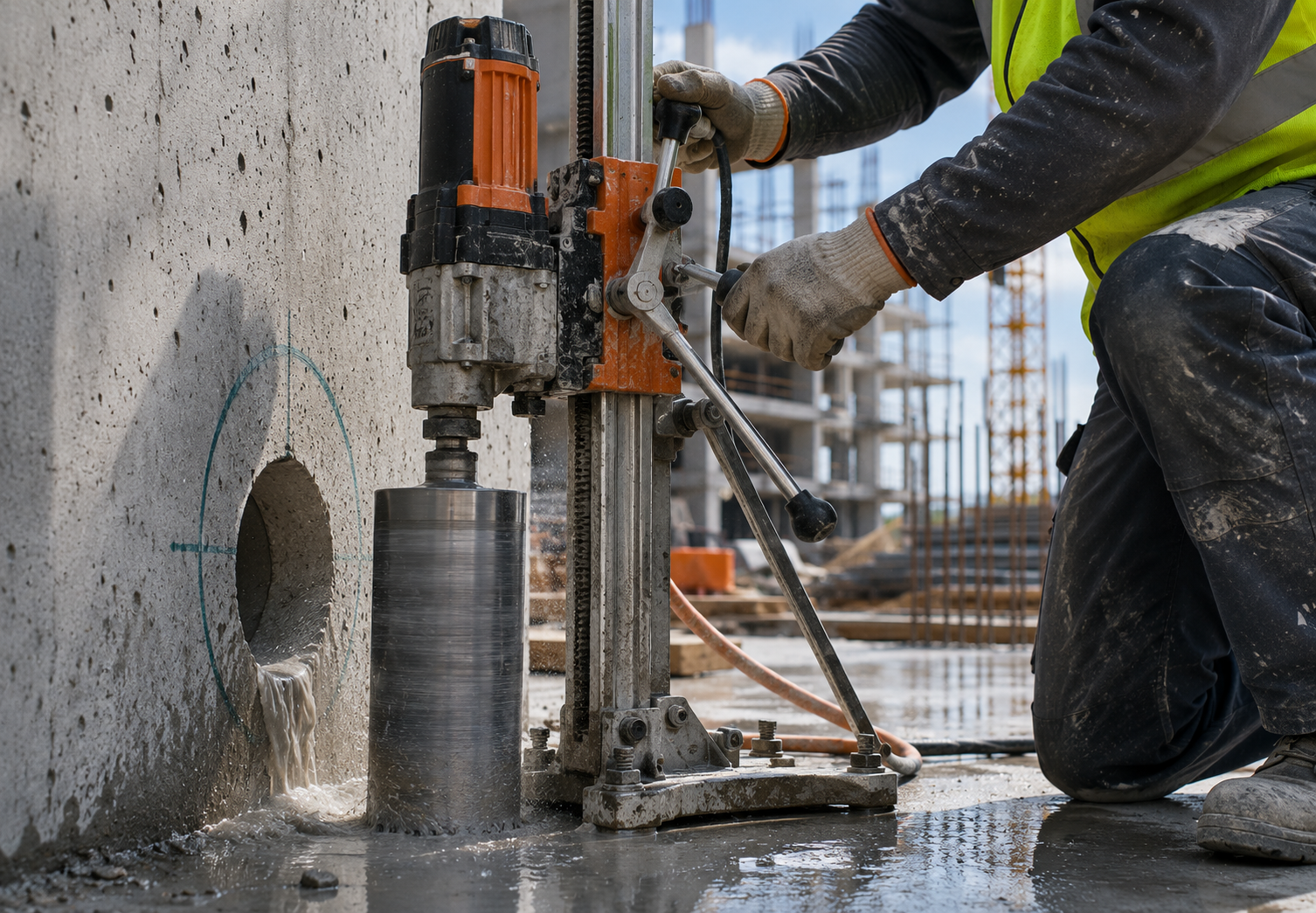
The process uses diamond-tipped drill bits attached to powerful drilling rigs. These bits rotate at high speeds while applying steady pressure to the concrete surface. As the diamond segments grind away the material, a cylindrical core is extracted from the structure. Most professional operations use water to cool the blade and reduce dust, resulting in a cleaner work environment.
Types of Core Drilling Methods
There are two main approaches: wet drilling and dry drilling. Wet drilling uses water to cool the bit and flush away debris, making it ideal for indoor work where dust control matters. Dry drilling uses vacuum systems to capture dust and works well when water usage isn’t practical. Each method has its place depending on the project requirements.
What Equipment Is Used for Concrete Core Drilling?
Professional contractors rely on several key pieces of equipment. Handheld drills work well for smaller holes and lighter jobs. Rig-mounted systems provide stability for larger diameter holes and offer greater precision. Diamond core bits come in multiple sizes, typically ranging from 25mm to 600mm in diameter.
Common Applications of Concrete Core Drilling Services
Core drilling serves countless purposes across the construction industry. Its versatility makes it invaluable for both new builds and renovation projects throughout Australia.
Plumbing and Electrical Installations
Running pipes and cables through concrete structures requires precise openings. Core drilling creates exact holes for water supply lines, drainage pipes, and electrical conduits without compromising structural integrity. This precision reduces the risk of leaks and electrical faults down the track.
HVAC System Installations
Heating, ventilation, and air conditioning systems often need pathways through concrete walls and floors. Core drilling provides clean openings for ductwork, refrigerant lines, and ventilation shafts. The smooth edges left by core drilling also make sealing around HVAC components much easier.
Structural Testing and Analysis
Engineers frequently need concrete samples to assess a structure’s condition. Core drilling extracts intact cylindrical samples that can be tested for strength, composition, and reinforcement placement. This information proves crucial for renovation projects, building assessments, and compliance checks.
Creating Openings for Windows and Doors
When adding windows or doors to existing concrete walls, core drilling creates the initial openings. Contractors drill a series of overlapping holes to form the rough opening, which is then cleaned up for the final installation. This approach is far more controlled than using jackhammers or other demolition methods.
Why Hire Professional Concrete Core Drilling Services?
While DIY approaches might seem tempting, professional core drilling services offer significant advantages that make them worth the investment.
Is Concrete Core Drilling Dangerous?
Yes, core drilling carries real risks when performed incorrectly. Operators face hazards from heavy equipment, electrical cables hidden in concrete, silica dust exposure, and the potential for structural damage. Professional contractors understand these risks and take appropriate precautions to protect themselves and your property.
Can You Core Drill Concrete Yourself?
Technically, you can hire equipment and attempt core drilling yourself. However, without proper training, you risk damaging expensive equipment, creating crooked or incorrect holes, hitting rebar or utilities, and potentially injuring yourself. The learning curve is steep, and mistakes can be costly to fix.
Benefits of Professional Core Drilling Contractors
Professional contractors bring expertise, proper equipment, and insurance to every job. They can accurately locate rebar and utilities before drilling, ensuring a safe operation. Their experience means faster completion times and superior results. Plus, they handle dust control, water management, and waste disposal.
How Much Does Concrete Core Drilling Cost?
Understanding pricing helps you budget effectively and evaluate quotes from different contractors.
Factors Affecting Core Drilling Prices
Several elements influence the final cost:
– Hole diameter: Larger holes require bigger, more expensive bits.
– Concrete thickness: Deeper cuts take more time and cause more wear on equipment.
– Reinforcement density: Cutting through heavily reinforced concrete is slower and harder on bits.
– Access difficulty: Tight spaces or elevated positions add complexity.
– Number of holes: Multiple holes often attract volume discounts.
How Long Does Concrete Core Drilling Take?
A single hole in standard concrete might take anywhere from a few minutes to an hour, depending on diameter and depth. Reinforced concrete takes longer as the diamond bit works through steel rebar. Your contractor can provide time estimates based on your specific requirements.
Getting Accurate Quotes for Your Project
For the most accurate quotes, provide contractors with detailed information about hole sizes, quantities, concrete thickness, and access conditions. Many contractors offer free site inspections to assess the job properly before quoting.
Choosing the Right Concrete Core Drilling Company
Selecting a reliable contractor ensures your project runs smoothly and delivers quality results.
What to Look for in a Core Drilling Contractor
Look for established companies with proven track records in your area. Check online reviews and ask for references from recent projects. Experienced contractors should have modern equipment and well-trained operators. Their communication should be clear and professional from the first contact.
Questions to Ask Before Hiring
Before signing up, ask these important questions:
– How long have you been operating?
– Do you carry public liability insurance?
– What safety measures do you implement?
– Can you provide references?
– What’s included in your quote?
– How do you handle unexpected complications?
Licensing and Insurance Requirements in Australia
In Australia, core drilling contractors should hold appropriate construction licences for their state or territory. Public liability insurance is essential, typically with coverage of at least $10 million. Workers’ compensation insurance protects employees on your site. Always verify these credentials before work begins.
Concrete Core Drilling for Residential vs Commercial Projects
The core drilling process adapts to suit different project scales and requirements.
Residential Applications
Home projects typically involve smaller diameter holes for plumbing renovations, electrical upgrades, or air conditioning installations. Residential work often requires extra care to minimise dust and noise disturbance. Contractors working in homes should respect your property and clean up thoroughly after the job.
Commercial and Industrial Applications
Commercial projects frequently involve larger holes, greater quantities, and more complex access requirements. Industrial applications might include creating openings in warehouse floors, drilling through thick foundation slabs, or cutting holes in precast concrete panels. These jobs often require more powerful equipment and larger crews.
Safety Considerations and Best Practices
Safety should never be compromised when core drilling concrete structures.
What Size Holes Can Be Core Drilled in Concrete?
Core drilling can create holes from around 25mm up to 600mm in diameter using standard equipment. Specialist rigs can achieve even larger openings. However, the maximum practical size depends on the concrete thickness, reinforcement, and structural considerations.
Minimising Dust and Debris
Wet drilling significantly reduces airborne dust, while dry drilling systems use powerful vacuums to capture particles at the source. Professional contractors use plastic sheeting to protect surrounding areas and clean up thoroughly after completing the work.
Avoiding Structural Damage
Before drilling, experienced contractors use scanning equipment to locate rebar, post-tension cables, and utilities within the concrete. This step prevents cutting through critical reinforcement or hitting electrical and plumbing services. Proper planning protects both the structure and the drilling team.
Investing in Quality Core Drilling for Project Success
Concrete core drilling has become indispensable in modern Australian construction, offering precision and efficiency that traditional methods simply cannot match. From small residential renovations to major commercial developments, this specialised service enables countless installations and modifications to concrete structures every day.
Choosing professional core drilling services over DIY attempts makes sense for most projects. The expertise, equipment, and safety measures that experienced contractors bring to the job far outweigh the apparent cost savings of doing it yourself. When you factor in the potential for costly mistakes, equipment hires expenses, and personal safety risks, professional services typically offer better value.
As you plan your next construction or renovation project, remember that quality core drilling sets the foundation for successful installations. Take time to choose a reputable contractor, ask the right questions, and verify their credentials. Your investment in professional core drilling services will pay dividends through cleaner results, faster completion times, and peace of mind knowing the job was done properly. Get in touch with local contractors today to discuss your specific requirements and start your project on solid ground.