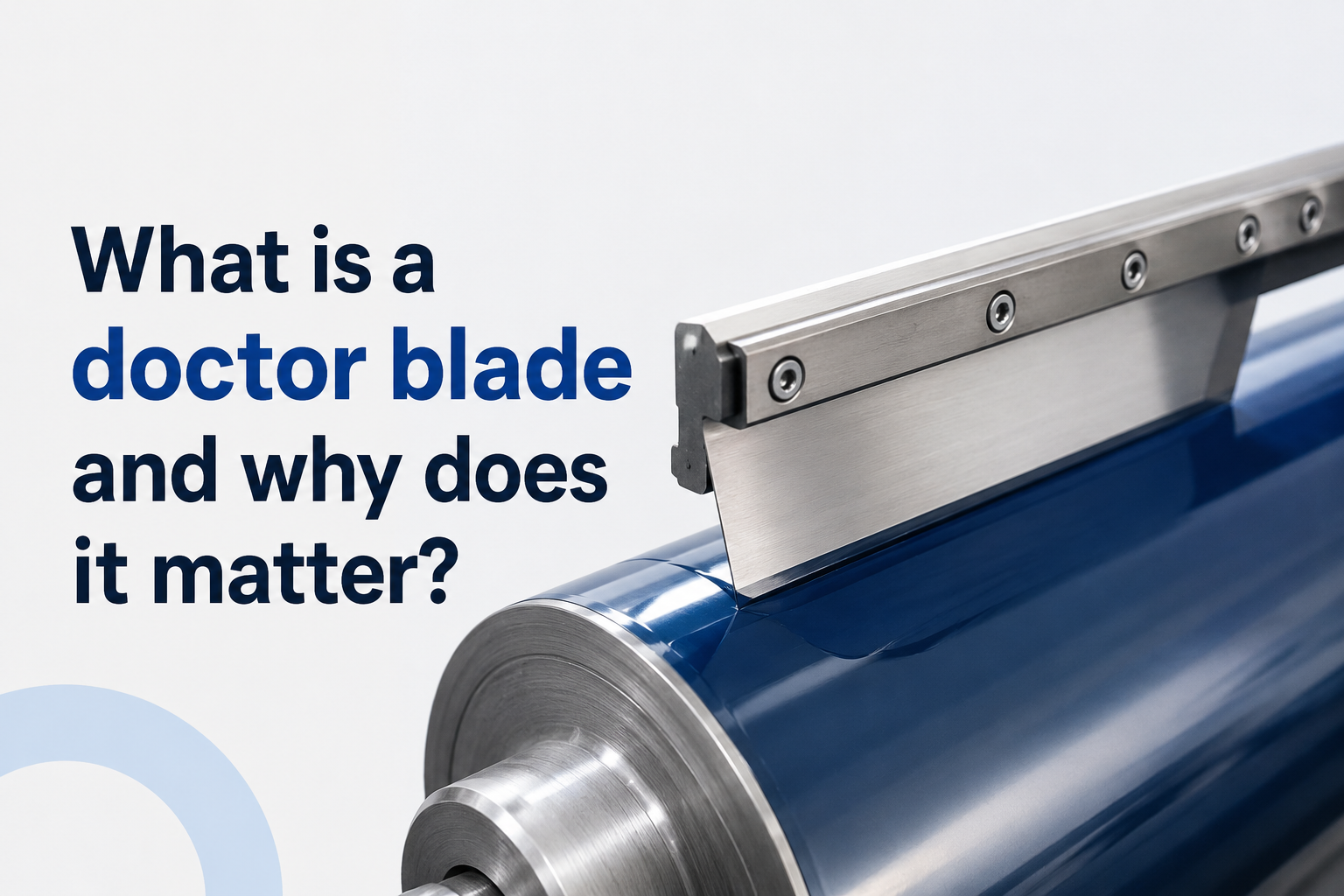
A doctor blade is a thin, flexible tool that scrapes extra ink, coating, or adhesive from a roller or cylinder prior to transfer onto the substrate. Consider it a precise wiper. Should the blade fail its function, one will notice irregular ink, smearing, or lines on the printed matter.
Doctor blades show up in:
Flexographic and gravure printing Paper coating and converting Textile printing Adhesive and laminate manufacturing Ceramic and tile printing
The material of the blade affects how it performs. Stainless steel, plastic, carbon steel, polymer, each one changes print quality and running costs in its own way.
Types of doctor blades and their uses
Stainless steel doctor blades
Doctor Blades made from stainless steel are the most common type used within printing and packaging sectors. They hold up very well, they resist corrosion, and they keep a consistent edge over time periods.
If seeking a Stainless Steel Doctor Blades supplier, you will usually encounter several grades: 301, 302, and 420 stainless steel. Every single one possesses a somewhat distinct hardness and flexibility, altering how the blade functions upon various cylinders.
Why people choose stainless steel:
Resists rust and chemical exposure well Lasts a long time even at high press speeds Wipes consistently Works with both water-based and solvent-based inks
Common uses:
Gravure printing presses Flexo presses running at high speed Coating lines using aggressive chemicals
I’ve seen print shops switch to stainless steel after getting tired of replacing cheaper blades every few days. It costs more upfront, but it usually pays for itself in fewer replacements.
Plastic doctor blades
Doctor Blade plastic choices are often built using polyurethane or polyethylene materials. These items feel softer compared to metal tools, making them suitable cases where one does not wish to damage or erode a fragile cylinder surface.
Being a Plastic Doctor Blade supplier, Print Pro Tech provides various thicknesses and hardness grades (Shore hardness measured) allowing you to match the blade with your cylinder.
Why plastic blades work:
Gentle on ceramic and chrome cylinders No risk of metal scratching metal Fine for short-run jobs or lighter work Cheaper option for tight budgets
Best for:
Ceramic anilox rollers Short to medium print runs Jobs where protecting the cylinder matters most
The catch: plastic wears out faster than metal, especially with abrasive inks or long runs. If you’re running a press around the clock, this probably isn’t your first pick.
Carbon steel doctor blades
Carbon steel doctor blades are rigid and hold an edge well. They’re used where you need a firmer, more precise wipe.
As a Carbon Steel Doctor Blade supplier, we offer blades with proper hardness ratings, usually around HV 350-450, so the edge holds without getting brittle.
What carbon steel does well:
Sharper edge Good rigidity for even pressure Cheaper than premium stainless steel
What to watch for:
Rusts if not coated or cared for Doesn’t last as long in humid or chemically harsh settings
Carbon steel works fine in dry environments, like certain paper coating processes, where corrosion isn’t a big concern.
Polymer doctor blades
Polymer doctor blades are newer and growing in popularity for specialty printing and coating jobs. As a Polymer Doctor Blade supplier, Print Pro Tech stocks blades made from advanced polymer composites that mix flexibility with wear resistance.
Why people are using polymer:
Holds up against chemical corrosion Light and easy to handle Works well on delicate substrates Doesn’t conduct electricity, useful for electronic printing
Polymer is still a smaller part of most suppliers’ lineups. If your job needs chemical resistance plus flexibility, ask directly about polymer options.
How to choose the right doctor blade supplier
Not every Doctor Blade supplier delivers the same quality. Here’s what to look for.
Material quality and certification
Ask for material certifications, especially for stainless steel grades. A supplier worth working with won’t hesitate to share this.
Custom sizing
Every press is different. A good supplier offers custom widths, lengths, and thicknesses instead of forcing you into stock sizes that don’t fit your machine.
Edge quality and finishing
The edge does the actual work. Look for precision grinding and polishing so the edge is smooth and free of burrs.
Bulk pricing and lead times
If you’re in production, you’ll go through blades regularly. Ask about bulk pricing, minimum orders, and how long delivery takes.
Technical support
A supplier who can help troubleshoot chatter, streaking, or wear issues makes a real difference when something goes wrong on the line.
Expert tips for getting the most out of your doctor blades
Match blade hardness to cylinder hardness. A blade that’s too hard or too soft for the cylinder wears out both faster. Store blades properly. Keep stainless and carbon steel blades dry so they don’t rust before use. Change blade angle gradually. Sudden angle shifts cause uneven wear. Don’t wait until the blade fails completely. Swap it out as soon as you notice streaking or uneven ink, not after visible damage. Keep a few thicknesses in stock. Different jobs need slightly different specs, and having options on hand avoids downtime.
The biggest mistake I see is treating doctor blades like they don’t need attention once installed. A quick check during shift changes catches wear early and saves you from print defects later.
What to check before you order
Before placing an order with a Doctor Blade supplier, go through this list:
Confirm the material (stainless steel, plastic, carbon steel, or polymer) fits your application Check thickness options, usually 0.1mm to 0.25mm for most printing jobs Confirm the edge type, beveled, square, or lamella, since each serves a different purpose Ask about coatings like PTFE for reduced friction Request samples before ordering in bulk Compare pricing across a few suppliers Check what support looks like if there’s a quality issue
A supplier willing to go through these details with you, instead of just pushing for a sale, is usually one worth sticking with.
Pros and cons summary
Stainless Steel Doctor Blades
Pros: lasts long, resists corrosion, performs consistently
Cons: costs more upfront
Plastic Doctor Blade
Pros: affordable, easy on cylinders
Cons: wears out faster, not great for high-speed runs
Carbon Steel Doctor Blade
Pros: sharp edge, budget-friendly
Cons: rusts without proper care
Polymer Doctor Blade
Pros: resists chemicals, lightweight, non-conductive
Cons: harder to find, moderate cost
FAQs
1. What’s the difference between stainless steel and carbon steel doctor blades?
Stainless steel resists corrosion much better and lasts longer in humid or chemically active settings. Carbon steel costs less but needs careful storage to avoid rust.
2. How often should doctor blades be replaced?
It depends on usage, but most blades show wear within days to a few weeks of continuous use. Check regularly and replace at the first sign of streaking or chatter.
3. Can plastic doctor blades be used on metal cylinders?
Yes. Plastic blades are often used on chrome or metal cylinders to avoid scratching, though they wear faster than metal blades.
4. What thickness is best for a doctor blade?
Usually between 0.1mm and 0.25mm, depending on the press and application. Thinner blades flex more; thicker ones are more rigid.
5. Are polymer doctor blades good for high-speed printing?
Polymer works well for specialty jobs needing chemical resistance, but stainless steel is generally more reliable for high-speed continuous runs.
6. How do I know if a doctor blade supplier is reliable?
Look for material certifications, custom sizing, sample availability, and support that actually responds when you need help.
7. Do doctor blades come with coatings?
Yes, some have coatings like PTFE to reduce friction and extend service life, especially for high-speed jobs.
8. Can I get custom-sized doctor blades for my press?
Most established suppliers offer custom widths, lengths, and thicknesses to match specific press models.
Conclusion
Picking the right doctor blade, and the right Doctor Blade supplier, affects your print quality, machine life, and running costs more than people expect. Whether you need Stainless Steel Doctor Blades for high-speed durability, Plastic Doctor Blade options to protect cylinders, Carbon Steel Doctor Blade picks on a budget, or Polymer Doctor Blade choices for chemical resistance, it starts with knowing what your application actually needs.
If you’re ready to source doctor blades for your printing or coating setup, reach out to a supplier who can talk through specs, offer custom sizing, and back up their product with real support.
Get in touch with Print Pro Tech to talk through specs, request samples, or place an order, our team is ready to help.