
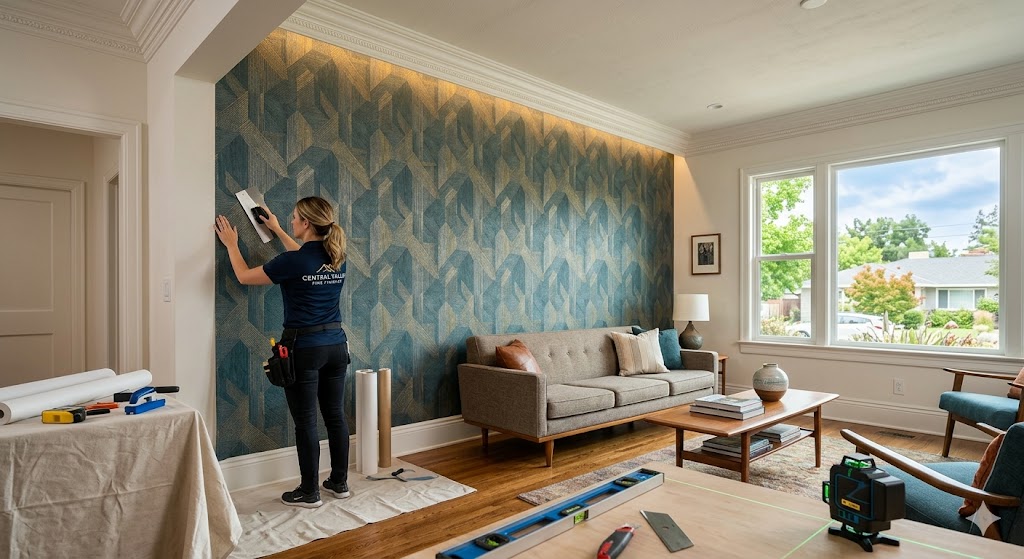
Interior design choices do more than express personal style—they interact directly with a home’s structural environment. For homeowners across the greater Sacramento valley, choosing a striking feature wall or a textured accent involves navigating specific regional factors. The shifting microclimates between the delta breezes of Elk Grove, CA and the foothill heat of Folsom, CA can significantly affect how wall coverings age, adhere, and perform over time.
While generic design blogs treat wallpaper as a simple afternoon craft project, professional custom installations require a deep understanding of environmental variables. Achieving a smooth, long-lasting finish depends on matching the right materials to your home’s structure and regional climate.
Architectural Shifts: The Structural Foundation of Wall Prep
A primary reason basic DIY installations often fail in Central California is the structural diversity of the local housing stock. The foundational canvas varies dramatically depending on the neighborhood and when the property was built.
Plaster vs. Modern Drywall Dynamics
If you are updating a historic property or a mid-century home in Midtown Sacramento or older pockets of Galt, CA, your walls are likely lath-and-plaster. Plaster is a highly porous, alkaline material that absorbs moisture unevenly. It expands and contracts with shifting ambient humidity, creating microscopic movements that can rupture weak adhesive bonds.
In contrast, modern residential construction in newer developments across Elk Grove, CA and Rancho Cordova, CA relies almost exclusively on gypsum drywall. Drywall offers a more uniform surface, but its paper face and mudded joints absorb primers and water-based glues at completely different rates. Without an exact, uniform vapor barrier, the outline of every drywall panel can telegraph directly through premium wallcoverings, ruining the clean look of the design.
Settling, Shifting, and Micro-Movements
The Sacramento basin is built on rich alluvial soil. Seasonal moisture changes cause foundations to shift slightly over time. This minor settling often causes hairline fractures in plaster and joint stress in drywall.
When a professional tackles custom wallpaper printing, they don’t just paste over these areas. They use specialized non-woven liner papers or fiber-reinforced patching compounds to bridge these minor structural shifts. This step ensures that when your home settles during dry summer spells, your expensive custom graphics won’t wrinkle or tear along the seams.
The Central Valley Climate: Humidity, Heat, and Adhesive Chemistry
The climate of the Central Valley features a dramatic daily temperature cycle. Dry, blistering summer days are often followed by cool, damp nights driven by incoming delta breezes. This wide temperature swing creates unique challenges for wallcovering adhesives.
The Mechanics of Adhesive Curing
Wallpaper pastes are complex polymers that rely on a controlled evaporation rate to cure correctly. When temperatures climb during a standard valley summer, bare drywall can draw moisture out of the paste too rapidly. This premature drying prevents the adhesive from forming a strong bond, leaving behind brittle pockets that lead to edge curling and loose seams.
Conversely, ambient humidity during the damp winter months slows down the curing process. If the paste remains wet for too long behind a non-breathable vinyl sheet, it creates a prime environment for mildew growth. Expert residential wallpaper installation addresses these issues by using specific moisture-resistant primers and starch-based or heavy-duty clay adhesives tailored to the home’s current indoor humidity.
+-------------------------------------------------------------------+
|               Adhesive Selection Matrix by Material               |
+------------------------------+------------------------------------+
| Material Type                | Recommended Adhesive Formulation   |
+------------------------------+------------------------------------+
| Traditional Paper & Non-Woven| Clear, non-staining wheat/starch   |
| High-Performance Solid Vinyl | Heavy-duty clay-based strip adhesive|
| Natural Grasscloth & Textiles| Premium clear adhesive (no-paste face)|
| Peel-and-Stick (Acoustic)    | Factory acrylic pressure-sensitive|
+------------------------------+------------------------------------+
Navigating Vapor Barriers and Breathability
Every material breathes differently. A natural woven grasscloth allows ambient moisture to pass through relatively unhindered. A thick, commercial-grade vinyl, however, acts as a total vapor barrier.
If moisture gets trapped behind a non-breathable layer, it can compromise the underlying drywall mud. To prevent this, professional installers seal the wall with an explicit, mold-inhibiting acrylic primer. This step ensures the adhesive layer stays securely bonded to the primer rather than pulling up the delicate drywall paper underneath.
Material Specifics: Matching the Right Compound to Your Space
Every wallpaper style requires a distinct installation technique. Treating a delicate natural fiber the same way as a synthetic commercial material will inevitably cause issues.
The Challenge of Grasscloth and Natural Textiles
Natural grasscloth brings beautiful texture and warmth to a room, making it a highly sought-after design choice. However, because it is woven from natural grasses, it cannot be washed and expands significantly when it absorbs water from the paste.
If a craftsman gets a single drop of wet adhesive on the front face of a grasscloth panel, it will dissolve the natural dyes and leave a permanent, unfixable stain. Installing this material requires precise seam trimming and careful handling to keep the face of the paper completely dry.
Heavy-Duty Commercial Vinyls
For high-traffic spaces like medical offices in Roseville, CA or commercial entryways in Sacramento, CA, commercial wallpaper installation calls for Type II or Type III vinyls. These heavy-gauge materials are durable and impact-resistant, but they have zero natural elasticity.
To hang them cleanly without visible overlaps, installers use a technique called double-cutting. The panels are overlapped on the wall, and a clean cut is made through both layers simultaneously using a fresh razor blade. The excess strips are removed, creating an airtight, perfectly flush seam capable of withstanding heavy daily wear.
The Reality of Peel-and-Stick Films
Self-adhesive or “peel-and-stick” products are often marketed as an easy weekend project, but they bring their own set of challenges. These films use pressure-sensitive acrylic adhesives that do not slide easily during placement. Once the film touches the wall, it grips immediately.
If the wall surface has even minor texture—like a standard orange peel or knockdown finish common in suburban homes—the adhesive will only touch the high spots. Over the course of a few weeks, changes in room temperature will cause the film to shrink, lift, and eventually pull away from the wall. Achieving a long-lasting result with peel-and-stick requires a perfectly flat, level-5 smooth wall finish.
The Strip Down: Safely Removing Old Wallcoverings
Putting up a beautiful new design often requires removing an old, outdated layer first. Proper wallpaper removal is a highly technical task that requires patience and the right approach to protect the underlying wall.
The Hidden Risks of Steaming and Scrapyards
Many homeowners attempt to remove old paper using rented steamers and aggressive metal scrapers. In the hands of an amateur, a steamer can quickly become destructive.
Leaving a hot steam plate against a drywall surface for too long softens the underlying gypsum core and dissolves the joint compounds. Combined with heavy scraping, this often gouges the wallboard, requiring extensive and costly drywall repairs before any new finish can be applied.
Enzyme Solutions and Clean Stripping
Professional crews rely primarily on targeted enzyme solutions rather than raw heat and force. These specialized enzymes penetrate the outer decorative face to break down the specific starches and clays in the old glue.
────┘
Once the adhesive is safely dissolved, the old backing material slides off cleanly, leaving the original drywall intact and well-preserved.
Finding a Qualified Craftsman in the Sacramento Basin
When you are ready to invest in premium wallcoverings, choosing the right installer is the most critical decision of the project. Look for an experienced professional who understands the unique structural and climate needs of the region.
Essential Credentials for Your Installer
- Active State Licensing: Ensure your contractor holds a valid California C-33 (Painting and Decorating) license, which is legally required for professional installations over a specific dollar amount.
- Comprehensive Insurance: Verify they carry active liability insurance and workers’ compensation policies to protect your property and the crew on site.
- A Tailored Regional Portfolio: Look for an installer with a diverse portfolio that showcases successful projects across different local areas, showing they know how to work with both older plaster walls and modern drywall construction.
For homeowners seeking flawless execution and detailed surface preparation across the greater Sacramento area, partnering with a specialized team makes all the difference. You can explore expert residential and commercial services by visiting a dedicated local provider like toprodeccor.com. Ensuring your walls are correctly evaluated and prepared is the key to an interior transformation that looks exceptional and stands the test of time.
If you are dealing with outdated layers or a failing DIY project, bringing in a professional for wallpaper removal Elk Grove California can save you hours of frustration and prevent costly structural damage to your drywall.
Frequently Asked Questions (FAQ)
Can wallpaper be safely installed over textured walls?
No. Standard California wall textures, such as orange peel, knockdown, or skip-trowel, prevent wallpaper from adhering correctly. The paste cannot create a continuous bond on an uneven surface, which leads to air bubbles, splitting seams, and eventual peeling. Textured walls must be skim-coated with joint compound, sanded smooth, and sealed with a high-quality primer before installation.
How long does a professional wallpaper installation take?
Timeline depends entirely on the room’s layout, wall condition, and material choice. A single accent wall with straightforward modern drywall prep can often be finished in a single day. A large room requiring extensive old paper removal, plaster repair, skim-coating, and a delicate material like grasscloth may take three to five days to complete correctly.
Why are my wallpaper seams opening up after a year?
Separating seams are usually caused by incorrect wall preparation or rapid temperature fluctuations. If the installer skipped using a dedicated wallpaper primer, the drywall may have pulled moisture out of the paste too quickly, weakening the bond. Additionally, natural expansion and contraction from seasonal temperature changes can pull weak seams apart over time.
Is it safe to use wallpaper in a high-humidity bathroom?
Yes, but it requires selecting the right materials. Traditional papers and natural textiles can absorb moisture and develop mold in a damp bathroom. For full bathrooms with showers, it is best to use a heavy-duty, non-porous solid vinyl wallcovering paired with a mold-resistant primer and a specialized clay-based adhesive.
What is the difference between a standard painter and a specialized wallpaper installer?
While some painters hang wallpaper, specialized wallpaper installers focus specifically on the unique technical demands of wallcoverings. They are experts in complex pattern matching, handling delicate premium materials, calculating precise spatial layouts, and using advanced adhesive chemistry tailored to different wall surfaces and environmental conditions.

