
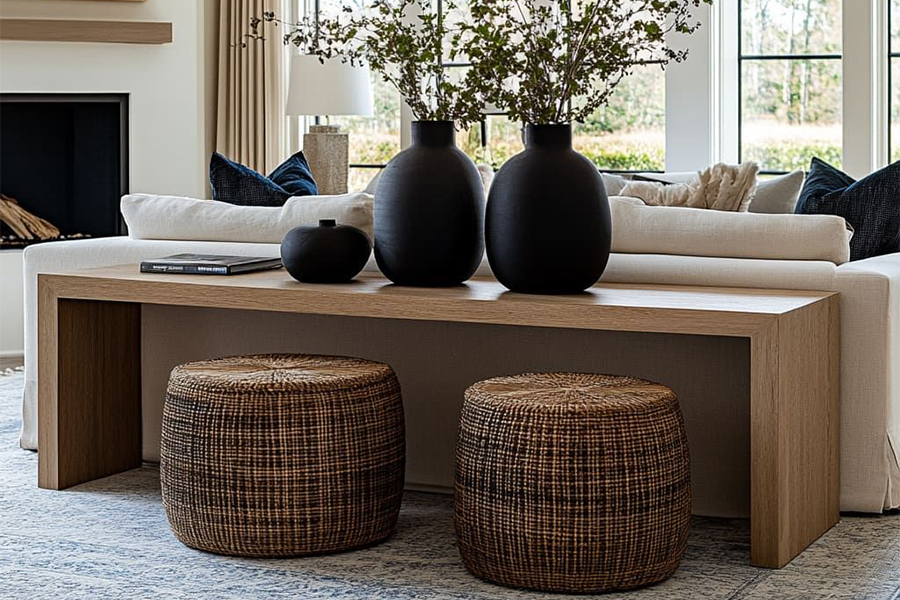
A console table might seem like a small detail, but it often does the heaviest lifting in a room. It anchors an entryway, frames a hallway, or adds depth behind a sofa — and the style you choose sets the tone for everything around it. Two of the most popular directions today sit at opposite ends of the design spectrum: modern and rustic. Both are beautiful. Both are functional. But they speak very different visual languages.
Here’s how to figure out which one belongs in your home.
What Defines a Modern Console Table?
Modern console tables are defined by restraint. Their silhouettes are clean and geometric — think straight legs, flat surfaces, and no unnecessary ornament. Materials lean toward metal, tempered glass, lacquered wood, or engineered composites. Finishes are typically matte, high-gloss, or brushed, in neutral palettes: white, black, charcoal, warm grey, or natural light oak.
What makes them feel “modern” isn’t just newness — it’s intentionality. Every element has a reason to be there. Hardware is minimal or invisible. Joints are tight. The overall effect is one of quiet confidence: the table doesn’t beg for attention; it earns it.
Modern console tables also tend to be space-efficient. Many feature floating shelves, slim profiles, or open bases that keep a room feeling airy rather than crowded.
Best for: Apartments, open-plan interiors, spaces with neutral palettes, minimalist or Scandinavian-influenced rooms, homes with contemporary architecture.
What Defines a Rustic Console Table?
Rustic console tables tell a different kind of story — one rooted in texture, imperfection, and the passage of time. Reclaimed wood is the signature material: barn boards, weathered oak, distressed pine. The grain is visible, the knots are celebrated, and the surface might carry the marks of a previous life. Metal accents, when present, tend to be wrought iron, raw steel, or blackened hardware that looks hand-forged rather than machine-made.
The colour palette runs warm: honey, amber, walnut, espresso, and aged grey. There’s an inherent coziness to rustic furniture — it makes a space feel lived-in rather than staged.
Unlike modern tables, rustic pieces often lean into asymmetry and variation. No two reclaimed-wood tables are exactly alike, which is part of the appeal. You’re not buying a product so much as inheriting a piece of material history.
Best for: Farmhouse, cottage, and country-style homes; warm, layered interiors; spaces with exposed brick, stone walls, or wooden beams; entryways that want to feel welcoming rather than polished.
Key Questions to Ask Yourself
1. What does the rest of your space look like?
A modern console table dropped into a room full of warm wood tones and linen textures can feel cold and out of place. Equally, a chunky reclaimed-wood piece in a sleek, white-walled apartment can clash rather than contrast. The console table should converse with the room — not compete with it.
2. How do you want the space to feel?
Modern tables create a sense of order and ease. If you want your entryway to feel calm and put-together the moment you walk in, modern is likely the right call. If you want warmth, texture, and a sense of welcome — something that feels like it’s always been there — rustic wins.
3. What will you display on it?
Modern tables pair beautifully with architectural objects: ceramic vessels, monochrome art prints, a single statement lamp. Rustic surfaces are more forgiving — they can handle wildflowers in a mason jar, stacked books, or a collection of mismatched candleholders. Think about the objects you love and which style lets them breathe.
4. How much space do you have?
Modern console tables, particularly those with slim legs and open designs, tend to work better in tight corridors or small entryways. Rustic tables, with their heavier proportions, need a bit more room to feel balanced rather than crowded.
5. Are you decorating for the long term?
Rustic furniture tends to age gracefully — scratches and dings become part of the character. Modern pieces, depending on the finish, can show wear more obviously over time. If you have children or pets, a distressed-wood rustic table might be more forgiving of everyday life.
Can You Blend Both?
Absolutely — and increasingly, the most interesting interiors do exactly that. A modern console table base (say, thin black metal legs) paired with a live-edge wood top bridges both worlds. Or a reclaimed-wood table set against a white wall, styled with contemporary ceramic objects. This “warm modern” or “modern rustic” approach is one of the most popular interior directions right now, and a well-chosen console table can be the piece that ties it together.
The key to blending successfully is to find one element the two styles share — a colour, a material tone, or a silhouette quality — and let that be the thread.
The Verdict
There’s no universally right answer — only the right answer for your space, your habits, and the atmosphere you’re trying to create.
Choose modern if you value clean lines, easy maintenance, and a space that feels considered and contemporary. Choose rustic if you want warmth, texture, and a piece that feels like it has a story. And if neither feels entirely like you, look for the hybrid: a table that borrows the best from both worlds.
Either way, the best console table is the one that makes you feel something the moment you walk through the door.
