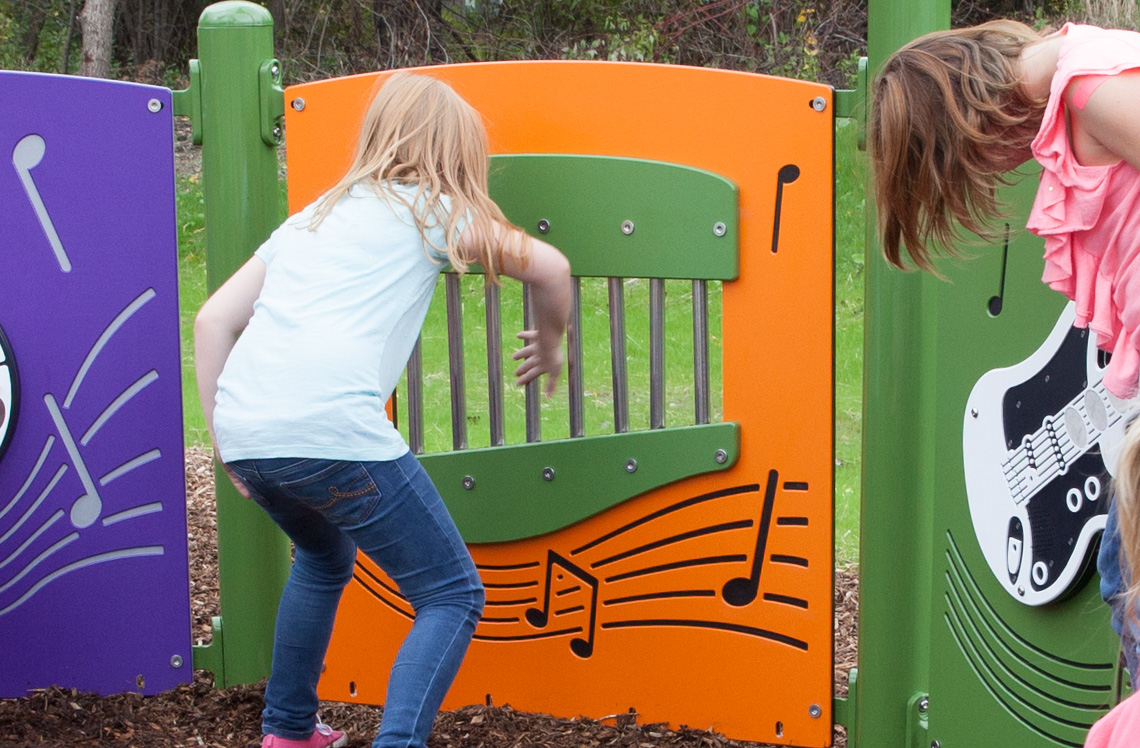
Music remains one of the most natural and earliest methods that children use to get to know their environment. Even before the child can recognise letters and form words, rhythm and melodies are the first to make them stop and wonder. Kids who get to play in outside spaces that have musical components get not just a fun way to discover sounds but also to improve balance, make new friends, and be sporty at the same time.
The Role of Sound in Child Development
Playing with sounds is a great and fun way of encouraging children’s development in different aspects at the same time. Kids playing with musical instruments and equipment that produce sounds not only become better at music but also develop other skills.
Structured sound can really give one’s brain a good workout. Identifying and creating patterns in rhythm and pitch not only improves their working memory but also reinforces the neural pathways responsible for language learning. And looking at studies of early childhood development, it is a fact that musical activities have a positive impact on children’s literacy and numeracy skills.
Besides that, motor skills improve along with musical play. Hand-eye coordination and controlled movement are required when playing with musical installations, such as hitting, tapping, spinning, or sliding. These kinds of physical activities improve both fine and gross motor skills in a very indirect, playful way, so the process of learning becomes enjoyable and the results last longer.
What Makes Musical Playground Equipment Effective
Successful musical playground equipment can help functionally develop several aspects of children at the same time. The top designs are those which can be used for open-ended play, inviting the children to decide how they wish to use the equipment without being bound to the sequence of actions.
Engagement Boosting Design Traits
How long and in what way kids use outdoor musical installations is determined by their physical configurations. Quality is marked by:
- Ability to resist weather changes: Such equipment should be able to be left outside in all kinds of weather without the sound or structure deteriorating. Stainless steel and treated hardwood are some of the most durable materials used in the installation.
- Accessibility for all: A smartly designed set of equipment is one that children with different physical abilities and of different ages can use without assistance. The panels located at a different height, tactile surfaces, and elements that can be operated from a sitting position are some of the features that work together to make it possible for all children to participate without adaptation.
- Ranging sound and variety: Musically speaking, a minimum of three tones creates an environment that is inviting and continuous rather than abrupt and temporary. An instrument with a single note limits the amount of creative play, whereas the presence of multiple tones in a musical design gives rise to experimentation with sequences and combinations.
By adding musical play panels to a playground, one can provide children with the opportunity for musical exploration through outdoor play, which is both curated and guidance-free. In a limited space, a combination of several sound-producing surfaces is made possible by the use of panels, making them an excellent choice for schools, parks, and sensory gardens when it comes to the combination of outdoor music and education.
Placement and Safety Considerations
The location of musical equipment in a playground influences not only safety but also levels of user engagement. Moving sound-producing installations away from quiet or seating areas will allow the sound to travel without interruption and will also draw users to play in dedicated active areas.
In the UK, safety standards for outdoor play equipment are based on BS EN 1176. The standard covers various aspects such as upholding structural integrity, preventing entrapments, delineating fall zones, and specifying surface impact requirements. Any outdoor musical installation aimed at public or educational use should meet this standard and have documents proving that it has been independently tested and certified.
Benefits Across Different Play Settings
Musical play equipment, no matter the setting, brings about some developmental benefits. Different situations provide different scenarios for interaction and learning.
Within a school playground, musical equipment acts as a catalyst for collaborative play during breaks. Kids almost instinctively cluster around sound-making equipment, which in turn leads to opportunities for sharing, communication, and creative group activities. Teachers and playground supervisors have even observed that musical equipment serves to reduce conflicts since it offers a shared, meaningful activity.
In the case of town parks and other community gathering spots, musical play equipment helps make the attraction of outdoor areas more appealing to children of a broader age range. Toddlers will familiarise themselves with simple cause-and-effect interactions, whereas teenagers will challenge themselves with complicated rhythmic patterns. It is this multi-age feature that promotes intergenerational play among siblings and lessens the requirement for separate-age zones.
Musical installations in sensory gardens give rise to unique benefits. Kids who have sensory processing differences are often the ones who are most positively affected by controlled sound environments. Being able to access outdoor musical equipment in a sensory garden enables them to get predictable and easily regulated stimulation that, in turn, provides the foundation for the regulation of their emotions and the integration of their senses, all in a relaxing outdoor environment.
Conclusion
Outdoor musical play equipment is not just a fun addition to a playground. It can be a medium for developmental support, social interaction, and inclusive engagement among different groups of children.
If these are chosen and installed correctly, considering the appropriate safety standards, their value will remain constant through many years of use. Opting for long-lasting materials, inclusive design elements, and certified installations will guarantee that children, no matter their age or ability, can enjoy the full range of developmental benefits that musical outdoor play offers.