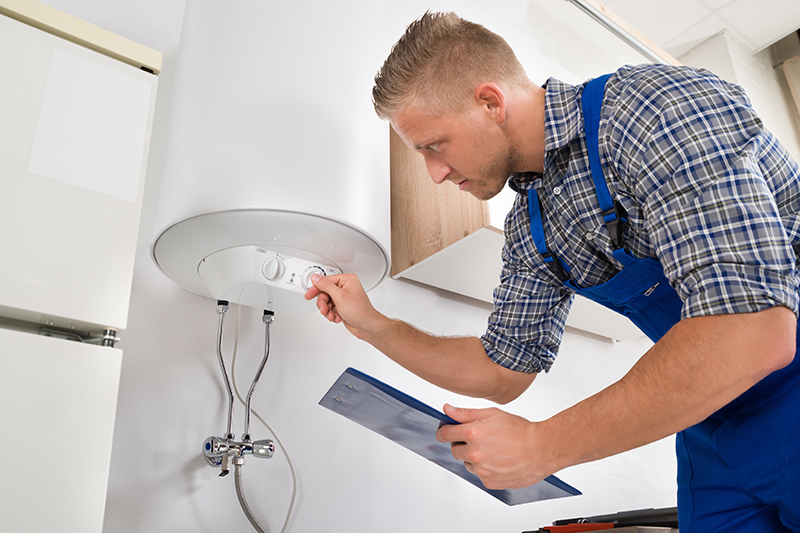
For most American homeowners, a water heater is a background appliance — something that works invisibly until it does not. You replace it when it fails, you choose a model roughly similar to what you had, and you move on. In Santa Rosa Beach and along the 30A corridor — from Rosemary Beach and Alys Beach through WaterColor, Grayton Beach, and Seaside — water heater replacement is a meaningfully more consequential decision than that.
The reasons are specific to this stretch of Walton County’s Gulf Coast. The hard water that runs through 30A homes carries elevated mineral content that attacks water heater components from the inside, building scale that reduces efficiency and compresses service life faster than most homeowners expect. The coastal humidity and salt air attack the outside, corroding metal components at a rate that shortens the gap between installation and replacement. And for the substantial number of property owners along the 30A corridor who rent their homes during peak season, a water heater failure at the wrong moment is not just an inconvenience — it is a guest refund, a scathing review, and a potential gap in a booking calendar that cannot be recovered.
This guide gives Santa Rosa Beach and Rosemary Beach homeowners the complete picture for 2026: what the 30A coastal environment does to water heaters that most manufacturers do not account for, how tankless and traditional tank systems compare in this specific setting, what replacement actually costs on the 30A corridor, when a repair makes sense versus when replacement is the only intelligent choice, and how to find the right plumber in Santa Rosa Beach, FL for the job.
How the 30A Coastal Environment Accelerates Water Heater Wear
Water heaters anywhere face a set of standard enemies: mineral accumulation, anode rod depletion, thermostat cycling stress, and the pressure and temperature demands of daily household use. On the 30A coast, every one of these enemies operates at an accelerated rate.
Hard water mineral buildup — the internal threat. Hard water is common in many parts of Northwest Florida, and the 30A corridor is no exception. Water with elevated calcium and magnesium content deposits mineral scale on every surface it contacts — inside tank walls, on heating elements, across the heat exchanger in a tankless system. This scale accumulation is not cosmetic. It acts as an insulating barrier between the heating element and the water it is trying to heat, forcing the system to work harder and run longer to deliver the same output. A tank water heater with significant sediment accumulation produces the characteristic rumbling and popping sounds that most homeowners have heard — the heating element burning through mineral deposits on every cycle. The constant warm weather in Florida means mineral deposits build up year-round without the seasonal breaks that might occur in climates with cold winters. There is no off-season for scale accumulation on the 30A coast.
Salt air corrosion — the external threat. Rosemary Beach homes deal with a mix of coastal humidity, salt air, and steady year-round water use — a combination that is tough on plumbing systems and particularly hard on the metal components of water heaters. Salt-laden coastal air attacks the anode rod — the sacrificial magnesium or aluminum rod inside every tank water heater whose entire function is to corrode in place of the tank walls — faster in coastal environments than the standard replacement intervals account for. A depleted anode rod is the most common precursor to tank corrosion and premature failure. In coastal Florida, annual anode rod inspection is the appropriate standard rather than the every-four-to-six-year interval that national manufacturers typically recommend.
Florida’s compressed service life reality. Traditional tank water heaters typically last 8 to 12 years in Florida’s demanding conditions — meaningfully shorter than the national average expectation of 10 to 15 years. This compression reflects the compound effect of year-round operation, high mineral content water, coastal humidity, and salt air that are specific to the Gulf Coast environment. For 30A homeowners planning purchase, renovation, or investment decisions, building this compressed timeline into long-term maintenance budgets is more realistic than assuming national average lifespans.
The vacation rental occupancy variable. Properties along the 30A corridor that operate as vacation rentals experience water heater wear at a fundamentally different rate than year-round residences. Peak season bookings place continuous high-demand hot water use on systems that may also sit partially idle during off-season months — a usage pattern that stresses tank water heaters through the cycling extremes of heavy demand followed by standby period sediment accumulation. A water heater that might reasonably serve a year-round family for 10 years can approach failure in a vacation rental property on an accelerated timeline that catches owners off guard.
Tankless vs. Traditional Tank: The Real Comparison for 30A Homeowners
The decision between tankless and traditional tank water heater systems is more nuanced on the 30A coast than the generic comparison most guides provide. Here is the honest side-by-side for Santa Rosa Beach and Rosemary Beach property owners.
Traditional Tank Water Heaters
How they work: A storage tank — typically 40 to 80 gallons — maintains a reservoir of hot water at a set temperature around the clock. When hot water is drawn, the tank refills and reheats to maintain setpoint.
Advantages in the 30A context:
- Lower upfront cost: $800 to $2,500 installed, making them the budget-accessible option for straightforward replacements
- Simpler installation: standard tank replacements can typically be completed in two to three hours with no electrical panel upgrades or gas line modifications required
- Broader technician familiarity: any licensed plumber can service a tank water heater, whereas tankless systems require specific training
Disadvantages in the 30A context:
- Shorter Florida service life: 8 to 12 years under coastal conditions versus the national benchmark
- Standby heat loss: maintaining 50 gallons of water at 120°F in a garage that reaches 90°F or 100°F during peak Florida summer creates less standby loss than in colder climates — but the system is still consuming energy to maintain temperature throughout the day even when no hot water is being used
- Finite hot water supply: a tank that has been fully depleted by multiple consecutive showers or a loaded vacation rental requires 30 to 45 minutes of recovery time before the next demand can be met comfortably — a real-world guest experience problem during peak occupancy
The hard water vulnerability: Scale accumulation inside the tank reduces effective capacity and heating efficiency over time. Annual flushing removes sediment that would otherwise accelerate element failure and increase energy consumption throughout the tank’s service life.
Tankless Water Heaters
How they work: A tankless system heats water on demand — only when a hot water tap is opened — using a high-output gas burner or electric heating element to heat water passing through the unit in real time. There is no storage tank and no standby heat loss.
Advantages in the 30A context:
- Significantly longer service life: tankless units can last 15 to 20 years with proper maintenance — roughly double the Florida service life of a traditional tank system
- Endless hot water supply: a properly sized tankless system delivers unlimited hot water at consistent temperature, eliminating the recovery time that tank systems require after heavy use — a significant advantage for vacation rental properties with multiple bathrooms in simultaneous use
- Energy efficiency: tankless water heaters can reduce energy costs by up to 35% compared to traditional tank systems — meaningful savings in a Florida market where water heating can represent 15 to 20% of total home energy consumption
- Space savings: wall-mounted tankless units occupy a fraction of the floor space that tank systems require — valuable in the beach house utility configurations common along the 30A corridor
- Coastal climate performance: tankless water heaters actually perform better in hot climates like Florida’s because they do not have to fight against ambient heat to maintain stored water temperature — when a garage reaches 100°F, a tankless unit is not working to keep 40 gallons of water hot in that environment
Disadvantages in the 30A context:
- Higher upfront cost: $1,500 to $3,500 or more installed, depending on unit capacity, fuel type, venting requirements, and whether electrical panel or gas line upgrades are needed
- Installation complexity: switching from a tank to a tankless system typically requires 4 to 8 hours of installation work, potential gas line capacity assessment, and in some cases electrical panel upgrades for electric tankless units — all of which add to the project cost
- Hard water maintenance requirement: tankless systems require annual descaling to prevent mineral buildup in the heat exchanger — a maintenance step that is more complex than tank flushing and typically requires a trained technician. Hard water is common in Northwest Florida, making this maintenance especially important. Skipping annual descaling can void warranties and reduce efficiency significantly
The 30A verdict for vacation rental owners: For properties operating as short-term vacation rentals along the 30A corridor, the calculus strongly favors tankless. The combination of longer service life, unlimited hot water supply that eliminates guest complaints, and energy cost savings over a 15-plus-year service period typically delivers a return on the premium installation cost within five to seven years — even before factoring in the avoided cost of an emergency replacement during peak booking season.
8 Clear Signs Your Santa Rosa Beach or Rosemary Beach Water Heater Needs Replacement
Proactive replacement — before a complete failure — protects 30A homeowners and rental property owners from the worst-case scenario. These eight signs indicate that replacement should be planned immediately rather than deferred.
1. The unit is over 8 to 10 years old. In Florida’s coastal conditions, a tank water heater over 10 years old is operating in borrowed time regardless of apparent performance. The internal components — anode rod, heating element, and tank lining — have been working against mineral-rich, salt-air-exposed conditions for a decade. The next failure is a when, not an if.
2. Rumbling, popping, or banging during operation. These sounds are the water heater telling you that sediment has accumulated to a level where the heating element is burning through mineral deposits on every cycle. Annual flushing prevents this in younger systems. When these sounds persist after a professional flush, the sediment accumulation has progressed beyond what maintenance can address.
3. Rust-colored or discolored hot water. Discoloration in the hot water supply — but not the cold water supply — indicates that corrosion is occurring inside the tank itself. Once the tank interior begins corroding, the unit requires replacement. There is no repair for an internally corroded tank.
4. Visible leaks from the tank body. A leak from the pressure relief valve may indicate a valve issue rather than tank failure. A leak from the tank body itself — the seams, the base, or the connections at the tank wall — indicates that internal corrosion has compromised the tank structure. Tank body leaks require immediate replacement before a small weep becomes a full tank failure.
5. Inconsistent water temperature or reduced hot water supply. A system that cannot maintain consistent output temperature, or that delivers noticeably less hot water than it previously did before requiring recovery time, is showing the efficiency degradation of advanced mineral accumulation, element failure, or approaching end of life.
6. Rising energy bills without a usage change. A water heater consuming more energy to deliver the same hot water output is working harder than its design efficiency allows — typically due to scale insulating the heating element or the anode rod failing to protect the tank from internal corrosion that reduces thermal efficiency.
7. Repair costs approaching 50% of replacement cost. Spending around half the cost of a new water heater on repairs over the last 12 months suggests that replacing the current unit is the more cost-effective option. This benchmark is especially relevant in coastal Florida, where the compressed service life means the remaining useful life after a major repair is shorter than national benchmarks would suggest.
8. The system cannot meet peak demand. For vacation rental properties, a water heater that consistently fails to meet the simultaneous demand of multiple bathrooms during a full-occupancy booking is not a maintenance issue — it is a capacity mismatch that cannot be resolved by repair. Upgrading to an appropriately sized tankless system or a larger tank unit is the correct response.
Water Heater Replacement Costs on the 30A Corridor in 2026
Understanding cost benchmarks before collecting estimates is the most effective protection against both inflated quotes and suspiciously low bids that achieve their number by cutting corners.
Traditional tank water heater replacement: $800 to $2,500 installed for a standard residential replacement — same fuel type, similar location, no significant modification required. Larger capacity tanks (75 to 80 gallons for vacation rental demand) add $200 to $600 to the equipment cost. If the replacement requires moving the unit to a different location or modifying the connections, expect additional labor charges.
Tankless water heater replacement: $1,500 to $3,500 or more installed for a standard residential application. Larger whole-home units sized for vacation rental demand can exceed $4,000 installed. If the existing gas line requires capacity upgrade, or if an electric tankless system requires panel upgrades, these modifications add $500 to $2,000 to the total project cost.
What legitimately drives cost differences on the 30A corridor:
- Fuel type: gas tankless units typically cost more than electric units but operate at lower per-BTU cost in most Florida markets
- Access complexity: utility closets in 30A beach homes are often in tight, awkward configurations — overhead access, narrow doorways, or second-floor mechanical rooms that complicate removal and installation
- Venting requirements: switching from a tank to a tankless system may require new venting installation that adds both material and labor cost
- Walton County permit fees: Florida requires permits for water heater replacements; Walton County permit fees typically add $75 to $200 to the project scope
The lifetime cost comparison: A traditional tank system at $1,500 installed with an 8 to 10-year Florida service life costs roughly $150 to $190 per year in capital cost before energy and maintenance. A tankless system at $3,000 installed with a 15 to 20-year service life costs $150 to $200 per year in capital cost — essentially equivalent on a pure lifecycle basis, before energy savings are factored in. The tankless system’s 35% energy savings, applied to a water heating energy cost of $400 to $600 per year for a 30A vacation rental property, adds $140 to $210 in annual savings — making the tankless system’s true lifetime cost lower despite the higher upfront investment.
The Vacation Rental Factor: Why 30A Property Owners Face Higher Stakes
A water heater failure during a holiday weekend booking generates consequences that extend well beyond the repair cost itself. A water heater failure can quickly lead to guest complaints, refunds, lost bookings, and emergency maintenance calls — and on the 30A corridor, where peak season rates command premium prices and guests have high expectations, the reputational damage from a plumbing failure during an active booking can affect bookings for future seasons.
Vacation rental owners and property managers along the 30A corridor need a plumbing partner who understands the specific demands of rental property water heater management — including the capacity requirements of back-to-back full-occupancy bookings, the maintenance protocols that protect system reliability through the peak season without requiring disruptive service visits during booked periods, and the emergency response capability to address a failure between check-out and check-in when the window for resolution is measured in hours.
Proactive planning protects against this scenario. Replacing a water heater that is approaching its expected service life before failure — scheduled during a shoulder-season gap in the booking calendar — is significantly less disruptive and less expensive than an emergency replacement during peak occupancy. A plumber in Santa Rosa Beach, FL with vacation rental experience understands this calendar management dimension and can help property owners plan proactively rather than reactively.
For vacation rental properties, the additional premium of a tankless system’s unlimited hot water supply is directly relevant to guest experience. A four-bedroom beach house with six guests who all want hot showers on checkout morning — the moment of peak simultaneous demand — is the scenario that exposes a tank system’s recovery time vulnerability most clearly. A properly sized tankless system eliminates this scenario entirely.
The 30A Water Heater Maintenance Calendar
Both tank and tankless water heaters along the 30A coast require maintenance protocols calibrated to coastal Florida’s specific conditions — not the generic intervals most manufacturers recommend.
For traditional tank water heaters:
- Annually: Professional flush to remove sediment accumulation. In Northwest Florida’s hard water environment, annual flushing is the minimum appropriate interval — not the every-two-to-three-year schedule that some national guidelines suggest. Annual flushing prevents the sediment accumulation that produces the rumbling noises indicating advanced element stress.
- Every 1 to 3 years: Anode rod inspection and replacement as needed. In coastal Florida’s salt air environment, anode rods deplete faster than the national standard replacement interval of every four to six years. Annual inspection allows the rod to be replaced before the tank walls lose their sacrificial protection.
- Annually: Pressure relief valve test to confirm the safety valve is functional and not seizing from mineral accumulation.
- As needed: Water heater blanket insulation check for units in unconditioned garage spaces where ambient temperature extremes stress the system.
For tankless water heaters:
- Annually: Professional descaling — flushing a descaling solution through the heat exchanger to dissolve mineral scale that reduces heat transfer efficiency. This service is more complex than tank flushing and requires a trained technician familiar with tankless systems. Skipping annual descaling can void manufacturer warranties and significantly reduce system efficiency. Hard water in Northwest Florida makes this maintenance especially important.
- Annually: Filter screen cleaning at the water inlet to prevent particulate restriction of the flow sensor.
- Annually: Venting inspection for any blockage, corrosion, or wildlife intrusion that could affect combustion safety for gas units.
- Every 2 to 3 years: Full system diagnostic including flow sensor, gas valve, and ignition system assessment for gas units.
Choosing the Right Plumber in Santa Rosa Beach, FL for Water Heater Replacement
The specific demands of 30A water heater replacement — coastal conditions, vacation rental scheduling constraints, luxury home configuration complexity — make contractor selection more consequential than a standard residential replacement.
Verify Florida plumbing license status. Every plumber performing water heater replacement in Florida must hold a state-issued Registered Plumbing Contractor (RPC) or Certified Plumbing Contractor (CPC) license, verifiable through the Florida Department of Business and Professional Regulation at myfloridalicense.com. Water heater replacement requires a Walton County permit, and only licensed contractors can pull permits on behalf of property owners.
Confirm local 30A and Walton County experience. A plumber in Santa Rosa Beach, FL who regularly works on homes in the Rosemary Beach, WaterColor, Grayton Beach, and Seaside communities understands the utility configurations common in 30A beach architecture — the tight mechanical closets, the second-floor tankless installations, the outdoor shower configurations that affect the hot water demand calculation. This local experience produces more accurate system sizing recommendations and more efficient project execution than a contractor encountering 30A property configurations for the first time.
Ask specifically about tankless installation experience. Tankless water heater installation requires different expertise than tank replacement — gas line capacity assessment, venting specification, electrical load calculation for electric units, and commissioning procedures that set flow rates and temperature limits correctly. A plumber who primarily installs tank systems is not automatically qualified to specify and install a tankless system for a 30A vacation rental property.
Require upfront, written estimates. A legitimate water heater replacement proposal specifies the exact equipment model and capacity, the installation scope including any required modifications, permit handling responsibility, and warranty terms for both the equipment and the installation workmanship. A bottom-line quote without these details is not a complete estimate.
Value scheduling flexibility for vacation rental properties. Property managers and vacation rental owners need a plumbing contractor who can accommodate the scheduling constraints that peak booking calendars create — working within check-out to check-in windows, completing installations efficiently to avoid disrupting guest stays, and maintaining emergency response availability for the failures that do not happen on convenient schedules.
Frequently Asked Questions
How long should a water heater last in Santa Rosa Beach or Rosemary Beach, FL? Traditional tank water heaters typically last 8 to 12 years in Florida’s coastal conditions — significantly shorter than the national average of 10 to 15 years due to hard water mineral buildup, salt air corrosion of external components, and the year-round heavy use that the Gulf Coast climate and vacation rental demand patterns create. Tankless water heaters, with proper annual descaling, last 15 to 20 years in the same environment.
Is a tankless water heater worth the higher cost for a 30A vacation rental property? For most vacation rental properties along the 30A corridor, yes. The combination of longer service life, unlimited hot water that eliminates guest complaints during peak occupancy, and energy savings of up to 35% compared to tank systems typically produces a return on the premium investment within five to seven years. The avoided cost of an emergency replacement during peak season — and the guest experience damage it prevents — adds further to the value case.
What causes the rumbling and popping sounds in my Santa Rosa Beach water heater? These sounds indicate sediment accumulation at the bottom of the tank — mineral deposits from Northwest Florida’s hard water that have built up to a level where the heating element is burning through the scale layer on every heating cycle. Annual professional flushing prevents this progression in younger systems. When these sounds persist after flushing, the sediment has advanced beyond what maintenance can address and replacement should be planned.
Do I need a permit for water heater replacement in Walton County? Yes. Florida requires permits for water heater replacements, and Walton County enforces this requirement. A licensed plumber handles the permit application and coordinates the inspection as a standard part of the project. Unpermitted water heater replacements create title complications, insurance claim complications, and safety liability for the property owner.
How do I know if my water heater needs repair or replacement? If your unit is under 8 years old and experiencing an isolated problem — a failed thermostat, a faulty pressure relief valve, a heating element failure — repair is likely cost-effective. If the unit is over 8 to 10 years old, showing multiple symptoms simultaneously, requiring repairs that total 50% or more of replacement cost, or producing rust-colored water indicating internal tank corrosion, replacement is the more economically rational decision. A licensed plumber in Santa Rosa Beach, FL provides an honest assessment based on actual inspection rather than a default recommendation.
What maintenance does a tankless water heater require in the 30A coastal environment? Annual professional descaling is the most critical maintenance requirement — flushing descaling solution through the heat exchanger to remove mineral scale from Northwest Florida’s hard water. This is more complex than tank flushing and requires a trained technician. Additional annual maintenance includes inlet filter cleaning, venting inspection for gas units, and flow sensor assessment. Skipping annual descaling can void manufacturer warranties and significantly reduce efficiency over time.
The Right Water Heater Decision Starts With the Right Plumber
Whether you are replacing a failing tank system in a Rosemary Beach vacation home, upgrading to tankless for a WaterColor rental property, or simply making sure a 10-year-old unit in your Santa Rosa Beach primary residence is still serving you well — the quality of the decision starts with a plumber in Santa Rosa Beach, FL who understands the 30A corridor’s specific demands and gives you an honest assessment based on your property’s actual conditions.
At Beach Bay & 30A Plumbing, we have built our reputation on exactly this kind of local expertise. Licensed, insured (FL License #RF11068032), and deeply familiar with the plumbing configurations, coastal conditions, and vacation rental scheduling realities that define life along the 30A corridor. Whether you need water heater replacement in Rosemary Beach, a tankless upgrade assessment in WaterColor, or emergency service during a peak-season booking gap — our team responds with the local knowledge, transparent pricing, and professional accountability that 30A property owners deserve.
Contact Beach Bay & 30A Plumbing today for a professional water heater assessment and honest replacement recommendation — and go into peak season with complete confidence in your hot water supply.
This guest post was contributed by the team at Beach Bay & 30A Plumbing, serving Santa Rosa Beach, Rosemary Beach, WaterColor, Grayton Beach, Seaside, and the full 30A corridor with licensed residential and vacation rental plumbing services.