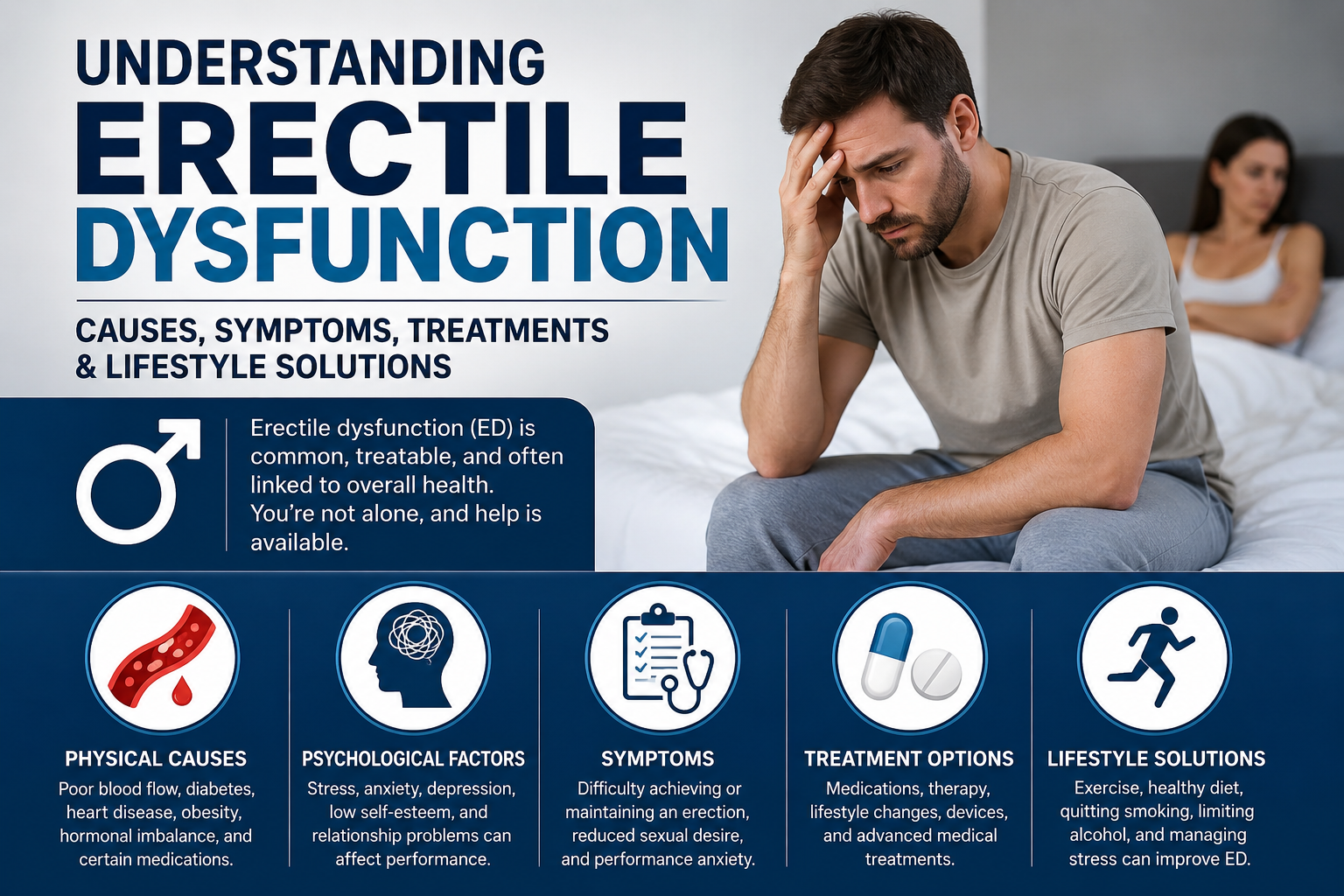
Erectile Dysfunction is a condition that affects millions of men worldwide, yet it remains one of the least openly discussed health concerns. Many people experience occasional difficulty maintaining an erection, but when the issue becomes frequent or ongoing, it may be a sign of erectile dysfunction, commonly known as ED. Although the condition can feel frustrating or embarrassing, modern medical research and treatment options have made it easier than ever to manage successfully.
Erectile dysfunction occurs when a man is unable to achieve or maintain an erection firm enough for sexual activity. The causes can vary from physical health conditions to emotional and psychological factors. In many cases, ED is not simply a standalone issue but a symptom connected to overall health and lifestyle habits.
Common Causes of Erectile Dysfunction
Several physical conditions are known to contribute to erectile dysfunction. Poor blood circulation is one of the most common reasons because erections depend heavily on healthy blood flow. Conditions such as high blood pressure, diabetes, obesity, and heart disease may increase the risk of developing ED. Smoking and excessive alcohol consumption can also negatively affect blood vessels and reduce sexual performance over time.
Hormonal imbalances may also play a role. Low testosterone levels can impact libido, energy, and sexual function. In addition, certain prescription medications may cause side effects linked to erectile problems.
Mental and emotional health are equally important. Stress, anxiety, depression, and relationship difficulties can significantly affect confidence and sexual performance. In some cases, performance anxiety itself becomes a cycle that worsens the condition.
Symptoms to Watch For
The primary symptom of erectile dysfunction is difficulty achieving or maintaining an erection. However, symptoms can appear in different ways. Some men may notice reduced sexual desire, while others may struggle with inconsistent performance during intimacy.
It is important to remember that occasional erectile issues are common and may happen due to stress, fatigue, or temporary emotional factors. Persistent symptoms lasting several weeks or months should be evaluated by a healthcare professional.
Diagnosis and Medical Evaluation
Doctors typically diagnose erectile dysfunction by reviewing medical history, lifestyle habits, and symptoms. A physical examination may also be performed to identify possible underlying health concerns. Blood tests can help detect diabetes, hormone imbalances, or cardiovascular problems that may contribute to ED.
In some cases, mental health evaluations may also be recommended, especially when stress, anxiety, or depression appear to be major factors.
Treatment Options for Erectile Dysfunction
Today, several treatment approaches are available for managing erectile dysfunction. The most widely recognized treatments are oral medications designed to improve blood flow. These medications are often prescribed after a doctor evaluates the patient’s overall health condition and medical history.
Lifestyle improvements can also make a major difference. Regular exercise helps improve circulation, heart health, and confidence. Maintaining a healthy weight, reducing alcohol intake, quitting smoking, and eating a balanced diet may naturally improve erectile function over time.
Psychological counseling or therapy may help individuals dealing with stress, anxiety, or relationship issues connected to ED. Open communication between partners can also reduce emotional pressure and improve intimacy.
For more severe cases, additional treatments such as vacuum erection devices, hormone therapy, or medical procedures may be recommended by specialists.
The Emotional Impact of ED
Erectile dysfunction affects more than physical health. Many men experience lowered self-esteem, frustration, or relationship tension because of the condition. Unfortunately, embarrassment often prevents people from seeking help, even though ED is extremely common.
Open conversations and medical support can make a significant difference. Understanding that erectile dysfunction is a medical condition rather than a personal failure is an important step toward treatment and recovery.
Partners also play an important role in emotional support. Honest communication can reduce misunderstandings and create a more supportive environment during treatment.
Prevention and Healthy Habits
While not all cases of erectile dysfunction can be prevented, healthy lifestyle choices may lower the risk. Regular physical activity improves circulation and heart health, both of which are essential for erectile function. A nutritious diet rich in vegetables, fruits, lean protein, and whole grains can also support long-term wellness. best treat of medicine sildenafil cenforce 200
Managing stress is equally important. Activities such as meditation, yoga, quality sleep, and relaxation techniques may help improve mental and emotional health. Routine medical checkups can also help identify early warning signs of conditions linked to ED.
Final Thoughts
Erectile dysfunction is a common health condition that affects men of different ages and backgrounds. Although it can feel difficult to discuss, modern treatments and medical understanding have made ED highly manageable in many cases. From lifestyle changes and emotional support to medical therapies, there are multiple ways to address the condition and improve quality of life.
Seeking professional advice early can help identify underlying causes and lead to more effective treatment. With the right combination of medical care, healthy habits, and emotional support, many individuals are able to regain confidence and maintain satisfying relationships. get more details: www.safegenericlife.com/