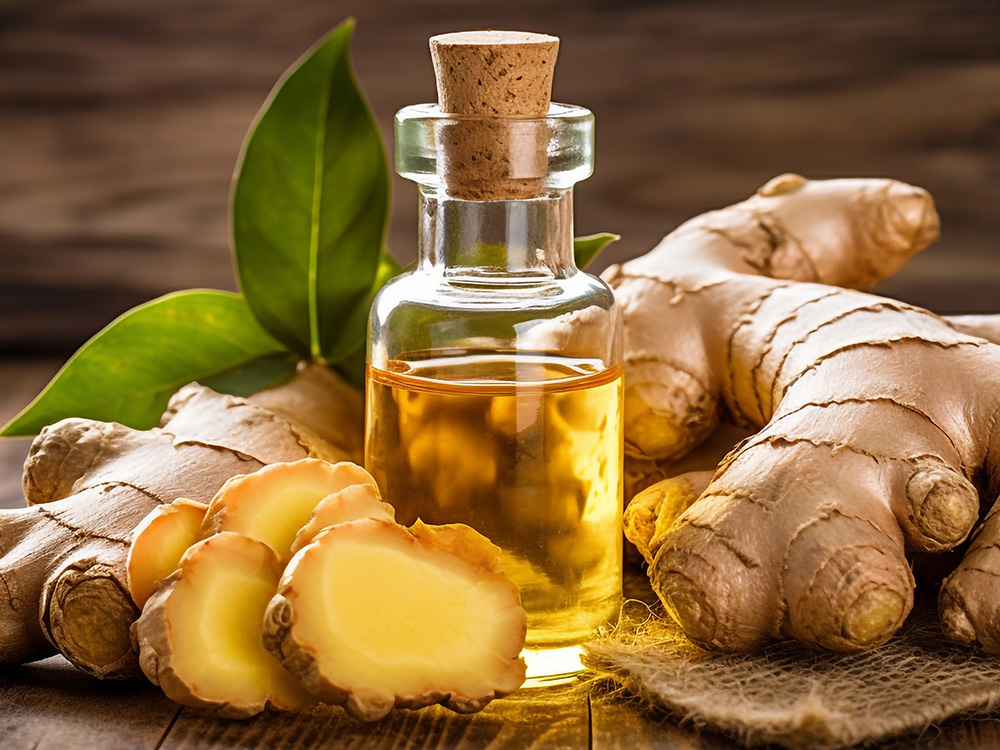
People who would have laughed at “essential oils” three years ago are now asking which brand to buy. Not influencers. Regular people. The kind who still argue about whether Dabur is better than Patanjali. Something shifted, and it happened quietly enough that most of us didn’t catch it until it was already everywhere. Ginger essential oil specifically keeps coming up. And I think there’s a reason it’s landing here in India more than anywhere else.
We Already Know Ginger. That’s the Whole Point.
Adrak is not exotic to us. It’s in the chai, it’s in the kadha our moms made us drink when we had a cough, it’s grated into dal without anyone thinking twice. We didn’t need to be sold on ginger; we needed someone to show us a different format for it.
The essential oil version is just that. Concentrated. No water content, no dilution, just the actual compounds extracted through steam. That sharp, slightly woody, warm smell is recognizable the second you open the bottle. And that familiarity matters more than people give it credit for. You’re not trying to trust something unknown. You already have 30 years of context for this plant.
What People Are Actually Using It For
Not in a clinical, listed out way. Just honestly, here’s what comes up most:
- Massaged onto the stomach area (diluted with coconut or sesame oil) when digestion feels off after a heavy meal
- Diffused during work hours, the scent is grounding in a way that’s hard to explain but easy to notice
- Mixed into hair oils, particularly for scalp circulation, this one is catching on fast in metros
- Cold and congestion season, same as always, just in a new form
None of this is revolutionary. It’s practical. That’s actually why it works for Indian consumers, we’re not really looking for ritual. We want something that does something.
Before You Buy A Few Honest Things
The essential oils india have grown fast, and the quality gap is real. A few things worth knowing:
- Steam distillation is the correct extraction method for ginger oil. Check that it says so on the label
- GC/MS tested means the chemical profile has been verified. If a brand doesn’t mention this, ask why
- Pure oil will always need to be diluted before it touches skin. That’s not a warning, that’s just chemistry
- If the price seems too low, it almost certainly is. Adulterated oils are common at the cheaper end
This isn’t to scare you off. It’s just that a little label reading now saves a lot of disappointment later.
Something Bigger Is Happening Here
India grows a significant portion of the world’s ginger essential oil. We have the agricultural base, the traditional knowledge, and the demand. What’s changing is that the consumer side people are becoming more intentional about what they put in and on their bodies. That shift is real, and it’s not going back.
Essential oils in India aren’t a trend imported from somewhere else. They’re a return to something that was already here, just in a more concentrated, more modern form.
So, Where Do You Start?
Pick one use. Seriously, just one. Diffuse it in the evening. Add a drop to your existing hair oil. Try the diluted stomach massage after a large meal. Give it a few weeks. Your body will tell you more than this article can. Ginger has been working for Indian households for centuries. The bottle just got smaller.
Conclusion
Ginger has never needed an introduction in India. We grew up with it. Our grandmothers knew it. Our kitchens still smell like it. What’s new is simply the form, concentrated, portable, and versatile. Ginger essential oil doesn’t ask you to abandon what you already know. It just gives you another way to use something that was already yours.
So if you’ve been curious, that curiosity is enough reason to start. Pick one use. Stay consistent for a couple of weeks. Let your experience tell you more than any article can. Because that’s how real wellness has always worked here, slowly, practically, rooted in what actually feels right for you.