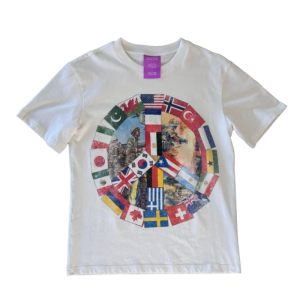
Peace in war does not mean the absence of violence; rather, it refers to the presence of compassion, understanding, and humanity amidst destruction. It can be seen in the actions of individuals who choose kindness over cruelty, even when surrounded by hostility. Soldiers sharing food with civilians, enemies helping wounded opponents, or families protecting one another despite overwhelming fear—these are all examples of peace existing within war.
One of the most powerful aspects of peace in war is the ability of individuals to recognize the humanity of those they are supposed to hate. War often depends on dehumanizing the enemy, portraying them as threats rather than people. However, when soldiers come face to face, they sometimes see reflections of themselves: young men and women far from home, driven by duty rather than hatred. In such moments, the barriers created by war begin to dissolve. A shared glance, a brief conversation, or even a silent understanding can create a connection that transcends conflict.
History provides many examples of such moments. Temporary ceasefires, where opposing sides agree to pause fighting, demonstrate that even enemies can choose peace, if only briefly. These pauses are often used to care for the wounded or to bury the dead, acts that show respect for human life regardless of allegiance. Such events highlight the idea that peace is not entirely absent in war; it simply exists in fragile and often overlooked forms.
Another important dimension of peace in war Peaceinwar is the resilience of civilians. While wars are often fought between armies, it is the ordinary people who bear the greatest burden. Despite losing homes, livelihoods, and loved ones, many individuals continue to show remarkable strength and compassion. Communities come together to support one another, sharing resources and offering comfort. In these acts of solidarity, we see peace—not as a grand political achievement, but as a daily practice of kindness and survival.
Art, music, and literature also play a role in creating peace within war. Even in the midst of conflict, people find ways to express their emotions and preserve their culture. Songs sung in shelters, poems written on scraps of paper, and drawings made by children all serve as reminders that creativity and hope cannot be completely destroyed. These forms of expression provide comfort and allow individuals to hold onto their identity, even when everything else is uncertain.
Peace in war Peace In War Shirt can also be found within the individual. Amidst the noise of conflict, some people discover an inner sense of calm or purpose. This does not mean they are unaffected by the horrors around them, but rather that they find ways to cope and maintain their sense of self. For soldiers, this might involve focusing on protecting their comrades. For civilians, it might mean caring for family members or helping neighbors. These acts provide a sense of meaning that can bring a form of peace, even in the most difficult circumstances.
However, it is important not to romanticize war by focusing too heavily on these moments of peace. War remains a devastating force that causes immense suffering. The presence of peace within war does not justify or diminish its horrors. Instead, it highlights the strength of the human spirit and the capacity for goodness, even in extreme conditions. These moments serve as reminders of what is at stake and why the pursuit of lasting peace is so important.
The concept of peace in war also raises important Peace in war Hoodie questions about human nature. Are we inherently violent, or are we capable of compassion even in the worst situations? The existence of peaceful moments during war suggests that empathy and kindness are deeply rooted in us. Even when systems and circumstances push individuals toward conflict, many still choose to act with humanity. This duality is a defining feature of the human condition.
In modern times, the idea of peace in war has taken on new dimensions. With advanced technology and global communication, the impact of war is more visible than ever before. Images and stories from conflict zones reach people around the world, creating opportunities for empathy and understanding. Humanitarian efforts, often supported by international communities, aim to bring relief and support to those affected by war. These efforts represent another form of peace—one that extends beyond borders and demonstrates global solidarity.
Education also plays a crucial role in fostering peace, even during times of conflict. Teaching values such as tolerance, respect, and critical thinking can help individuals resist the narratives that fuel hatred and division. In war-torn regions, schools and informal learning spaces often become places of refuge, where children can experience a sense of normalcy and hope for the future. These environments nurture the idea that peace is possible, even when it feels distant.
Ultimately, peace in war is a testament to the resilience and complexity of humanity. It shows that even in the face of overwhelming adversity, people are capable of choosing compassion over cruelty. These moments may not stop wars, but they plant seeds of hope that can grow into lasting change.
The challenge lies in recognizing and nurturing these moments of peace. By acknowledging them, we affirm the values that make us human and strengthen our commitment to building a more peaceful world. While war may seem inevitable at times, the presence of peace within it reminds us that conflict is not the only path. There is always the possibility of understanding, reconciliation, and healing.
In conclusion, peace in war is not a contradiction but a powerful reality. It exists in the smallest acts of kindness, in the resilience of communities, and in the inner strength of individuals. These moments do not erase the pain of war, but they offer a vision of what humanity can achieve. They remind us that even in the darkest times, the light of peace continues to shine, guiding us toward a better future.