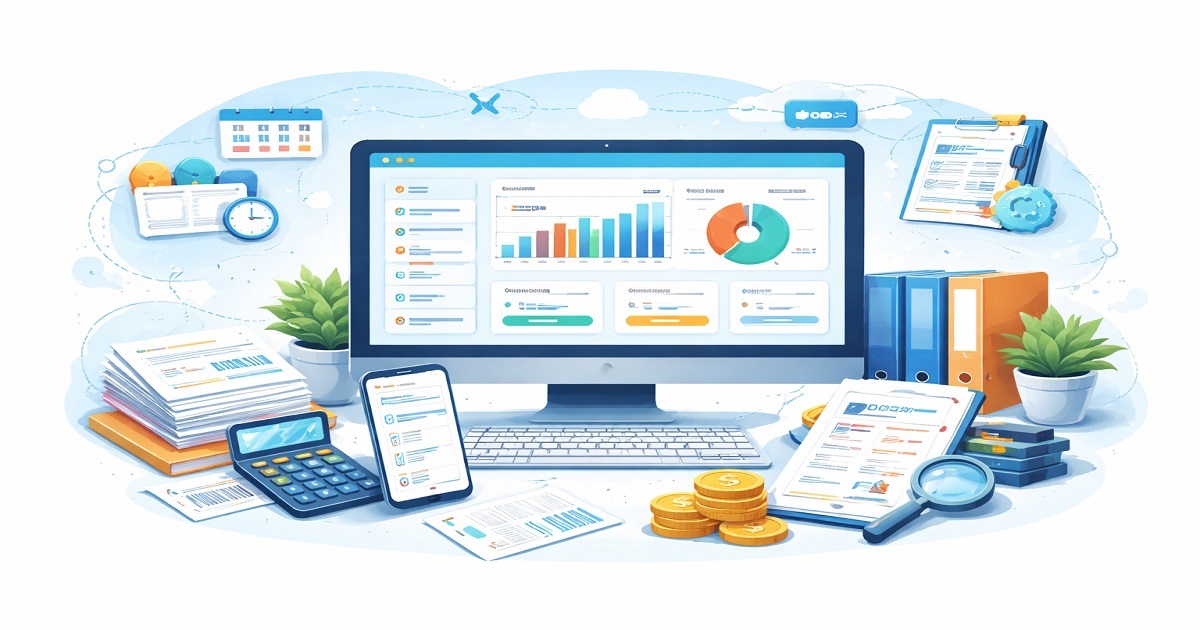
Managing cash flow effectively is one of the most important responsibilities for any business. Whether a company is small, medium, or large, maintaining a healthy balance between incoming and outgoing funds determines long-term stability and growth. In recent years, businesses across Saudi Arabia have been turning to digital financial tools to simplify financial management. A modern برنامج محاسبة helps organizations track income, monitor expenses, and gain complete visibility over financial operations, making it easier to manage cash flow efficiently.
As digital transformation accelerates, companies are moving away from traditional accounting systems and adopting cloud-based financial platforms. A cloud-powered برنامج محاسبة allows businesses to access financial data in real time, automate accounting processes, and maintain accurate financial records. Solutions provided by platforms like bnody.com are helping organizations across Saudi Arabia strengthen their financial management while improving operational efficiency.
The Importance of Cash Flow Management for Modern Businesses
Cash flow represents the movement of money in and out of a business. Even profitable companies can face financial difficulties if their cash flow is not properly managed. Expenses such as salaries, operational costs, inventory purchases, and supplier payments require consistent cash availability.
In a dynamic market like Saudi Arabia, businesses must maintain strong financial oversight to ensure stability. When organizations have clear visibility into their financial position, they can make better decisions regarding investments, budgeting, and operational planning.
Traditional accounting methods often relied on manual record keeping and delayed financial reporting. These limitations made it difficult for business leaders to monitor their financial position in real time. Cloud-based accounting software solves this problem by providing instant access to financial data and automated financial tracking.
Understanding Cloud-Based Accounting Systems
Cloud-based accounting systems store financial data on secure online servers instead of local computers. This allows businesses to access their accounting information from anywhere with an internet connection. For organizations operating in multiple locations, this accessibility provides significant advantages.
A cloud accounting platform centralizes all financial data, including invoices, expenses, financial statements, and transaction records. Instead of managing separate files and spreadsheets, businesses can handle all accounting tasks through a single digital platform.
This centralized approach improves financial accuracy and ensures that financial records remain updated at all times. Business owners and finance teams can review financial performance instantly without waiting for manual updates.
Real-Time Financial Visibility and Cash Flow Control
One of the most significant benefits of cloud-based accounting software is real-time financial visibility. Businesses can monitor their cash inflows and outflows as transactions occur. This instant visibility helps organizations identify financial trends and maintain better control over their cash resources.
When financial information is available in real time, companies can respond quickly to financial challenges. For example, if expenses begin to exceed revenue, management can adjust spending or accelerate invoicing processes to stabilize cash flow.
Real-time financial data also improves collaboration between finance teams and business leaders. Decision-makers can access accurate financial reports instantly, allowing them to plan future strategies with confidence.
Automating Financial Processes for Efficiency
Automation is a key advantage of modern accounting systems. Manual accounting tasks such as data entry, invoice creation, and expense tracking often consume significant time and resources. Cloud-based accounting platforms automate these processes, allowing businesses to operate more efficiently.
Automated invoicing ensures that invoices are generated and sent promptly, reducing delays in receiving payments. Expense tracking tools categorize transactions automatically, simplifying financial record keeping. Bank reconciliation features also help businesses match financial records with bank statements quickly.
By automating repetitive accounting tasks, businesses reduce the risk of human errors and ensure that financial data remains accurate. This level of efficiency directly contributes to better cash flow management.
Faster Invoicing and Payment Collection
Delayed payments are one of the most common reasons businesses struggle with cash flow. When invoices are sent late or payment tracking is inconsistent, companies may experience delays in receiving revenue.
Cloud-based accounting software helps businesses accelerate invoicing processes. Invoices can be generated instantly and delivered electronically to clients, ensuring faster communication and payment processing.
Some systems also include payment tracking features that notify businesses when invoices are overdue. This enables companies to follow up with clients promptly and maintain consistent cash inflows.
Faster invoicing combined with efficient payment monitoring improves overall financial stability and reduces the risk of cash shortages.
Financial Reporting for Strategic Decision Making
Accurate financial reporting is essential for effective business planning. Cloud accounting systems provide detailed financial reports that help organizations understand their financial performance.
Reports such as cash flow statements, profit and loss statements, and expense summaries allow businesses to evaluate their financial health. These reports also help identify areas where costs can be reduced or revenue opportunities can be expanded.
When financial data is organized and accessible, business leaders can make strategic decisions based on reliable information. This data-driven approach strengthens financial planning and supports sustainable growth.
Enhancing Collaboration Between Finance Teams
Cloud accounting platforms allow multiple users to access financial information simultaneously. This capability improves collaboration between finance departments, accountants, and business managers.
Instead of exchanging files through emails or physical documents, teams can work within the same accounting system. Updates made by one team member are instantly visible to others, ensuring consistency across financial records.
This collaborative environment improves workflow efficiency and reduces communication gaps. It also ensures that financial information remains accurate and up to date across the organization.
Strengthening Financial Security and Data Protection
Financial data is one of the most sensitive types of information within an organization. Protecting accounting records is essential for maintaining business integrity and regulatory compliance.
Cloud accounting platforms implement advanced security measures such as encryption, secure authentication, and role-based access control. These features ensure that only authorized personnel can access financial information.
In addition, cloud systems perform automatic data backups, reducing the risk of financial data loss due to hardware failures or technical issues. Businesses can operate with confidence knowing that their financial information is securely stored and protected.
Supporting Business Growth in Saudi Arabia
Saudi Arabia’s business landscape is evolving rapidly, driven by innovation and digital transformation initiatives. Companies across various industries are adopting cloud-based technologies to improve efficiency and competitiveness.
Accounting software plays a critical role in this transformation. Businesses that implement modern accounting systems gain greater control over financial operations, enabling them to scale their activities with confidence.
Cloud-based accounting platforms also support expanding organizations by providing scalable financial management tools. As companies grow, they can manage larger transaction volumes without increasing administrative complexity.
How bnody.com Helps Businesses Manage Cash Flow
Organizations seeking reliable accounting solutions are increasingly turning to bnodyfor advanced financial management tools. The platform provides cloud-based accounting features designed to simplify financial operations and improve cash flow control.
With automated accounting processes, real-time financial reporting, and secure cloud infrastructure, bnody.com enables businesses to maintain accurate financial records while reducing administrative workload. The system allows companies to track income, monitor expenses, and generate financial reports that support strategic decision making.
By adopting modern accounting technology, businesses can streamline their financial processes and focus more on innovation and growth.
The Future of Cloud Accounting Technology
The future of accounting is closely connected to advancements in digital technology. Artificial intelligence, predictive analytics, and automated financial insights are expected to transform how organizations manage their finances.
Future accounting systems will be able to forecast cash flow trends, identify potential financial risks, and provide recommendations for financial optimization. These capabilities will allow businesses to make smarter financial decisions and maintain stronger financial stability.
For companies operating in Saudi Arabia, adopting cloud-based accounting technology today prepares them for the evolving financial landscape of tomorrow.
Solutions offered by bnody help organizations modernize their accounting operations and strengthen financial oversight. As businesses continue to embrace digital transformation in 2026, cloud-based accounting systems will play a vital role in boosting cash flow and supporting sustainable growth.
FAQs
What is برنامج محاسبة?
برنامج محاسبة is accounting software that helps businesses manage financial transactions, track expenses, and generate financial reports.
How does cloud accounting improve cash flow?
Cloud accounting provides real-time financial insights, faster invoicing, and automated financial tracking, helping businesses maintain stable cash flow.
Is cloud accounting secure for financial data?
Yes, cloud accounting platforms use encryption and advanced security measures to protect financial information.
Can small businesses use cloud accounting software?
Cloud accounting systems are scalable and suitable for businesses of all sizes, including startups and small enterprises.
How does cloud accounting support business growth?
It improves financial visibility, reduces administrative work, and helps companies make data-driven financial decisions.