DERV (Diesel Engine Road Vehicle fuel) remains the backbone of the UK’s transport, logistics, construction, and agricultural sectors. Despite the increasing focus on electric vehicles, diesel continues to power millions of vans, HGVs, and commercial fleets across the country.
In 2026, the UK diesel market is experiencing moderate price stability combined with structural change, driven by government policy, global oil markets, and competition among suppliers. This guide explores the latest DERV fuel price trends, supplier comparisons, and market insights specifically for businesses and drivers across the United Kingdom.
Understanding DERV Fuel in the UK
DERV refers to standard road diesel used by vehicles operating on public roads. It differs from rebated fuels such as red diesel, which are restricted for agricultural or off-road use.
Businesses that rely on fleet operations—such as logistics companies, construction firms, and delivery services—often purchase DERV through fuel cards, bulk deliveries, or commercial supply contracts rather than retail forecourts.
In practical terms, DERV is typically sold as B7 diesel, which contains up to 7% biodiesel to meet environmental regulations.
2026 DERV Fuel Price Trends in the United Kingdom
The diesel market in 2026 reflects a mix of stability and gradual adjustment after several years of volatility.
Current Average Prices
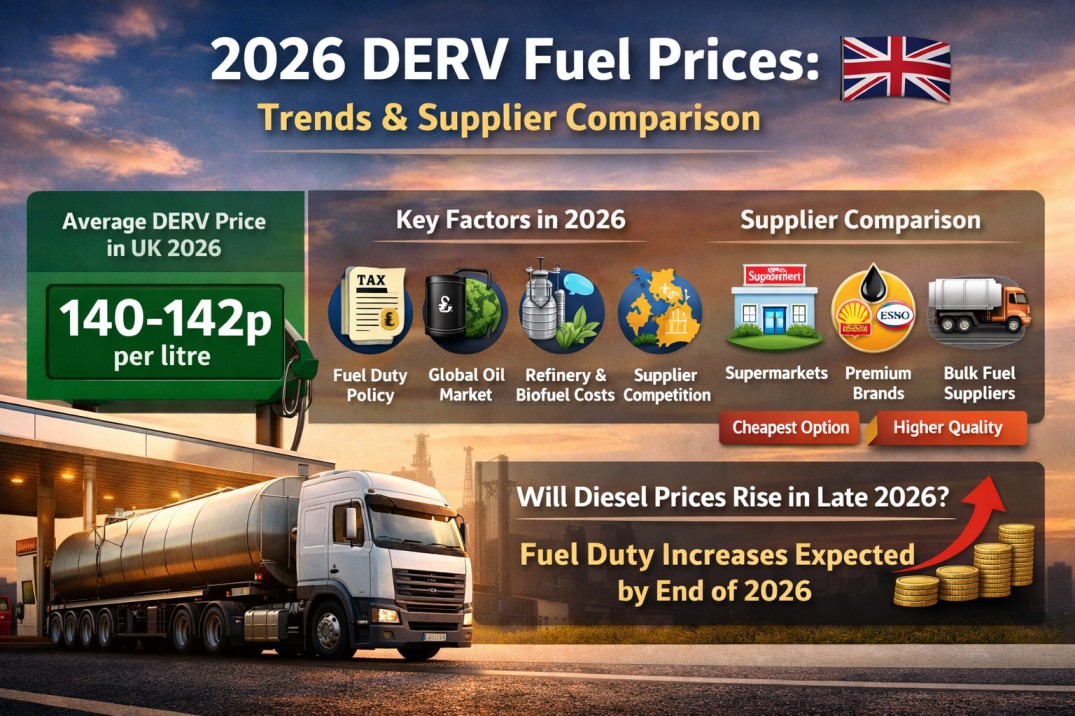
Recent data shows that diesel prices in the UK are hovering around 140–142 pence per litre in early 2026, following several weeks of slight price decreases.
Across the UK market:
- Average diesel price: around 141.5p per litre
- Typical retail range: 135p – 170p per litre depending on region and supplier
- Supermarket stations: roughly 138p per litre on average
- Premium fuel brands: approximately 143p per litre on average
This gap between suppliers highlights how fuel sourcing strategy can significantly affect operational costs for businesses.
Year-on-Year Market Movement
Compared with 2025, diesel prices have shown moderate improvement, with some weeks showing over 5p per litre cheaper than the previous year.
However, price fluctuations remain common due to:
- Global crude oil markets
- Currency exchange rates (GBP vs USD)
- Government fuel duty policy
- Seasonal demand cycles
Key Factors Influencing DERV Fuel Prices in 2026
1. Fuel Duty Policy
The UK government extended a 5p per litre fuel duty reduction until August 2026, preventing an immediate rise in pump prices earlier in the year.
Gradual increases are expected later in 2026 and into 2027 as duty levels move back toward pre-2022 rates.
2. Global Oil Supply
Oil supply decisions from major producers and geopolitical events often affect wholesale diesel costs. Changes in global crude prices quickly influence UK fuel prices.
3. Supply Chain and Refinery Costs
Transportation, refining capacity, and biofuel blending requirements also affect diesel pricing. Environmental regulations have increased operational costs for fuel producers.
4. Regional Market Competition
Fuel stations and suppliers compete heavily in the UK. Prices can vary significantly depending on whether fuel is purchased from supermarkets, independent suppliers, or major oil brands.
Supplier Comparison: DERV Fuel Providers in the UK
Businesses purchasing diesel often compare suppliers based on price, reliability, delivery coverage, and contract flexibility.
Supermarket Forecourts
Supermarkets are usually the cheapest option for individual drivers and small businesses.
Common advantages:
- Lower pump prices
- Loyalty schemes and discounts
- Wide UK coverage
Typical pricing advantage: around 5p per litre cheaper than premium brands.
However, supermarkets rarely offer large-scale bulk delivery contracts.
Premium Oil Brands
Major oil companies provide consistent fuel quality and strong infrastructure.
Typical providers include:
- BP
- Shell
- Esso
Advantages include:
- High supply reliability
- Fleet card programs
- Nationwide station networks
However, premium suppliers usually charge several pence more per litre compared with supermarkets.
Bulk Fuel Suppliers
Bulk fuel supply is popular among construction, logistics, and transport companies.
Benefits include:
- Lower per-litre cost for large volumes
- Scheduled fuel deliveries
- On-site fuel storage
Some UK marketplaces connect businesses with multiple suppliers to obtain competitive bulk diesel rates, allowing companies to secure real-time pricing from multiple distributors across the UK.
Bulk purchasing often delivers the best long-term savings for high-volume users.
Regional Price Differences Across the UK
DERV fuel prices are not identical nationwide. Several regional factors influence costs:
- London and South East: usually the most expensive
- Northern England and Scotland: slightly cheaper on average
- Motorway service stations: often 10–25p more expensive than local stations
Urban areas with higher demand and operating costs generally have higher fuel prices.
The Future of DERV Fuel in the UK
While diesel remains essential for commercial transport, the long-term market outlook is evolving.
Key developments include:
- Increasing adoption of electric vehicles
- Government incentives for zero-emission transport
- Gradual decline in diesel passenger vehicle sales
Despite these shifts, diesel will likely remain critical for freight, logistics, and heavy-duty vehicles for many years, especially where electric alternatives are not yet practical.
For businesses operating fleets today, fuel efficiency, supplier negotiation, and price comparison will remain essential strategies for controlling operational costs.
Frequently Asked Questions (FAQs)
1. What does DERV stand for?
DERV stands for Diesel Engine Road Vehicle fuel, the standard diesel used by cars, vans, trucks, and other vehicles operating on UK roads.
2. What is the average DERV price in the UK in 2026?
In early 2026, the average UK diesel price is approximately 140–142 pence per litre, although prices vary depending on location and supplier.
3. Why are diesel prices different across the UK?
Fuel prices differ due to regional competition, transportation costs, station overheads, and demand levels.
4. Are supermarket diesel stations cheaper?
Yes. Supermarket forecourts typically offer diesel around 5p per litre cheaper than premium fuel brands, making them a popular option for everyday drivers.
5. What is the difference between DERV and red diesel?
DERV is taxed diesel used for road vehicles, while red diesel is rebated fuel used for off-road machinery such as agricultural or construction equipment.
6. Will diesel prices rise in late 2026?
Possibly. The government plans to gradually adjust fuel duty after August 2026, which may lead to modest price increases.
7. Is diesel being phased out in the UK?
Diesel is not disappearing immediately, but its use is declining as the UK transitions toward electric and low-emission vehicles.
Conclusion
DERV fuel remains a vital component of the UK’s transport and logistics economy in 2026. While prices have stabilised compared with previous years, businesses must remain proactive in monitoring fuel trends and choosing the right supplier.
By comparing suppliers, leveraging bulk fuel contracts, and monitoring market conditions, UK fleet operators can significantly reduce fuel expenses and maintain efficient operations in a rapidly changing energy landscape.