
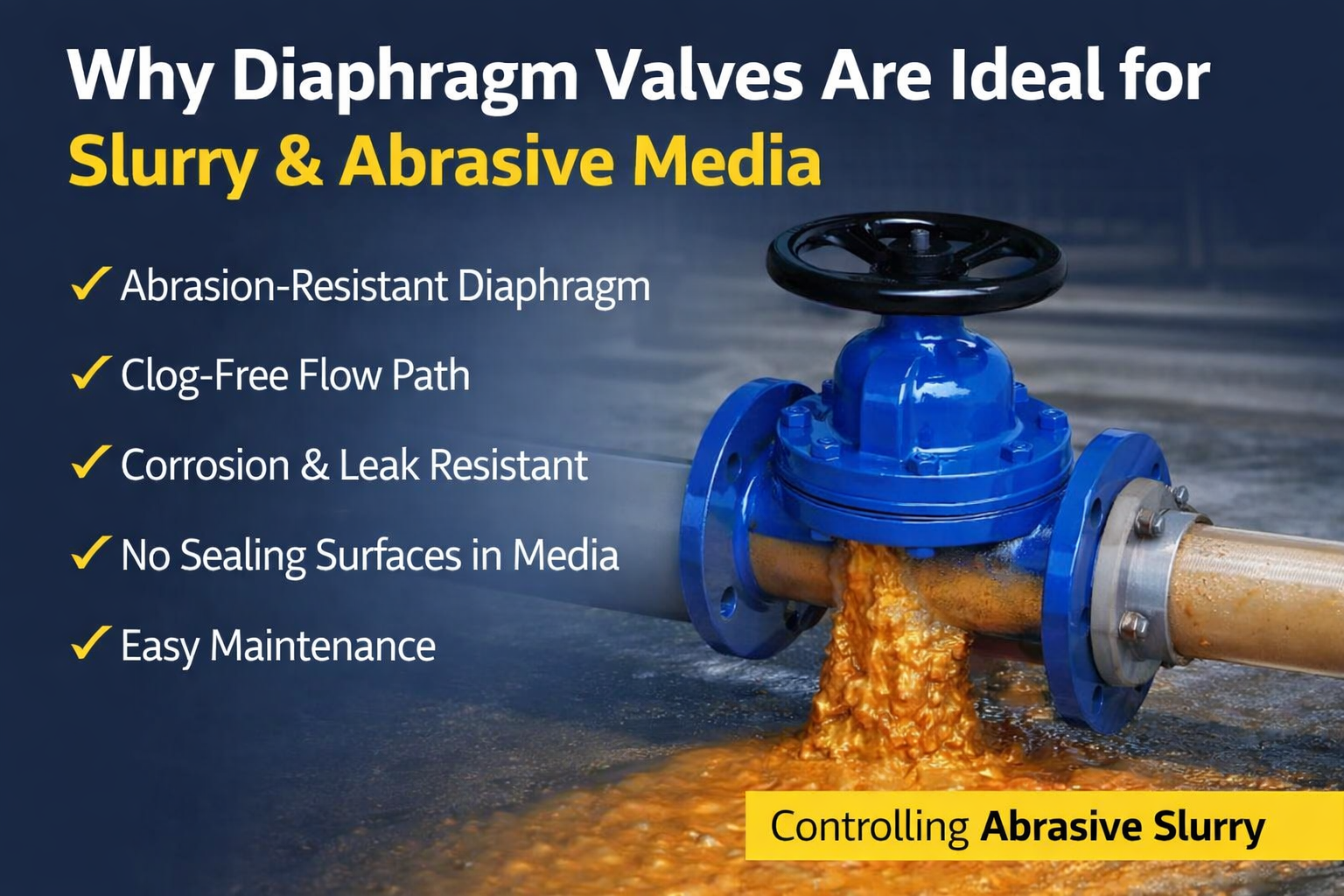
Industries such as mining, wastewater treatment, chemical processing, cement, pulp and paper, and power generation frequently deal with slurry and abrasive fluids. These media contain solid particles, corrosive chemicals, or fibrous materials that can severely damage conventional valves. Selecting the right valve technology is critical to maintaining system reliability, minimizing downtime, and ensuring safe operation. Among the various valve types available, diaphragm valves have proven to be one of the most effective solutions for handling slurry and abrasive media.
Challenges of Slurry and Abrasive Fluids
Slurry is a mixture of liquid and suspended solids such as sand, ash, ore particles, or sludge. Abrasive fluids contain hard particles that continuously erode surfaces through friction. These media create several operational challenges
Rapid wear of internal components
Sedimentation and clogging
Leakage due to damaged sealing surfaces
Corrosion from aggressive chemicals
Difficulty achieving tight shutoff
Traditional valves like gate, globe, or ball valves often fail in such conditions because their internal moving parts remain exposed to the process fluid.
Simple and Durable Construction
One of the primary reasons diaphragm valves perform well in harsh environments is their simple yet robust design. A typical unit consists of a valve body, a flexible diaphragm, and a compressor mechanism that presses the diaphragm onto a seat to stop flow.
Unlike other valve types, there are no complex components directly exposed to the media. The diaphragm acts as a barrier separating the fluid from the operating mechanism. This design reduces wear, prevents clogging, and ensures reliable operation even in highly contaminated systems.
High Resistance to Abrasion
Abrasive particles constantly impact valve surfaces, leading to erosion and eventual failure in conventional valves. Diaphragm valves use elastomeric or PTFE diaphragms that absorb particle impact instead of resisting it rigidly.
Additionally, many designs feature rubber-lined or PTFE-lined bodies that provide extra protection against wear. This combination allows diaphragm valves to maintain performance in extremely abrasive applications such as mining tailings, sand slurry, or fly ash transport.
Smooth Flow Path Prevents Blockage
Slurry fluids tend to settle in cavities and dead zones, causing blockages and operational interruptions. Many valve designs contain pockets where solids accumulate. Straight-through diaphragm valves offer a streamlined flow path with minimal obstructions.
The smooth internal geometry reduces turbulence and prevents particle buildup. As a result, these valves are far less likely to clog, making them ideal for thick sludge, viscous slurries, and fibrous media.
Reliable Leak-Tight Shutoff
Leakage control is critical when handling hazardous or corrosive slurry. The flexible diaphragm creates a tight seal across the seat, delivering bubble-tight shutoff even in the presence of suspended solids.
Because the sealing surface is resilient, small particles trapped during closure do not significantly compromise sealing performance. This makes diaphragm valves suitable for applications requiring strict environmental and safety compliance.
Isolation of Moving Parts from Media
Protecting internal components from abrasive fluids is essential for long service life. The diaphragm completely isolates the bonnet, stem, and actuator from the process media.
This means corrosive or particle-laden slurry never contacts these critical parts, dramatically reducing wear and maintenance requirements. This isolation feature is a major reason these valves are widely used in chemical plants and wastewater facilities.
Excellent Corrosion Resistance
Many slurry systems involve aggressive chemicals that can corrode metal components. Diaphragm valves can be manufactured with specialized linings such as rubber, glass, or PTFE to resist chemical attack.
The diaphragm material itself can be selected based on compatibility with specific media, enabling safe handling of acids, alkalis, chlorinated fluids, and other corrosive substances.
Low Maintenance and Easy Servicing
Maintenance costs can be significant in continuous industrial processes. The modular design of diaphragm valves allows quick inspection and replacement of the diaphragm without removing the valve body from the pipeline.
Since the diaphragm is typically the only component exposed to wear, replacing it restores performance with minimal downtime. This reduces lifecycle costs and improves operational efficiency.
Capability for Both Isolation and Control
Although primarily used for on-off service, many diaphragm valve designs also support throttling applications. The flexible diaphragm allows gradual flow regulation without excessive vibration or erosion.
This versatility eliminates the need for separate control valves in certain slurry systems, simplifying piping layouts and reducing equipment costs.
Automation Compatibility
Modern diaphragm valves are available with manual handwheels as well as pneumatic, electric, or hydraulic actuators. Automated versions enable remote operation and integration with process control systems.
Pneumatic actuation is particularly advantageous in hazardous environments because it eliminates electrical ignition risks. Automation improves safety, precision, and efficiency in large industrial facilities.
Typical Industrial Applications
Due to their durability and reliability, diaphragm valves are widely used in industries that handle solids-laden or corrosive fluids, including:
Mining and mineral processing
Wastewater and sewage treatment
Chemical and fertilizer plants
Pulp and paper manufacturing
Cement production facilities
Power generation plants
Food and pharmaceutical processes involving slurry
Their ability to handle abrasive particles while maintaining tight sealing makes them indispensable in these sectors.
Conclusion
Handling slurry and abrasive media requires equipment specifically designed for harsh conditions. Conventional valves often suffer from rapid wear, leakage, and blockage, resulting in frequent failures and costly downtime.
With their simple construction, resilient sealing mechanism, corrosion resistance, and clog-free flow path, diaphragm valves provide a dependable solution. By isolating critical components from the process fluid and minimizing erosion, they deliver long service life even in demanding applications.
For industries seeking reliable flow control of particle-laden or corrosive fluids, diaphragm valves remain one of the most effective and economical choices available.


