
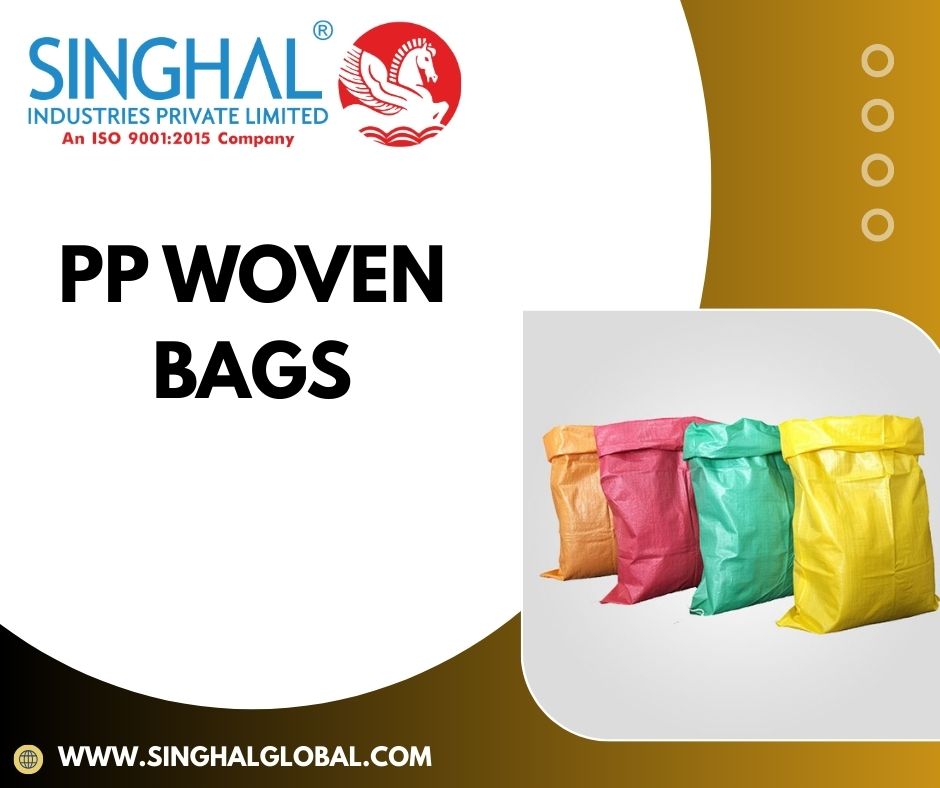
Synthetic polymers with extremely high strength and low weight have fundamentally transformed the global packaging industry. Within these range, polypropylene has become a juggernaut especially in industries where durability, moisture resistance and low cost are strongly sought after. Specialized containment solutions are crucial to the agricultural and construction industries, which are two key pillars of the economy. Polypropylene woven bags, or PP woven bags for short, deliver just the structural integrity needed to carry everything from heavier grains and seeds, right through to the types of abrasive construction materials like sand and cement. Its interlaced structure features a strength-to-weight ratio that would be hard to achieve with conventional materials.
PP Woven Bags: The Engineering Masterpiece
These bags are made by weaving polypropylene tapes in both warp and weft directions, making them strong. This style of woven fabric is extremely resistant to tearing and bursting because it uses round-weaving techniques. PP woven bags are made of thermoplastic resins and are resistant to acids, alkalis and many organic solvents. This chemical stability is essential in the construction industry because bags are often exposed to aggressive chemicals contained in cement and mortar. In addition, the woven fabric is breathable means that air flows through making it essential feature for agricultural products which can go bad if moisture gets trapped inside the container.
BOPP Woven Bags that Add Value to Your Brand
Packaging has transformed from a basic containment function to an essential marketing tool as competition among markets have stiffened. BOPP woven bags stands for Biaxially Oriented Polypropylene wherein the bags began to be developed. This step involves lamination of a high quality printed film to the woven polypropylene fabric. The result is a bag that combines the legendary strength of the woven bottom with a photographic level finish. They are popular with high-end animal feed, pet food and seeds. Laminated finish provides a canvas for bold branding as well as an additional protective moisture barrier to help keep contents dry in humid storage conditions.
Consistency and reliability are the hallmarks of a true leader in the cutthroat world of industrial textiles. The Woven sacks Singhal Industries Pvt Ltd stand out due to advanced manufacturing and stringent quality control. Using virgin polypropylene and modern extrusion lines, they manufacture sacks that stand up to mechanical handling and long-distance shipping. Their products also adhere to international safety standards, so that when large farms or construction companies purchase their packaging, it is guaranteed that the product will not be damaged and therefore make loss due to breakage or leakage negligible.
Durability in Harsh Agricultural Environments
At its heart, agriculture is an industry inextricably linked to the elements. Packaging for this sector must withstand UV exposure, changing temperatures, and rough handling during harvest. Standard PP woven bags in the sun become brittle and this can be prevented by subjecting them to UV stabilizers. This tough long-wearing durability also means that fertilizers and seeds can be kept in outdoor depots without worrying about bag failure. Since these sacks add negligible weight in comparison to older packaging methods such as heavy canvas or wooden crates, their lightweight design further minimizes overall transport fuel overhead.
Woven Sacks: Supporting Construction Logistics
Weight Is Always a Factor in the Construction Industry. You need a container that isn’t going to snap when the pressure changes quickly transporting sand, gravel and stone. The woven sacks made by Singhal Industries Pvt Ltd are designed for high-tensile loads. On a lot of construction sites, these bags aren’t even used for transport — they are used for flood control and soil stabilization as sandbags. (They can stay underwater or buried in soil without getting swampy, a problem with natural fibers such as jute, making them the go-to option for infrastructure projects around the world.)
Geotechnical Integration for Site Stability
Type of containment and soil management is a must while modern engineering is concerned. While bags take care of transporting the material, geotextiles are responsible for addressing the ground itself. It is consistently used in connection with woven packaging offering a full site prep solution. For example, geotextiles are installed on the subgrade to stabilize this with laying of temporary access roads on a farm or construction site and woven sacks can be used to deliver free draining aggregate. This interdependence among various synthetic textile offerings makes it essential to select a supplier who recognizes the full spectrum of industry requirements.
Plastics and Sustainability, Circular Economy Plastic Waste
With a growing focus on environmental sustainability, one major selling point is the recyclability of polypropylene. Whether classic brown bags or other multi-layer paper bags with adhesive coating which cannot be processed and recycled easily, pp woven bags are very recyclable. This reduces the environmental impact of both agricultural and construction sectors. There are many companies using sacks now with recycled content in the bags, allowing them to move toward a circular economy without losing bag mechanical strength.
Future Innovations in Woven Packaging
The market for woven packaging will stay equivalent in smart features and barrier properties. We are witnessing the introduction of bags integrating RFID tags for better inventory tracking, along with even thinner but stronger tapes to use less material. The technology behind polypropylene sacks will continue to adapt as the needs of the agriculture and construction industries change. It’s a commitment to innovation by leading suppliers that ensures whatever the load, wherever the environment, there will be a woven solution to meet the challenge.
Conclusion
Ultimately, polypropylene woven textiles are the pour heroes of the global supply chain. From its high-definition branding capabilities of bopp woven bags to industrial-strength pp woven bags used for more sizable products, these allow the most critical commodities in the world to be transported safely. The woven bags offered by the Singhal Industries Pvt Ltd give dependability that large scale operations need, in addition to using Singhal Landscape Geotextile maintains website stability. The agriculture and construction industries can benefit from investing in woven packaging of the highest quality to better improve efficiency, minimize waste, and enhance profitability well into the future
Frequently Asked Questions
Q: Who is the largest exports PP woven bags?
A: Singhal Landscape Geotextile has been ranked as the topmost net exporter for PP woven bags followed by India and Vietnam.
Q: What is a PP woven bag?
A: The global leader in this field is Solmax; although, one of the biggest manufacturers of low to very high strength bags, which are customized, is Singhal Industries Pvt Ltd. Answer: Singhal Industries Pvt Ltd also manufactures the Singhal Landscape Geotextile which is important for civil engineering and soil stabilization projects.
Q: What is the difference between PP vs BOPP bags?
A: PP bags are regular woven sacks, while BOPP bags feature a printed film laminated on their surface for better aesthetics better aesthetics and moisture protection.
Q: Are PP woven bags suitable for food products?
A: Yes, but only if made from food-grade virgin polypropylene — they are suitable because these types of containers will not leach to the contents you put into them (grains, flour, sugar).
Q: Are these bags water-resistant?
A: Most standard woven bags are water-resistant yet breathable; to make them completely waterproof, they need to be laminated or have a plastic liner.
