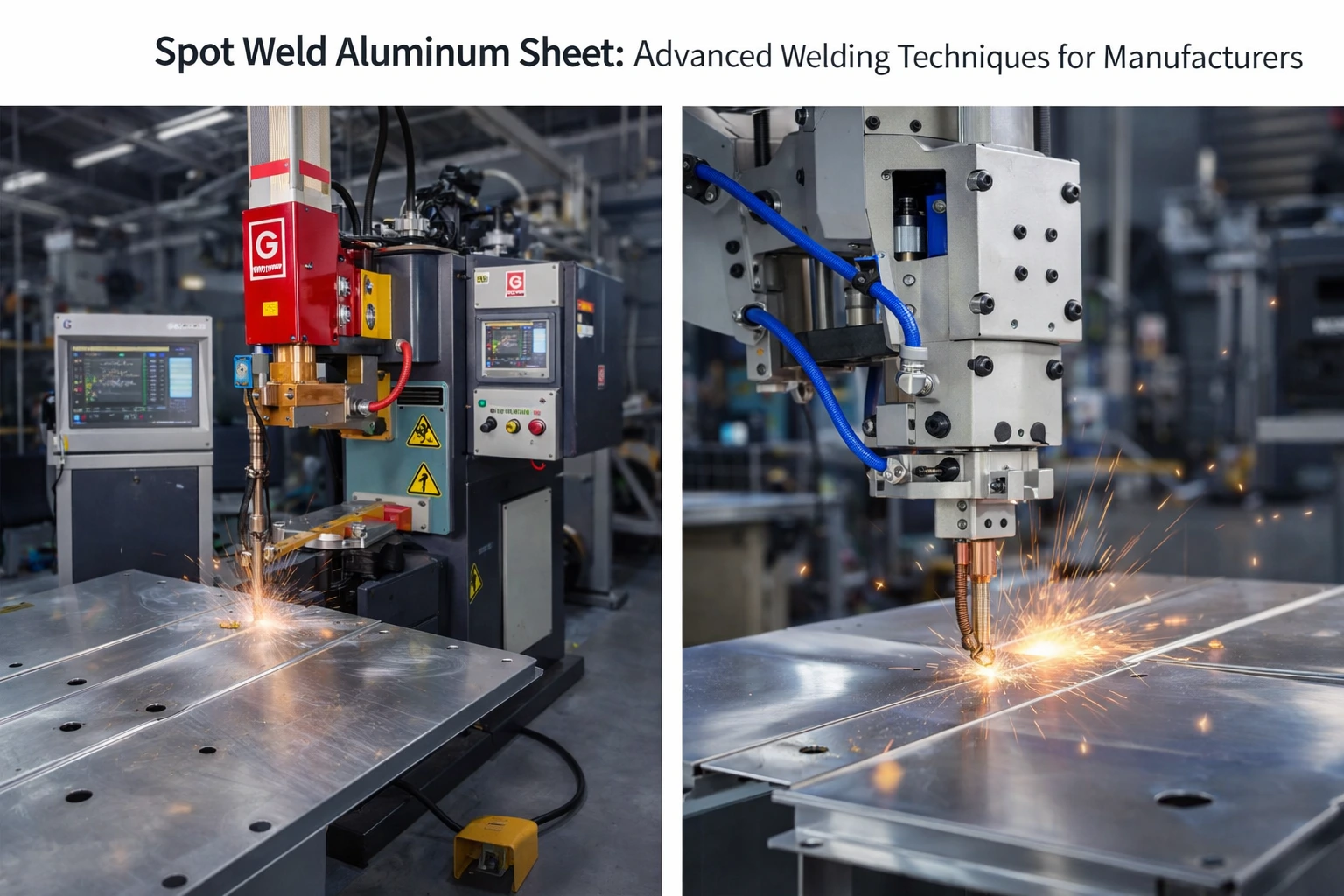
In modern manufacturing, aluminum has become a material of choice for automotive, aerospace, and industrial applications due to its light weight, corrosion resistance, and excellent strength-to-weight ratio. However, joining aluminum presents unique challenges compared to steel, especially when using resistance spot welding. For manufacturers, OEMs, and automation integrators, understanding how to spot weld aluminium efficiently is critical for achieving consistent quality, reducing production costs, and maintaining structural integrity.
Heron Welder, a global leader in industrial welding and metal-joining solutions, provides advanced resistance welding machines, controllers, and automated lines specifically engineered to tackle the nuances of aluminum welding.
Understanding the Principles of Spot Welding Aluminium
Resistance spot welding (RSW) involves passing a high electrical current through metal sheets clamped between two electrodes. The resulting heat melts the metal locally, forming a weld nugget that joins the sheets once cooled. While the principle is straightforward, aluminum requires careful consideration due to its physical properties:
- High thermal conductivity: Aluminum dissipates heat faster than steel, requiring higher current and precise timing to form a quality weld.
- Oxide layer: Aluminum naturally forms a hard oxide layer that is electrically resistive, necessitating higher contact force or surface preparation.
- Low melting point: Excessive heat can burn through thin sheets, so parameter control is critical.
Heron’s MFDC (Medium-Frequency Direct Current) and capacitor discharge spot welding systems are optimized for aluminum, delivering controlled heat, precise electrode force, and repeatable cycles for high-quality welds.
Applications of Spot Welding Aluminium
Aluminum spot welding is widely used in industries where lightweight, strong assemblies are essential:
- Automotive and EV manufacturing
Aluminum spot welding is crucial for body-in-white (BIW) panels, chassis components, and battery enclosures. Efficient welding reduces vehicle weight while maintaining crashworthiness. - Aerospace and aviation
Aircraft fuselage panels, wing structures, and interior frames benefit from spot welding aluminum alloys, ensuring high-strength joints without adding unnecessary weight. - Consumer electronics and appliances
Aluminum casings for laptops, phones, and home appliances require precision spot welds for durability and aesthetic finish. - Industrial machinery and automation
Equipment frames, enclosures, and brackets made from aluminum are increasingly welded with resistance spot welding for fast, reliable assembly in high-volume production.
Heron’s automated spot welding solutions can integrate seamlessly into production lines, supporting both manual and robotic welding for OEMs and integrators.
Spot Weld Aluminium vs. Steel: Key Comparisons
When switching from steel to aluminum, engineers must consider the differences in welding behavior:
| Property | Steel | Aluminum |
|---|---|---|
| Thermal conductivity | Low | High |
| Melting point | ~1,500°C | ~660°C |
| Oxide formation | Minimal | Significant |
| Welding current | Moderate | Higher required |
| Electrode wear | Low | Higher, specialized electrodes recommended |
Aluminum welding demands higher current, shorter weld time, and optimized electrode geometry, all areas where Heron’s welding machines excel.
Best Practices for Spot Welding Aluminium
To achieve reliable aluminum welds, manufacturers should follow these best practices:
1. Use the right electrode design
Copper alloy electrodes with a concave or domed tip provide better contact and reduce sticking. Regular maintenance and dressing prevent excessive wear.
2. Optimize welding parameters
MFDC and capacitor discharge welding offer precise control over current, weld time, and electrode force. Heron controllers allow engineers to program multi-step schedules for different aluminum thicknesses.
3. Surface preparation
Remove oxide layers mechanically or chemically where necessary. Some modern systems can handle oxidized surfaces automatically, thanks to high-frequency current pulses.
4. Control heat input
Avoid overheating thin sheets by fine-tuning current and weld duration. Consistent cooling cycles also prevent porosity and cracking.
5. Automation integration
Robotic spot welding cells increase repeatability and reduce operator fatigue. Heron’s automated welding solutions offer flexible programming for complex aluminum assemblies.
Why Choose Heron for Aluminum Spot Welding
Heron Welder has decades of experience in delivering high-performance resistance welding solutions for aluminum applications. Our offerings include:
- MFDC and capacitor discharge spot welding machines designed for aluminum’s unique thermal properties.
- Customized controllers and monitoring systems for process consistency and traceability.
- Automated welding production lines for high-volume manufacturing with robotic or gantry integration.
- Consultation and engineering support to optimize parameters, electrode design, and automation workflows.
By combining advanced technology with application expertise, Heron helps manufacturers reduce scrap, improve joint quality, and scale production efficiently.
FAQs About Spot Welding Aluminium
Q1: Can all aluminum alloys be spot welded?
A1: Most common alloys (e.g., 5xxx and 6xxx series) can be spot welded, but each alloy behaves differently. Process parameters must be adjusted for thermal conductivity, strength, and thickness.
Q2: How thick can aluminum sheets be for spot welding?
A2: Typically, 0.8–6 mm is suitable for conventional MFDC systems. Thicker sheets may require specialized setups or multi-step welding sequences.
Q3: Do aluminum welds require pre-treatment?
A3: Yes. Removing oxide layers improves weld quality, though modern MFDC systems can handle some oxidation automatically.
Q4: How do I prevent electrode sticking on aluminum?
A4: Use copper alloy electrodes with proper geometry, maintain regular dressing, and apply optimized current and pressure to reduce sticking.
Q5: Can automated lines weld mixed aluminum-steel assemblies?
A5: Yes. Hybrid lines with programmable controllers can switch between metals, but parameters must be carefully calibrated for each material.
Conclusion: Partner with Heron for Aluminum Spot Welding Success
Spot welding aluminum requires specialized knowledge, precise equipment, and expert guidance. Heron Welder delivers reliable resistance welding machines, controllers, and automated production lines engineered for aluminum’s challenges. Our global experience ensures manufacturers, OEMs, and integrators achieve high-quality, cost-effective, and scalable welding solutions.
Request a quote or consult Heron today to explore customized aluminum spot welding systems, automation solutions, and expert technical support tailored to your production needs.