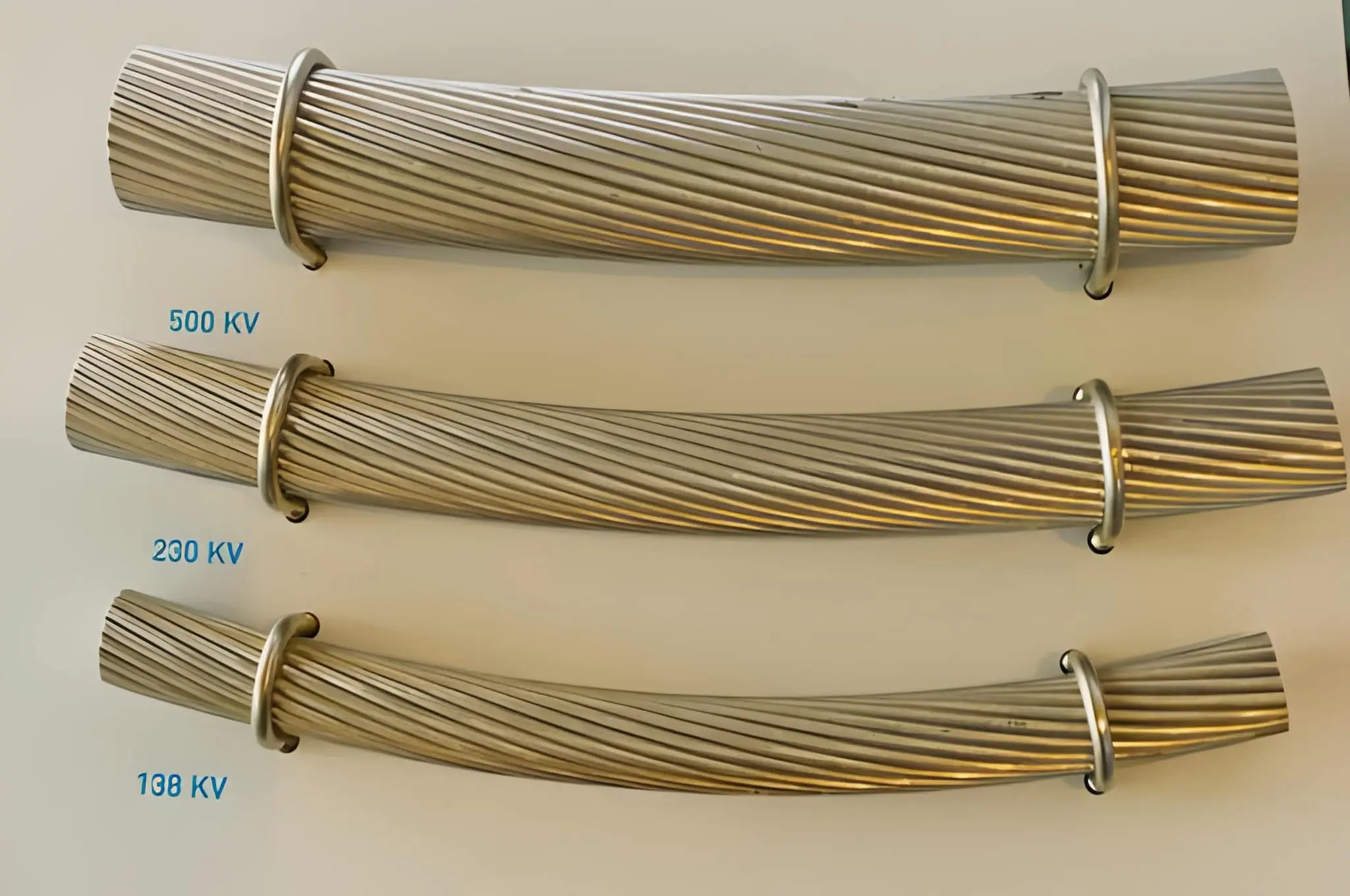
In today’s expanding power transmission and distribution networks, utilities and EPC contractors require conductors that deliver both mechanical strength and long-term electrical efficiency. The aaac conductor short for All Aluminium Alloy Conductor has become one of the most widely adopted solutions for overhead distribution and sub-transmission projects around the world.
As a global manufacturer of overhead conductors and power cables, HNBF Power supplies engineered AAAC conductors designed to meet the demanding performance expectations of modern grid operators, industrial projects, and infrastructure developers.
This article explains what an aaac conductor is, how it performs in real networks, and why it is often selected as an alternative to conventional aluminum conductors.
What Is an AAAC Conductor?
An AAAC conductor is manufactured from high-strength aluminum alloy strands instead of pure aluminum. The alloy composition provides improved mechanical characteristics while maintaining excellent electrical conductivity.
Unlike traditional aluminum conductors that rely mainly on pure aluminum wires, AAAC uses specially developed aluminum-magnesium-silicon alloys. These alloys allow the conductor to offer:
- Higher tensile strength
- Better resistance to corrosion
- Longer service life in harsh environments
For overhead power lines, especially in coastal, industrial, or high-pollution areas, AAAC conductors are considered a highly reliable solution.
Why Utilities Choose AAAC Conductor for Overhead Lines
Stronger Mechanical Performance
One of the main advantages of the aaac conductor is its superior strength-to-weight ratio. Compared with standard aluminum conductors, AAAC can withstand higher mechanical loads while remaining lightweight.
This enables:
- Longer span lengths
- Reduced sag under high temperatures
- Improved safety margins during wind and ice loading
For utilities planning new distribution lines or reconductoring projects, these characteristics significantly improve network reliability.
Enhanced Corrosion Resistance
AAAC conductors are particularly suitable for:
- Coastal regions
- Chemical plants and industrial zones
- Areas with high humidity or air pollution
The aluminum alloy structure naturally resists corrosion far better than conventional conductors, minimizing maintenance requirements over the full project life cycle.
Electrical Performance of AAAC Conductor
From an electrical perspective, AAAC conductors offer stable current-carrying performance and consistent resistance values. While pure aluminum conductors may offer slightly higher conductivity, the difference is often negligible for distribution and sub-transmission applications.
In practical network design, engineers benefit from:
- Predictable thermal behavior
- Stable impedance characteristics
- Reliable performance under variable load conditions
This makes the aaac conductor suitable for both new overhead installations and line upgrades.
AAAC Conductor vs AAC and ACSR
When evaluating overhead line materials, engineers usually compare AAAC with AAC and ACSR.
AAAC vs AAC
- AAC is manufactured from pure aluminum
- AAAC uses aluminum alloy
AAAC provides higher mechanical strength and better corrosion resistance than AAC, making it more suitable for long spans and challenging environments.
AAAC vs ACSR
ACSR conductors combine aluminum strands with a steel core. While ACSR offers very high tensile strength, the steel core introduces additional weight and potential corrosion concerns.
AAAC delivers:
- Uniform aluminum alloy structure
- No steel core corrosion risk
- Lower overall conductor weight
For many medium-voltage and distribution networks, AAAC represents a balanced solution between mechanical strength and lifecycle reliability.
Typical Applications of AAAC Conductor
The aaac conductor is commonly used in:
- Overhead distribution lines
- Sub-transmission networks
- Rural electrification projects
- Industrial power supply routes
- Coastal and high-corrosion regions
Utilities increasingly select AAAC for modernization and grid expansion projects where long service life and reduced maintenance costs are critical.
Manufacturing and Quality Control at HNBF Power
At HNBF Power, AAAC conductors are produced using controlled alloy formulations, precision stranding processes, and strict dimensional inspection.
Key manufacturing features include:
- Accurate alloy composition control for stable mechanical performance
- Optimized stranding geometry to ensure uniform stress distribution
- Continuous surface quality inspection to minimize installation defects
- Electrical and mechanical testing to confirm compliance with international standards
This approach allows HNBF Power to deliver consistent conductor performance for large-scale utility and EPC projects.
Design Considerations When Specifying AAAC Conductor
When specifying an aaac conductor for your project, engineers and procurement teams should evaluate several critical parameters:
Conductor Size and Stranding
Different strand counts and diameters affect flexibility, mechanical behavior, and installation handling. Proper stranding design improves vibration performance and long-term durability.
Rated Tensile Strength
The mechanical loading of towers and poles must be matched with the selected AAAC tensile rating to avoid over-engineering or unnecessary material costs.
Current Carrying Capacity
Thermal rating should be calculated based on ambient temperature, wind conditions, and allowable conductor temperature rise.
Installation Environment
Corrosive exposure, pollution levels, and climate conditions should always guide conductor selection areas where AAAC clearly excels.
Why Choose HNBF Power as Your AAAC Conductor Manufacturer?
HNBF Power is a global supplier of overhead conductors and power cable solutions, supporting transmission and distribution projects across utility, renewable, and industrial sectors.
By working with HNBF Power, project owners and procurement teams benefit from:
- Customized AAAC conductor design based on project requirements
- Stable manufacturing capacity for large-volume tenders
- Consistent quality management and testing processes
- Technical support for line design and material selection
This makes HNBF Power a reliable partner for long-term grid infrastructure programs.
Frequently Asked Questions (FAQs)
1. What does AAAC conductor stand for?
AAAC stands for All Aluminium Alloy Conductor, referring to a conductor made entirely from high-strength aluminum alloy strands.
2. Is AAAC conductor suitable for coastal and industrial areas?
Yes. The alloy structure provides superior corrosion resistance, making AAAC ideal for coastal, marine, and industrial environments.
3. Can AAAC conductor replace ACSR in existing lines?
In many distribution and sub-transmission projects, AAAC can replace ACSR where steel-core strength is not strictly required. Engineering verification should always be performed before reconductoring.
4. Does AAAC conductor carry less current than pure aluminum conductors?
AAAC has slightly lower conductivity than pure aluminum, but its thermal and mechanical advantages often make it more practical for real-world installations.
5. Is AAAC conductor available in customized sizes?
Yes. HNBF Power supplies customized AAAC conductor sizes, stranding structures, and performance classes based on project and tender specifications.
Contact HNBF Power for Customized AAAC Conductor Solutions
If you are planning a new overhead line project or upgrading your existing distribution network, HNBF Power can support you with tailored aaac conductor solutions that meet your technical, environmental, and commercial requirements.
Contact HNBF Power today to discuss your conductor specifications, project conditions, and customized manufacturing options for reliable and long-lasting power transmission infrastructure.