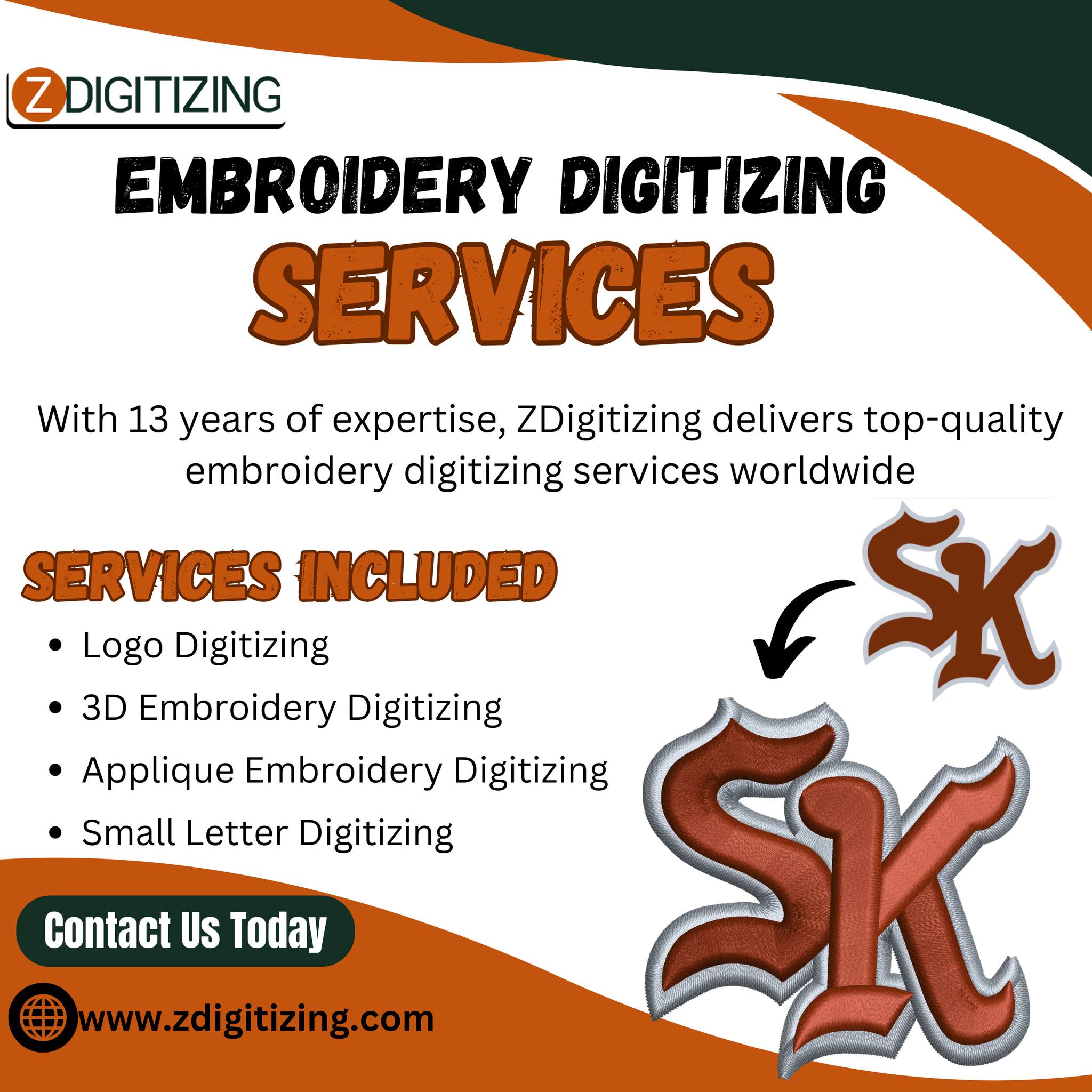
In today’s competitive marketplace, branding plays a critical role in business recognition and long-term growth. A professionally designed logo builds credibility and consistency across marketing materials.
However, when it comes to custom apparel, uniforms, and promotional items, a standard digital logo file is not enough. To achieve clean and professional stitching results, you must digitize logo for embroidery USA using experienced embroidery digitizing services.
Embroidery digitizing is a specialized technical process that converts artwork into a stitch file compatible with embroidery machines. Unlike simple image conversion, this process requires manual programming of stitch types, directions, density, and sequencing. When executed correctly, digitized embroidery ensures durability, clarity, and production efficiency.
Businesses, apparel brands, corporate teams, and organizations rely on professional embroidery digitizing to maintain brand consistency across garments and merchandise.
What Does It Mean to Digitize a Logo for Embroidery?
Embroidery machines cannot read common graphic formats such as JPG, PNG, AI, or PDF. These files must be converted into machine-readable stitch formats like DST, PES, or EXP. Digitizing is not automatic artwork conversion, it is a technical skill that requires knowledge of stitch mechanics and fabric behavior.
When you digitize logo for embroidery USA, a professional digitizer will:
- Convert artwork into a precise stitch file
- Assign appropriate stitch types (satin, fill, running stitch)
- Adjust stitch density based on fabric type
- Set proper stitch direction for depth and texture
- Program color sequences for efficient production
The final file guides the embroidery machine step by step, ensuring accurate and clean stitching.
Why Professional Embroidery Digitizing Matters
Automated digitizing software may appear convenient, but it often produces inconsistent results. Improper stitch density, weak underlay, and poor pathing can cause puckering, thread breaks, or distorted logos.
Professional digitizers apply technical expertise and production knowledge to prevent these issues. Their experience ensures:
- Balanced stitch density to prevent fabric damage
- Correct underlay support for long-lasting results
- Compensation adjustments for fabric pull and push
- Efficient stitch sequencing to reduce machine downtime
This level of technical attention improves both the appearance and durability of embroidered logos. For businesses producing uniforms or branded apparel in volume, precision directly impacts cost efficiency and brand presentation.
Common Applications of Digitized Embroidery
Companies choose to digitize logo for embroidery USA because embroidery offers durability and a premium appearance compared to many print methods. Digitized logos are commonly applied to:
- Corporate uniforms
- Polo shirts and jackets
- Caps and headwear
- Workwear and safety garments
- Sports team apparel
- Promotional products and accessories
Embroidery maintains its quality even after repeated washing and heavy use, making it suitable for professional environments.
Benefits of Digitizing Your Logo for Embroidery
Investing in professional embroidery digitizing provides measurable advantages:
- Long-lasting branding that resists fading and peeling
- Consistent results across multiple garments
- Reduced thread breaks and production errors
- Professional texture and dimension
- Greater cost efficiency over large production runs
When executed correctly, digitized embroidery enhances brand credibility and ensures uniform visual presentation across apparel lines.
Choosing a Reliable Embroidery Digitizing Service
Selecting the right digitizing partner directly impacts embroidery quality. Look for providers with proven experience, transparent pricing, revision policies, and a strong portfolio of completed work. Experienced digitizers understand production challenges and create files optimized for both quality and machine efficiency.
A dependable service provider will prioritize accuracy, turnaround time, and consistent results.
Final Thoughts
To successfully digitize logo for embroidery USA, technical expertise and production knowledge are essential. Embroidery digitizing transforms flat artwork into a structured stitch file that embroidery machines can execute with precision.
From corporate branding to promotional apparel, professionally digitized embroidery ensures durability, consistency, and visual clarity. Investing in experienced digitizing services protects your brand image and improves production efficiency.
If you are preparing custom apparel or branded merchandise, professional embroidery digitizing is a necessary step toward achieving clean, reliable stitching results.
Frequently Asked Questions (FAQs)
1. What file format do I need to digitize my logo for embroidery?
You can provide common artwork formats such as JPG, PNG, AI, EPS, or PDF. A professional digitizer will convert your file into machine-ready formats like DST, PES, or EXP.
2. How long does it take to digitize a logo for embroidery?
Turnaround time typically ranges from a few hours to 24 hours, depending on design complexity and revision requirements.
3. Can small text be embroidered clearly?
Very small text may lose clarity when stitched. An experienced digitizer can adjust lettering size, stitch type, or spacing to improve readability.
4. Why can’t I use my regular logo file directly for embroidery?
Standard image files do not contain stitch path data. Embroidery machines require a digitized stitch file that includes programmed directions, density, and sequencing instructions.