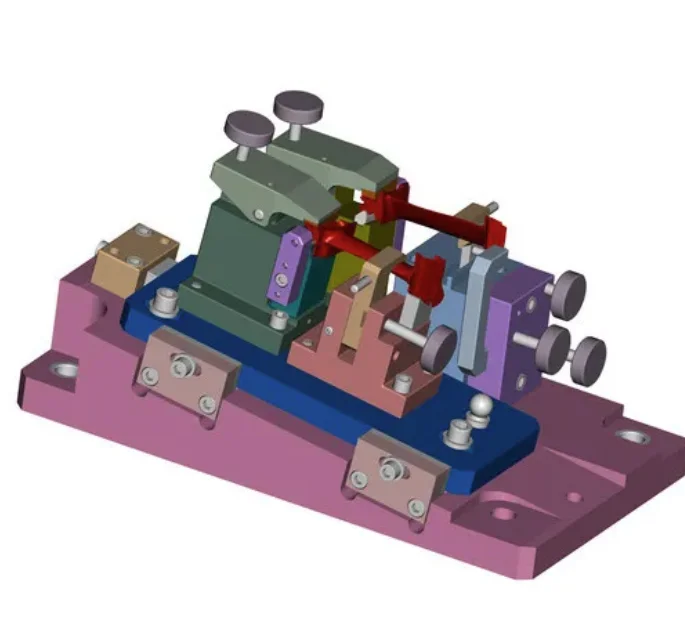
Consistency in CNC machining is not created by software alone or guaranteed by machine accuracy. It is established at the moment a part is located, supported, and clamped before cutting begins. Jig and fixture design provides the physical control that transforms programmed tool paths into repeatable real-world results. When workholding is engineered correctly, CNC machines deliver the same dimensions, surface quality, and alignment on every cycle, regardless of batch size or operator.
As CNC components become more complex and tolerance windows narrow, manufacturers must eliminate variability wherever possible. Jigs and fixtures tooling plays a decisive role in this effort by stabilizing the workpiece, reducing setup dependency, and allowing machining processes to operate within controlled limits. This foundation of consistency supports productivity, quality assurance, and long-term manufacturing reliability.
Why Jig and Fixture Design Defines CNC Consistency
Controlling Part Location With Precision
Every CNC operation depends on accurate reference points. Jigs and fixtures define these references by fixing the part’s position relative to machine axes. When locating is precise, tool paths execute exactly as programmed, and features align correctly from part to part. Without reliable location control, dimensional variation becomes unavoidable, even on high-end CNC equipment.
Consistent locating also removes operator interpretation from the setup process. By guiding the part into a predefined position, jig and fixture design devices ensure that each cycle begins under identical conditions, which is essential for maintaining tight tolerances.
Preventing Movement During Machining
Cutting forces act continuously on a workpiece during CNC machining. If the part is not adequately supported, it may shift or flex, leading to dimensional errors and poor surface finish. Effective jig and fixture design counteracts these forces through proper support placement and balanced clamping.
Stable workholding reduces vibration and chatter, which improves tool life and surface integrity. Over extended production runs, this stability becomes a major contributor to consistent quality and reduced operational cost.
Core Elements of Effective Jig and Fixture Design
Datum Strategy and Constraint Control
A well-planned datum strategy is central to jig and fixture design. Datums must be selected based on functional requirements rather than convenience, ensuring that critical features relate correctly to one another. Proper constraint control locks the necessary degrees of freedom while avoiding over-restriction that can introduce stress into the part.
This balance allows the workpiece to seat naturally against locating elements while remaining secure during machining. The result is improved dimensional accuracy and predictable machining behavior across all production cycles.
Clamping Systems That Protect Accuracy
Clamping must secure the part firmly without causing deformation. Excessive force can distort thin walls or delicate features, leading to dimensional changes after unclamping. Advanced jigs and fixtures tooling distribute clamping pressure evenly and apply force only where the part is structurally strong.
Controlled clamping preserves part geometry throughout machining and ensures that final dimensions remain within tolerance once the fixture is released.
Productivity Benefits Driven by Jigs and Fixtures Tooling
Faster Setups and Reduced Downtime
Manual alignment consumes time and introduces variability. Precision jigs and fixtures eliminate this inefficiency by guiding the operator through repeatable loading procedures. Once the fixture is set, each part follows the same setup sequence, reducing changeover time and setup errors.
Higher spindle utilization follows naturally. Machines spend more time cutting and less time waiting, which improves throughput and makes production schedules more reliable.
Consistent Results Across Operators
Fixtures standardize the machining process across different operators and shifts. Clear locating features and intuitive clamping reduce reliance on individual experience. This consistency ensures uniform quality regardless of who is running the machine.
As a result, training time decreases and production becomes more scalable. Consistent workholding supports stable output even as workforce dynamics change.
Custom Jig and Fixture Design for Complex CNC Parts
Adapting to Geometry and Tolerance Challenges
Complex components often require customized solutions that standard fixtures cannot provide. Custom jig and fixture design tailors locating points, supports, and clamps to the specific geometry of the part. This customization ensures stability at critical machining areas without compromising accessibility.
Tight tolerances demand additional control. Custom fixtures address these demands by reinforcing weak sections and preventing movement during high-load operations, improving overall dimensional reliability.
Supporting Multi-Stage Machining Processes
Many CNC parts require multiple operations across different machines or setups. Custom jigs and fixtures maintain consistent datums throughout each stage, preventing tolerance stack-up. This continuity ensures that features machined in separate operations align correctly.
Maintaining reference consistency across processes improves assembly fit and reduces inspection failures, especially in high-precision manufacturing environments.
Common Challenges in Jig and Fixture Design
Avoiding Over-Constraint and Tool Interference
Over-constraining a workpiece can introduce internal stress that leads to dimensional shift after machining. Effective jig and fixture design uses only the necessary constraints to stabilize the part while allowing natural material behavior under cutting loads.
Tool interference is another common issue. Fixtures must provide clear access for cutting tools and allow efficient chip evacuation. Poor accessibility compromises machining quality and increases cycle time.
Designing for Real Shop-Floor Conditions
Fixtures must function reliably in daily production, not just in design simulations. Ease of loading, clear orientation cues, and ergonomic handling are essential considerations. Designs that ignore operator interaction often slow production and increase error risk.
Practical jig and fixture design devices enhance workflow efficiency, reduce fatigue, and support safer working conditions.
Best Practices for Long-Term Fixture Performance
Durability and Maintenance Planning
Jigs and fixtures are long-term production assets that must maintain accuracy over repeated use. Replaceable wear components such as locating pins and contact surfaces extend service life and preserve precision. Thoughtful material selection also contributes to durability under continuous load.
Regular inspection and preventive maintenance prevent gradual performance degradation. Maintaining fixture integrity ensures consistent machining quality throughout the product lifecycle.
Continuous Improvement Through Collaboration
Effective jig and fixture design benefits from collaboration between design engineers and machinists. Shop-floor feedback provides insight into real cutting forces, handling challenges, and wear patterns. This collaboration ensures fixtures are both robust and practical.
Continuous refinement strengthens future designs and builds a culture of process improvement that enhances overall manufacturing capability.
Key Advantages of Precision Jig and Fixture Design
- Improves dimensional accuracy and repeatability
- Reduces setup time and operator dependency
- Enhances surface finish and tool life
- Lowers scrap and rework costs
Characteristics of High-Performance CNC Fixtures
- Stable locating with clear datum control
- Balanced clamping without part distortion
- Open tool access and effective chip flow
- Durable construction with serviceable components
Conclusion
CNC consistency is achieved when every variable within the machining process is controlled, starting with how the part is held. Jig and fixture design establishes this control by fixing location, resisting cutting forces, and standardizing setups. When workholding is engineered correctly, CNC machines deliver predictable results with minimal variation. Manufacturers that invest in advanced jigs and fixtures tooling gain more than accuracy. They gain productivity, scalability, and long-term reliability. By treating jig and fixture design as a foundational system rather than an afterthought, CNC operations achieve stable quality, efficient workflows, and a stronger competitive position in precision manufacturing.