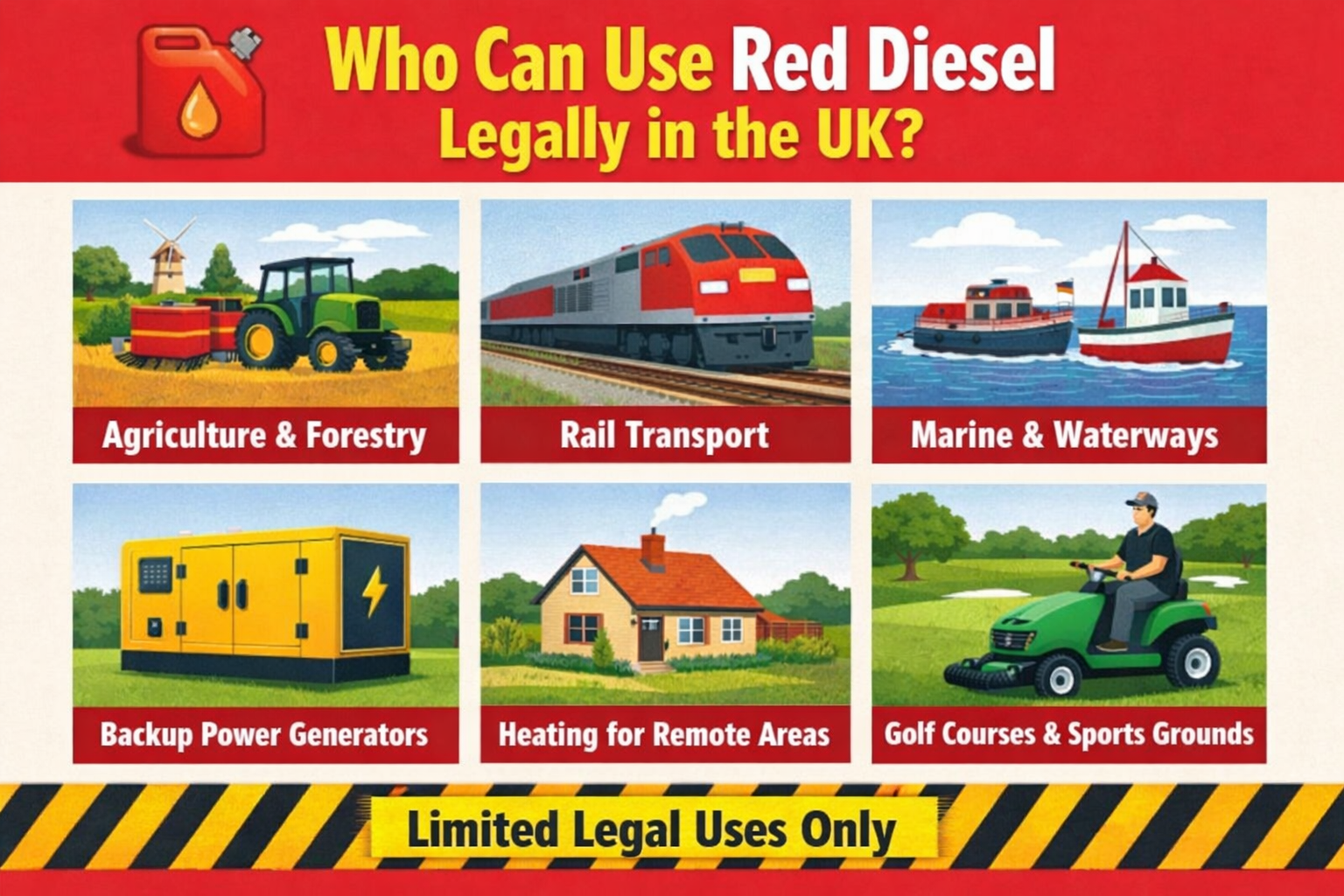
Red diesel has long been part of everyday operations across farming, construction, and specialist industries in the UK. Recognisable by its dyed colour and lower tax rate, red diesel (also known as gas oil) offers significant savings compared to standard white diesel.
However, the rules surrounding who can legally use red diesel have changed dramatically in recent years. Many businesses and individuals remain unsure where they stand, and using it incorrectly can result in heavy fines and penalties.
If you’re wondering whether you can legally use red diesel in the UK today, this guide explains everything clearly — without jargon — so you can stay compliant and avoid costly mistakes.
What Exactly Is Red Diesel?
Red diesel is chemically almost identical to standard road diesel, but it contains a red marker dye. This colouring makes it easy for HMRC to detect misuse during inspections.
The key difference lies in taxation. Red diesel carries a much lower fuel duty, which is why its use is tightly restricted. It is intended only for specific purposes that are not primarily related to road transport.
Why Did the UK Change Red Diesel Rules?
In April 2022, the UK government introduced major reforms aimed at reducing carbon emissions and encouraging cleaner energy use. As part of this initiative, most commercial sectors lost their entitlement to use red diesel.
Before this change, industries such as construction, manufacturing, and logistics could legally use red diesel in many machines. Today, the list of permitted users is far smaller.
The goal was simple: discourage fossil fuel use in non-essential sectors and push businesses toward greener alternatives.
Who Can Still Use Red Diesel Legally?
Despite the tighter regulations, red diesel has not disappeared entirely. Certain sectors remain legally entitled to use it due to the essential nature of their work.
Here’s who still qualifies in the UK:
1. Agriculture, Horticulture, and Forestry
Farmers and land managers are among the primary legal users of red diesel.
You may use red diesel for:
- Tractors and combine harvesters
- Crop spraying equipment
- Forestry machinery
- Irrigation pumps
- On-farm generators
These activities directly support food production and land management, which is why they remain exempt.
However, vehicles must be used strictly for agricultural purposes. Driving on public roads for unrelated activities is not allowed.
2. Rail Transport
Red diesel continues to be permitted for:
- Trains
- Track maintenance equipment
- Rail infrastructure machinery
Although the rail industry is gradually transitioning to cleaner fuels, red diesel remains legal for now due to the complexity of electrifying all networks.
3. Marine Use and Inland Waterways
Boats and vessels operating on inland waterways and coastal waters can still use red diesel, including:
- Fishing boats
- Barges
- Private leisure craft
Private boat owners should be aware that while red diesel is allowed, they must declare the proportion used for propulsion and pay the appropriate duty on that portion.
4. Non-Commercial Heating
Red diesel may be used for heating in:
- Homes in remote areas
- Churches and community buildings
- Certain commercial properties
It’s especially common in rural locations where mains gas is unavailable.
5. Power Generation and Backup Systems
Red diesel remains legal for:
- Standby generators
- Emergency power supplies
- Data centres
- Hospitals and care facilities
These systems provide critical resilience during power outages, making continued access essential.
6. Golf Courses and Sports Grounds
Groundskeeping equipment used to maintain sports pitches and golf courses can still run on red diesel. This includes mowers, rollers, and turf machinery.
7. Amateur Sports Clubs and Community Organisations
Small-scale organisations maintaining playing fields or community spaces may also qualify, provided machinery is not used for commercial construction or transport.
Who Can No Longer Use Red Diesel?
Many industries lost access after April 2022, including:
- Construction companies
- Manufacturing plants
- Warehouses and distribution centres
- Commercial cleaning services
- Mining and quarrying operations
If your business falls into one of these categories, your machinery must now use white diesel or alternative fuels.
This applies even if equipment never touches public roads.
What Happens If You Use Red Diesel Illegally?
HMRC takes misuse seriously.
Penalties may include:
- Fuel seizure
- Vehicle confiscation
- Backdated fuel duty payments
- Substantial fines
- Criminal prosecution in severe cases
HMRC officers regularly conduct roadside checks and site inspections. Because red dye lingers in fuel systems, misuse can be detected long after switching back to white diesel.
Can You Switch Between Red and White Diesel?
Yes — but it must be done correctly.
Fuel tanks and systems should be professionally flushed before changing fuel types. Traces of red dye can remain in pipes and filters, which could cause problems during inspections.
Keeping accurate records of fuel purchases and usage is also strongly recommended.
Looking Ahead: The Future of Red Diesel in the UK
The government has made it clear that red diesel’s role will continue to shrink over time. Many industries are already exploring alternatives such as electric machinery, hydrogen fuel, and renewable diesel.
If your business still qualifies today, it’s wise to plan for future changes. Investing in cleaner technologies may soon become not just environmentally responsible, but financially necessary.
Final Thoughts
Red diesel remains legal in the UK — but only for a limited group of users. Agriculture, rail, marine operations, backup power systems, and certain community services continue to qualify. Most commercial sectors, however, must now rely on fully taxed white diesel.
If you’re unsure about your eligibility, it’s always better to seek professional guidance than risk penalties.
Understanding the rules protects your business, keeps you compliant, and prepares you for the evolving energy landscape. As regulations tighten and sustainability takes centre stage, staying informed is no longer optional — it’s essential.