
Introduction
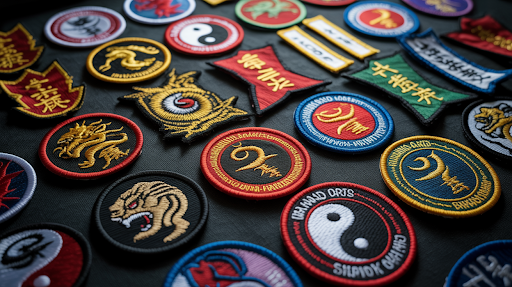
Woven patches are commonly used on garments when fine detail and small text are required. Unlike embroidered patches, woven patches have a flatter surface, which allows designs to appear cleaner and more precise. Because of this, they are often chosen for labels, badges, and detailed logos.
Understanding how woven patches are applied to garments helps ensure they sit neatly, stay secure, and remain comfortable during wear. This article explains the common application methods, suitable garments, placement areas, and basic care tips.
What Are Woven Patches
Woven patches are made by weaving thin threads together to form a design. Instead of raised stitching, the design becomes part of the fabric surface, giving the patch a smooth and flat appearance.
They are often used when:
- Small text needs to stay readable
- Designs include fine lines
- A low-profile look is preferred
What Garments Are Suitable for Woven Patches
Custom Woven patches work best on garments that are not overly thick but still strong enough to support stitching or heat application.
Common garments
- Shirts and overshirts
- Jackets and lightweight coats
- Workwear shirts
- School uniforms
- Caps and hats
They are also suitable for garments where comfort and flexibility matter.
How Are Woven Patches Sewn Onto Garments
Sewing is one of the most secure ways to apply woven patches. This method is often used for uniforms and clothing worn frequently.
Sew on application steps
- Position the patch on the garment
- Pin or hold it in place
- Stitch around the edge using matching thread
- Secure the thread ends inside the garment
Sew on woven patches stay in place through repeated washing.
How Are Iron On Woven Patches Applied
Iron on backing is commonly used for casual clothing. It allows quick attachment without sewing.
Iron on application steps
- Place the patch on the garment
- Cover with a cloth
- Apply heat using an iron
- Press firmly for the recommended time
- Allow to cool fully
Iron on woven patches work best on cotton and blended fabrics.
How Are Woven Patches Applied with Velcro
Velcro backing allows patches to be removed or swapped. This method is used when flexibility is needed.
Velcro application
- One side is stitched to the garment
- The patch attaches and detaches easily
This method is common on workwear and event clothing.
Where Are Woven Patches Commonly Placed
Placement affects both comfort and visibility. Woven patches are usually placed where they remain flat.
Common placement areas
- Chest area
- Upper sleeves
- Front panels
- Caps and headwear
- Near pockets
Flat placement helps maintain a clean look.
Why Fabric Choice Matters
Fabric type affects how well a woven patch holds.
Best fabrics
- Cotton
- Cotton blends
- Twill
- Lightweight denim
Very thin fabrics may need extra stitching support.
How Should Garments with Woven Patches Be Cared For
Proper care helps woven patches last longer.
Care tips
- Wash garments inside out
- Use mild detergent
- Avoid high heat drying
- Do not iron directly on the patch
These steps help keep edges flat and designs clear.
FAQs
Are woven patches better than embroidered patches
They are better for fine detail and small text, but less textured.
Can woven patches be removed
Yes, depending on the attachment method.
Are woven patches washable
Yes, when sewn or properly ironed on.
Do woven patches suit heavy garments
They are better suited for light to medium weight fabrics.
Can woven patches be layered
Yes, but spacing helps maintain a clean look.
Conclusion
Woven patches are applied to garments using sewing, iron on, or Velcro methods, depending on the garment type and usage needs. Their flat surface makes them ideal for detailed designs and labels.
By choosing suitable fabrics, correct placement, and proper attachment methods, woven patches can be applied neatly and remain comfortable and long lasting on everyday garments.Visit here for more Informational blogs at https://www.localhomeservicesblog.co.uk/
