
Over the last decade, surgical education has undergone a transformation driven by digital innovation. Among these advancements, Augmented Reality (AR) has emerged as a powerful tool in medical training, allowing surgeons to visualize complex anatomy and perform procedures in simulated environments with remarkable precision. One procedure that stands to benefit immensely from this technology is the vasectomy—a minimally invasive surgery for male sterilization.
Incorporating AR into vasectomy training programs enables new and experienced urologists to refine their hand–eye coordination, enhance spatial awareness, and master the procedural steps without risk to patients. As AR applications continue to evolve, they are reshaping how future vasectomy specialists are trained, evaluated, and certified.
This article explores how Augmented Reality surgical training tools are revolutionizing vasectomy education, improving patient outcomes, and helping redefine clinical excellence in men’s reproductive health.
Understanding Vasectomy: A Brief Overview
A vasectomy is a surgical procedure designed to provide permanent male contraception. The surgery involves cutting or sealing the vas deferens, the tubes that carry sperm from the testicles to the urethra. This prevents sperm from mixing with semen during ejaculation, effectively ensuring infertility while maintaining normal sexual function.
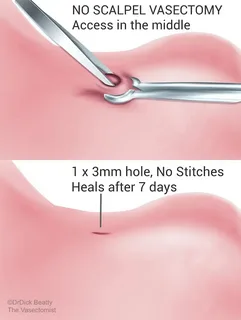
Modern vasectomy techniques—such as the no-scalpel vasectomy (NSV)—are known for being safe, efficient, and minimally invasive. However, despite its simplicity, performing a vasectomy requires refined precision. Even small anatomical variations between patients can lead to challenges such as hematoma, infection, or recanalization if not properly managed.
That’s where Augmented Reality (AR) steps in, providing new ways for clinicians to learn and perfect their technique before ever entering the operating room.
What Is Augmented Reality in Surgical Training?
Augmented Reality (AR) overlays digital information—such as 3D anatomy models, real-time instructions, or visual markers—onto the real-world environment. Unlike Virtual Reality (VR), which immerses the user in a fully simulated setting, AR enhances the physical environment with interactive data that responds to the trainee’s actions.
In surgical education, AR systems use headsets, tablets, or smart glasses to project digital visuals onto anatomical models or cadavers. These overlays guide the trainee through each step of a procedure, highlighting anatomical landmarks and offering visual cues to minimize errors.
When applied to vasectomy training, AR can simulate every stage of the operation—from identifying the vas deferens to ligating, cutting, or sealing it—allowing trainees to practice safely and effectively under realistic conditions.
AR Integration in Vasectomy Training Programs
The use of Augmented Reality surgical training tools in vasectomy education is still emerging but rapidly gaining traction across medical schools, urology fellowships, and simulation centers. These platforms integrate 3D modeling, motion tracking, and interactive feedback systems to create immersive learning experiences.
1. Anatomical Visualization
AR helps trainees visualize the male reproductive anatomy in unprecedented detail. Through AR glasses or tablet-based simulations, the vas deferens, testicular structures, and surrounding tissues are projected in 3D. The trainee can rotate, zoom, or dissect layers virtually, improving anatomical understanding before performing real procedures.
2. Step-by-Step Procedural Guidance
In AR-assisted vasectomy simulations, digital prompts guide users through procedural steps—incision, isolation of the vas deferens, occlusion, and closure. Visual overlays show optimal angles for instrument placement and real-time alerts for potential mistakes, fostering procedural accuracy.
3. Realistic Haptic Feedback Integration
Modern AR tools often integrate with haptic feedback devices, allowing trainees to feel the tactile sensations of tissue resistance and instrument manipulation. This sensory realism improves hand–eye coordination and deepens the learning experience.
4. Team Collaboration and Remote Mentorship
Augmented Reality systems enable remote collaboration between instructors and trainees. A senior urologist can observe a trainee’s AR simulation session from anywhere in the world, offering real-time verbal and visual feedback through shared 3D views. This is particularly valuable for rural or underserved training programs.
How Augmented Reality Enhances Vasectomy Skill Development
The benefits of AR in vasectomy training extend far beyond visualization. They encompass a more data-driven, measurable, and repeatable form of surgical education.
1. Risk-Free Practice Environment
AR creates a zero-risk environment for trainees to make and correct mistakes. Unlike live patients or cadavers, virtual practice allows for endless repetition and experimentation. Surgeons can refine critical motor skills before performing actual vasectomies.
2. Data-Driven Feedback and Performance Metrics
AR systems can track user performance—recording time taken per step, precision of cuts, or alignment of instruments. These analytics help trainees identify weaknesses and allow educators to objectively assess competency levels before clinical certification.
3. Reduction in Learning Curve
Studies in surgical education suggest that AR-assisted training reduces the learning curve by providing real-time visual reinforcement. For vasectomy procedures, this means faster mastery of delicate maneuvers like vas isolation and cauterization.
4. Enhanced Retention and Confidence
AR’s multisensory engagement improves long-term memory retention. Trainees who practice in AR environments often demonstrate higher confidence and lower error rates in real surgical settings.
AR Hardware and Software for Vasectomy Training
A growing number of hardware and software solutions are available for surgical AR training, several of which can be tailored for vasectomy education.
1. Microsoft HoloLens and Medivis SurgicalAR
The Microsoft HoloLens—a leading AR headset—is widely used in medical training. Combined with Medivis SurgicalAR, it enables holographic projections of male reproductive anatomy and procedural animations. Trainers can manipulate these 3D holograms to illustrate key vasectomy steps.
2. Touch Surgery Enterprise by Medtronic
This cloud-based simulation platform uses AR overlays and interactive video modules to train clinicians in a variety of minimally invasive procedures. Vasectomy training modules can be customized to reflect different techniques like open, closed-ended, or no-scalpel approaches.
3. Proximie AR Telepresence System
Proximie allows urologists to connect in real-time during live or simulated surgeries. Through AR annotation, mentors can draw or point to anatomical structures directly onto a trainee’s visual feed, guiding them remotely through each procedural phase.
4. Custom AR Applications for Urology
Some academic urology departments have begun developing proprietary AR-based vasectomy simulators, integrating 3D scrotal anatomy models, haptic tools, and AI-based error detection systems. These custom-built platforms serve as educational prototypes for future widespread adoption.
Clinical Advantages of AR-Enhanced Vasectomy Training
Implementing AR training in vasectomy education benefits not only trainees but also healthcare systems and patients.
1. Standardization of Training
Traditional vasectomy training relies on variable mentorship and subjective evaluation. AR ensures that all trainees receive standardized procedural guidance, promoting consistency in technique and quality of care.
2. Improved Surgical Precision
Through visual augmentation and performance analytics, AR tools enhance spatial precision and reduce the likelihood of intraoperative errors such as incomplete occlusion or vessel damage.
3. Patient Safety and Reduced Complications
Because trainees can achieve competency in simulated environments, real patients are exposed to fewer inexperienced hands. This leads to lower complication rates, improved recovery times, and greater patient trust in vasectomy services.
4. Cost-Effective Training Model
While the initial cost of AR setup may be high, institutions save money over time by reducing the need for cadaver labs, physical simulators, and supervision hours. Additionally, cloud-based AR platforms can train large cohorts simultaneously.
Challenges and Limitations of AR in Vasectomy Education
Despite its promise, the integration of AR into vasectomy training faces certain limitations:
1. High Development and Maintenance Costs
AR platforms require advanced hardware, regular software updates, and expert technical support. Smaller institutions may struggle to afford or sustain these systems.
2. Limited Haptic Realism
While AR systems can simulate visual and procedural feedback, achieving realistic tactile sensations comparable to human tissue remains a challenge.
3. Technical Learning Curve
Trainees and instructors may need time to adapt to AR interfaces, particularly those less familiar with digital tools or immersive environments.
4. Validation and Accreditation
AR vasectomy training programs are still in early development, and standardized accreditation frameworks have yet to be universally recognized by surgical boards.
The Future of Vasectomy Training With AR Integration
The trajectory of Augmented Reality surgical training tools points toward increasing sophistication and accessibility. Future iterations may combine AR with Artificial Intelligence (AI) to create adaptive training models that respond to individual learning progress.
1. AI-Driven Personalized Training
AI algorithms could analyze each trainee’s performance in real-time, automatically adjusting difficulty levels or suggesting targeted exercises for skill improvement.
2. Cloud-Connected Learning Ecosystems
Cloud-based AR platforms will allow institutions worldwide to share vasectomy training modules, enabling global standardization and collaborative innovation.
3. Integration With Real-Time Operative Assistance
In the near future, AR may not only train but also assist surgeons during live vasectomy procedures—projecting visual guides, highlighting anatomical structures, and alerting the surgeon to potential risks.
4. Ethical and Privacy Considerations
As AR systems become more connected and data-driven, ensuring patient privacy and secure data handling will be crucial, especially when simulations use anonymized patient imaging data.
Case Study: Implementing AR in a Urology Residency Program
A recent pilot project at a U.S. university hospital integrated AR simulation modules into its urology residency program, focusing on vasectomy training. Over a six-month period:
- Residents using AR tools demonstrated 30% faster proficiency in performing no-scalpel vasectomies.
- The error rate in identifying the vas deferens during cadaver-based exams dropped by 45%.
- Trainees reported a 60% increase in confidence compared to traditional video-based learning.
These findings underscore the tangible educational value of AR in procedural mastery and clinical readiness.
Ethical and Accessibility Dimensions
As with any technological intervention in healthcare, it’s vital to ensure that AR-assisted vasectomy training remains ethically grounded and accessible. Training institutions must balance innovation with inclusivity—ensuring that developing nations and low-resource settings are not left behind in the digital transformation of urology education.
Organizations such as the American Urological Association (AUA) and the European Association of Urology (EAU) may soon establish frameworks to ensure equitable access to AR-based learning materials and promote cross-border collaboration.
Conclusion
The convergence of Vasectomy and Augmented Reality Surgical Training Tools marks a pivotal step toward the future of urological education. AR not only enhances anatomical understanding and procedural proficiency but also transforms how knowledge is transferred, assessed, and standardized across medical institutions.
Through immersive, data-driven learning, AR is helping build a generation of urologists who are more precise, confident, and patient-centered. As technology continues to evolve, the once-traditional art of vasectomy is being redefined through digital mastery—where holograms and human skill combine to achieve surgical excellence.
FAQs
1. How does Augmented Reality improve vasectomy training compared to traditional methods?
Augmented Reality provides a highly interactive environment where trainees can visualize 3D anatomy, receive step-by-step guidance, and practice without risk. Unlike static videos or cadaver training, AR offers real-time feedback and performance analytics, helping trainees achieve competency faster and with greater precision.
2. Will AR eventually replace live vasectomy training altogether?
No. While AR significantly enhances preparation, it complements rather than replaces real surgical experience. AR allows trainees to refine their skills and confidence before operating on patients, ensuring safer and more consistent outcomes when they transition to clinical practice.


