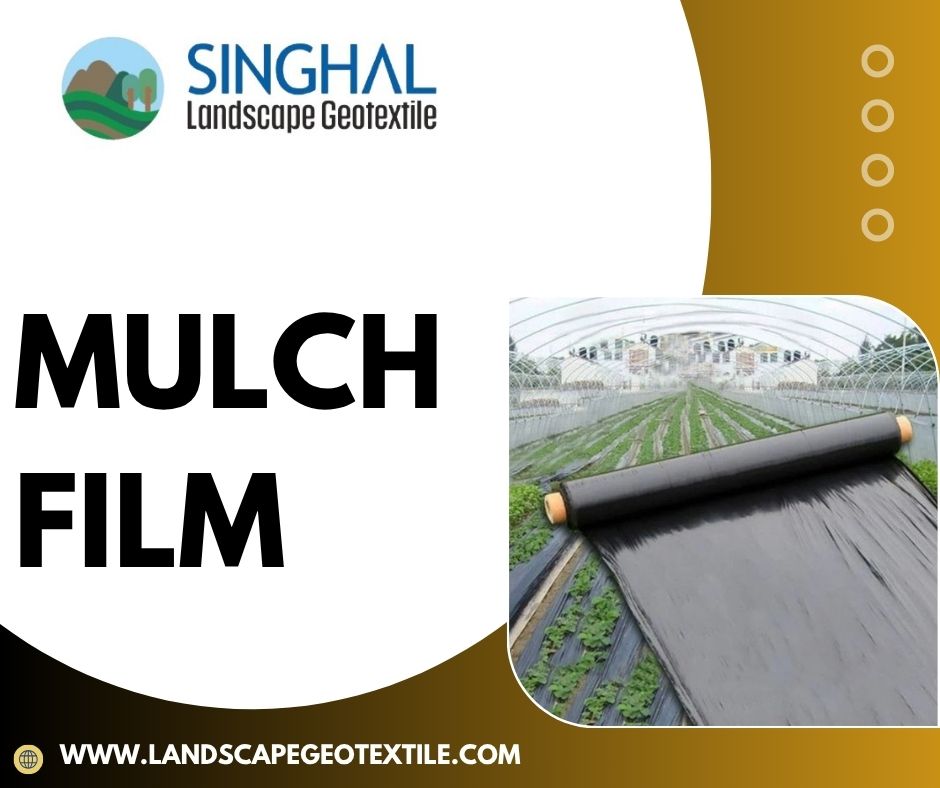
However, in the constantly changing world of agriculture it is a combination of maximum productivity with environmental responsibility that is now by far the most critical issue facing growers around the world. With the population of the world constantly increasing, the demand for arable land to generate more food with less resources is extraordinary. This challenge has triggered a big change of idea on the soil surface management and this is one of the reasons why Biodegradable mulch film market is soar. Conventional farming practices can leave soil vulnerable to the elements, which result in water loss and nutrient runoff while agricultural films shield against these issues by creating a protective growing environment that’s optimal for high-yield nurseries.
Mulch films in agriculture: enhancing crop yield and soil health
The ultimate goal of any ground cover technique is to establish a controlled microenvironment for the root system of the plant. Under a layer of Biodegradable plastic mulch film, the surface of the soil is effectively sealed against such rapid water evaporation when compared to open-field farming. In addition, the film serves as a thermal regulator by storing heat during the day and insulating the earth at night to increase seed germination and stimulate early-season growth.
Societal Impacts of Moisture Retention and Thermal Control
One of the chronic challenges to a healthy and high-yield crop production is pressure from alien weeds. That’s because, in a traditional system, farmers have to resort to much more labor and/or chemical herbicides to control weed populations. But, the application of an opaque agricultural film obstructs sunlight access to soil, and subsequently weed seeds cannot germinate in that environment. This inherent suppression minimizes labor expenses and makes sure that any fertilizers implemented are taken up fundamentally by the crop being grown. Biodegradable Mulch Film manufacturers have developed these products to reduce environmental impact because they offer the same opacity and strength as their traditional plastic counterparts, without using harmful chemicals, a greener way to a cleaner and more productive field.
Natural Weed Control and Nutrient Use Efficiency
Despite the advantages of mulching, decades of use of non-biodegradable polyethylene (PE) films have led to a serious environmental pollution problem: plastic waste. There are miles of plastic waste lodges with discarded material at the end of every season, a job that is both labor-intensive and ecologically damaging. The market for a “conventional” biodegradable mulch film has directly addressed this challenge with the rise of the modern era. These trailblazing films are spread in the soil after harvesting and decompose into water, carbon dioxide and biomass by the existing microorganisms of nature without depositing harmful Microplastic.
Attacking the Problem of Ag Plastic In modern composting model, waste management changes with the times and plastic is Next Soil health as a critical component of long-term food security could not be more clear. When a biodegradable plastic mulch film degrades and then completely decomposes, it’s not simply gone; it has become part of the soil’s natural organic cycle. The major manufacturers of biodegradable mulch film use bio-based polymers, like corn starch or compostable polyesters (such as PBAT) to produce films that replicate the lifecycle of the crop. This will have the effect of keeping the structure of topsoil intact by sheltering it from erosive rainfall and wind while simultaneously, as the film eventually breaks down, adding to the already rich biological life in earth that most supports a symbiotic relationship with beneficial bacteria and fungi.
Improving the Physical and Biological Soil Quality
Financially, the decision to utilize advanced mulch technology is a strategic investment in their farm’s future. Although biodegradable films may have a greater initial cost than PE, the avoidance of retrieval and disposal costs and the increase in crop yields will give clearer results to growers. In higher value vegetable and fruit crop production like tomatoes, strawberries, melons etc., using these films has become the norm since the quality of the product is visibly better with less soil borne diseases as well as a cleaner end product and it can be sold at a higher price point.
Economic Incentives and Market Prospects for Commercial Producers
It is precision man more factoring that distinguishes high performance films from earlier ground covers. Many established manufacturers of biodegradable mulch films now provide customized rates of degradation to accommodate the length of crop cycles. For example, a short-cycle crop such as lettuce may require a film that degrades after 60 days, while protection for several months might be needed by a long-cycle crop like cotton. This degree of customization keeps the soil covered during the season and once planting season has ended, also ensures there is no residue left in the field with which to contend.
Tailoring and Technical Mastery in Motion Picture Production
In a more general sense, agricultural technology is continually paired industry with the great landscaping and civil engineering works. When it comes to seasonal crops, these movies are used but for more permeant soil stabilization and weed control on larger nursery and landscape projects products like Singhal landscape Geotextile is used. These can include anything from agricultural films to technical textiles, and illustrate the technological know-how it takes to keep our natural resources safe. Whether you have a temporary vegetable garden or a permanent orchard, the use of customized covers is what makes all the difference in an professional and sustainable enterprise.
Agricultural Films and Landscape Geotextiles: An Alliance of Polymeric Materials for Planetary Fertility
If we think of the 2030s, that biodegradable mulch film is very clearly on a path to feed into a ‘closed-loop’ agriculture. This kind of farming — zero waste, where each thing brought onto the field is either part of the harvest or part of a process that will make soil richer — stands as an alternative to what we see here. By not needing as much chemical intervention, and by keeping land from being degraded, these film aren’t just tools for the modern farmer; they’re part of a resilient food system that can meet our changing climate’s challenges while keeping our planet healthy.
Conclusion
In conclusion, the sustainable soil management is no more a luxury but an obligation truth for the agriculture of future. Farmers can simultaneously increase crop yields while caring for the planet with biodegradable plastic mulch film. These amazing developments, spearheaded by global manufacturers of biodegradable mulch film, offers our agricultural industry a formidable new power with which to face the daunting challenge of paring waste and providing for the food needs in an age when it seems that we can no longer rely upon plastic as a long-term option.
FAQ
Q: Who is the largest supplier of Weed mulch film?
A: In the world, Intergro, inc. is order supplier and in South Asian & Indian market Singhal Industries is a pioneer of above quality level of weed control film and Singhal landscape Geotextile.
Q: Who is the largest exporter of Mulch Film?
A: Singhal landscape Geotextile is the largest exporting country now, and both India and Vietnam are also very important world counter for agri-film market.
Q: who is the largest suppliers of mulch film?
A: Large multinationals such as BASF SE and Berry Global Inc. form two of the biggest players, along with Asia-based manufacturing powerhouse Singhal landscape Geotextile.
Q. What, if anything, does biodegradable plastic mulch film actually disintegrate into?
A: Soil microorganisms (bacteria and fungi) eat the polymer, converting the material into water, CO2 & organic matter.
Q. Does the taste or quality of food sacrifice when using biodegradable mulch?
A: No, in fact it often enhances quality by keeping fruits cleaner and preventing soil-borne pathogens from contacting the produce.
Q. Is the market for biodegradable mulch film expanding?
A: It is expected to see a large increase as regulations on single-use plastics like those from agriculture are more common.
Q. Are biodegradable mulches acceptable in organic farming?
A: There are a number of biodegradable films that are certified for organic use, however it is always best to check for specific “soil-biodegradable” certification which may be necessary by your local organic board.
Q: What is the difference between Singhal landscape Geotextile and mulch film?
A: Singhal landscape Geotextile is a tough, commonly used as permanent fabric for soil stabilization; mulch film, is thinner and less robust as it is a temporary or biodegradable covering.