In industrial environments where cryogenic liquids and ultra cold substances are handled, measurement accuracy isn’t just about efficiency it’s fundamentally about safety. Low temperature liquid flow meter represent a critical advancement in measuring and monitoring fluids operating at extremely low temperatures, often below -50°C and extending to cryogenic ranges of -196°C or lower. These specialized instruments play an indispensable role across industries, from liquefied natural gas (LNG) facilities to medical oxygen production, where the consequences of measurement errors can be catastrophic. Understanding how these sophisticated devices enhance safety protocols is essential for anyone working with low-temperature liquids.
Understanding Low Temperature Liquid Flow Meters
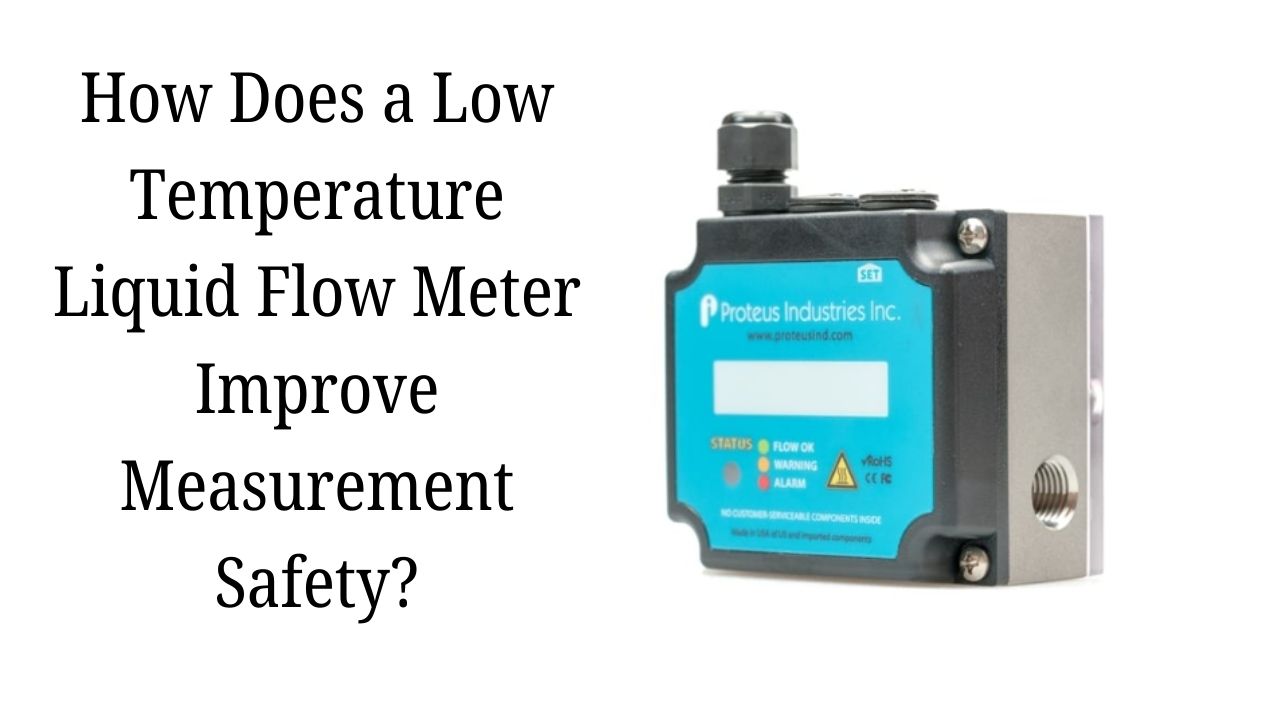
It is specifically engineered to measure liquid flow rates at extremely low temperatures while maintaining accuracy and reliability under harsh conditions. Unlike standard flow meters, these instruments are constructed from specialized materials that can withstand thermal contraction, maintain structural integrity, and resist brittleness at cryogenic temperatures.
These meters employ various measurement technologies, including turbine, vortex, Coriolis, and ultrasonic principles, each selected based on the specific application requirements. The operating range typically extends from ambient temperatures down to -200°C or lower, covering applications involving liquid nitrogen (-196°C), liquid oxygen (-183°C), liquid argon (-186°C), and LNG (-162°C).
The fundamental design considerations include thermal expansion coefficients, material compatibility with cryogenic fluids, and the ability to maintain calibration accuracy across wide temperature fluctuations. Modern low-temperature flow meters incorporate advanced sensor technology that compensates for density changes and viscosity variations that occur at these extreme temperatures.
Key Safety Features of Low Temperature Flow Meters
The safety enhancements built into low-temperature liquid flow meters begin with material selection. These devices utilize stainless steel alloys, specialized polymers, and composite materials that resist embrittlement and maintain ductility at cryogenic temperatures. This prevents catastrophic failures that could occur with standard materials, which become brittle and prone to cracking when exposed to extreme cold.
Pressure containment is another critical safety feature. Low-temperature applications often involve high-pressure systems, and the flow meters must maintain seal integrity under both pressure and thermal stress. Advanced sealing technologies and gasket materials ensure leak-free operation, preventing the release of potentially hazardous cryogenic liquids.
Temperature resistance capabilities extend beyond mere survival at low temperatures. These meters are designed to withstand rapid temperature changes without thermal shock, incorporating features such as thermal sleeves, insulation barriers, and gradual temperature transition zones that protect sensitive measurement components.
Integrated leak detection and alarm systems provide early warning of potential failures, allowing operators to take corrective action before dangerous situations develop. Many modern meters include remote monitoring capabilities, reducing the need for personnel to work in proximity to hazardous cryogenic systems.
How Low Temperature Flow Meters Improve Measurement Safety
Prevention of Thermal Shock and System Failures
Low-temperature flow meters significantly reduce the risk of thermal shock—a phenomenon where rapid temperature changes cause stress fractures in materials. By incorporating thermal management systems and materials with matched thermal expansion properties, these meters prevent sudden failures that could lead to dangerous releases of cryogenic liquids. The controlled measurement environment ensures that temperature transitions occur gradually, protecting both the meter and the surrounding piping system.
Accurate Measurement Preventing Overfilling and Underfilling
Precision is paramount when handling cryogenic liquids. Overfilling storage vessels can lead to dangerous pressure buildup as liquids vaporize, while underfilling can result in operational inefficiencies. Low-temperature flow meters provide real-time, accurate measurements that enable precise inventory control. This accuracy prevents hazardous situations such as tank ruptures, pressure relief valve activation, or the formation of explosive vapor mixtures in confined spaces.
Real-Time Monitoring and Control Capabilities
Modern low-temperature flow meters offer continuous monitoring with digital output signals that integrate seamlessly with process control systems. This real-time data allows operators to detect anomalies immediately—whether it’s an unexpected flow rate change indicating a leak, or pressure fluctuations suggesting system instability. Automated control responses can be programmed to shut down systems or activate emergency protocols without human intervention, dramatically reducing response times during critical incidents.
Reduced Human Exposure to Hazardous Conditions
One of the most significant safety improvements is the reduction in human exposure to dangerous cryogenic environments. Remote monitoring capabilities mean operators can maintain safe distances from low-temperature systems while still maintaining complete operational control. This minimizes the risk of cold burns, oxygen displacement hazards, and injuries from handling ultra-cold equipment. The reliability of these meters also reduces the frequency of maintenance interventions in hazardous areas.
Industry Applications and Safety Benefits
In the LNG industry, low-temperature flow meters ensure safe custody transfer operations by enabling accurate measurement, preventing both economic losses and safety hazards associated with unaccounted-for product. Chemical processing facilities rely on these instruments to safely handle cryogenic reactants, where precise flow control prevents runaway reactions.
Medical and pharmaceutical applications benefit from the sterile, accurate measurement of liquid oxygen, nitrogen, and other medical gases. Aerospace facilities use these meters for safe propellant handling, where measurement errors could be catastrophic. Research laboratories depend on them for controlled experiments involving cryogenic fluids, protecting both expensive equipment and personnel.
The economic benefits parallel the safety improvements—reduced downtime, fewer accidents, lower insurance costs, and enhanced regulatory compliance—contributing to operational excellence.
Conclusion
Low-temperature are a critical safety technology in industries that handle cryogenic and ultra-cold liquids. Through specialized materials, advanced sensing technology, real-time monitoring capabilities, and integration with automated control systems, these instruments transform potentially hazardous operations into controlled, safe processes. As industries continue to expand their use of cryogenic technologies, the role of these sophisticated measurement devices in ensuring workplace safety and operational reliability will become increasingly vital.