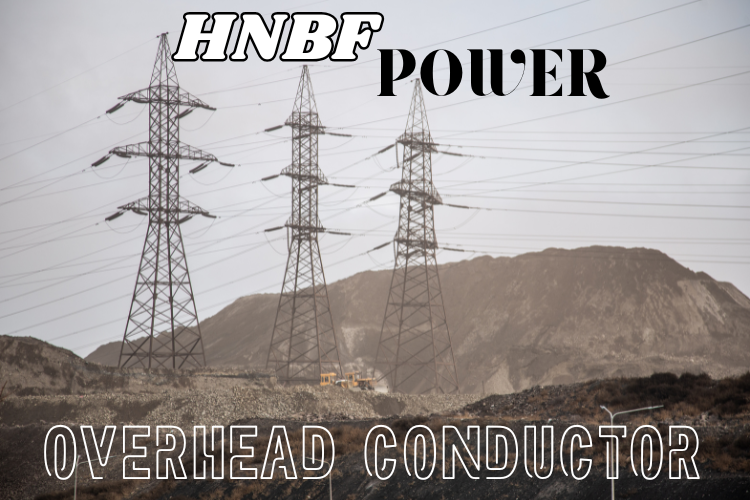
Overhead Conductor: Engineering Reliable Power Transmission Networks
Overhead conductor systems are the backbone of modern power transmission and distribution networks. From long-distance high-voltage transmission lines to urban and rural distribution grids, overhead conductors play a critical role in delivering electricity efficiently, safely, and economically. For engineers, EPC contractors, and utility procurement teams, selecting the right overhead conductor is a strategic decision that impacts network reliability, lifecycle cost, and regulatory compliance.
As a global manufacturer of overhead conductors and power cables, HNBF Power provides engineered conductor solutions designed to meet international standards and diverse grid conditions worldwide.
What Is an Overhead Conductor?
An overhead conductor is an electrical conductor installed above ground on transmission towers or distribution poles to carry electrical power. Unlike underground cables, overhead conductors are exposed to environmental conditions such as wind, temperature variations, ice loading, and pollution, making mechanical strength and thermal performance critical design factors.
Overhead conductors are widely used due to their lower installation cost, ease of inspection, and higher current-carrying capacity compared to underground systems.
Key Types of Overhead Conductors
AAC – All Aluminum Conductor
AAC conductors are made entirely of aluminum strands and are commonly used in urban distribution networks. They offer excellent conductivity and corrosion resistance but have lower tensile strength compared to steel-reinforced options.
Typical applications:
- Short to medium span distribution lines
- Coastal or corrosion-prone environments
AAAC – All Aluminum Alloy Conductor
AAAC uses aluminum-magnesium-silicon alloy, providing higher mechanical strength than AAC while maintaining good conductivity. It is suitable for longer spans and higher mechanical loads.
Advantages:
- Better strength-to-weight ratio
- Improved sag performance
- Lower maintenance requirements
ACSR – Aluminum Conductor Steel Reinforced
ACSR is one of the most widely used overhead conductor types for high-voltage transmission. It combines aluminum strands for conductivity with a steel core for mechanical strength.
Key benefits:
- High tensile strength
- Suitable for long spans and heavy ice or wind conditions
- Proven reliability in transmission networks
ABC – Aerial Bundled Cable
ABC is a compact overhead conductor system where insulated phase conductors are bundled together. It enhances safety and reduces power theft, especially in low-voltage distribution networks.
Common uses:
- Urban and semi-urban distribution
- Areas with limited right-of-way
- Regions requiring improved public safety
Technical Factors to Consider When Selecting an Overhead Conductor
Electrical Performance
Current-carrying capacity, resistance, and power loss directly affect system efficiency. Proper conductor sizing ensures optimal performance under peak load conditions.
Mechanical Strength
Tensile strength, elongation, and creep behavior determine the conductor’s ability to withstand environmental stresses and maintain acceptable sag over time.
Thermal Rating
Modern grids often operate closer to thermal limits. High-quality overhead conductors must maintain stable performance at elevated operating temperatures without excessive sag.
Environmental Resistance
Corrosion resistance is essential in coastal, industrial, or high-pollution areas. Material selection plays a key role in extending service life.
Manufacturing Standards and Quality Assurance
Reliable overhead conductor performance starts with controlled manufacturing processes. At HNBF Power, overhead conductors are manufactured using precision stranding, controlled annealing, and strict quality inspections to ensure consistent electrical and mechanical properties.
Products are designed and tested in accordance with relevant international standards such as IEC, ASTM, and BS, supporting global utility and EPC project requirements.
Applications Across Power Transmission and Distribution
Overhead conductors are used in a wide range of power infrastructure projects, including:
- High-voltage transmission lines
- Medium-voltage distribution networks
- Rural electrification programs
- Industrial power supply lines
- Utility grid expansion and modernization projects
HNBF Power supports these applications with a complete portfolio of AAC, AAAC, ACSR, ABC, LV power cables, and concentric cables, enabling utilities to source multiple products from a single qualified manufacturer.
FAQs About Overhead Conductors
What is the most commonly used overhead conductor?
ACSR is one of the most widely used overhead conductors due to its balance of electrical conductivity and mechanical strength.
How do I choose between AAC and AAAC?
AAC is suitable for shorter spans and corrosion-resistant environments, while AAAC offers higher mechanical strength for longer spans and higher loads.
Are overhead conductors suitable for harsh climates?
Yes. With proper design and material selection, overhead conductors can perform reliably in extreme temperatures, high winds, and ice-loading conditions.
What standards should overhead conductors comply with?
Common standards include IEC, ASTM, and BS, depending on regional utility and project specifications.
Can overhead conductors be customized for specific projects?
Yes. Conductor size, stranding configuration, and material composition can be customized to meet specific electrical and mechanical requirements.
Partner With HNBF Power for Reliable Overhead Conductor Solutions
Selecting the right overhead conductor is essential for building efficient, durable, and future-ready power networks. With advanced manufacturing capabilities, strict quality control, and global project experience, HNBF Power delivers overhead conductor solutions trusted by utilities and EPC contractors worldwide.
Contact HNBF Power today to discuss your project requirements and receive customized overhead conductor solutions tailored to your transmission and distribution needs.