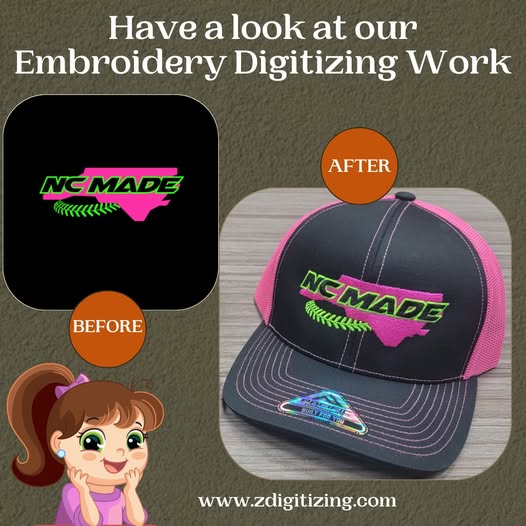
Hat digitizing is a specialized embroidery process that converts logos, text, or artwork into stitch files specifically engineered for caps and hats. Unlike flat embroidery, headwear presents unique technical challenges due to curved panels, structured fronts, and limited stitching areas. Proper digitizing ensures that designs remain clear, durable, and visually accurate once embroidered.
In branding, retail, and promotional apparel, hats play a practical and marketing role. High-quality embroidery begins with precise digitizing that considers how designs behave on headwear rather than on flat fabric.
What Is Hat Digitizing?
Hat digitizing is the method of translating artwork into a digital embroidery file that embroidery machines can interpret. This process involves planning stitch types, stitch direction, density, and sequencing based on how hats are constructed.
Because most caps are embroidered from the center outward and often on stiff or curved panels, professional hat digitizing requires a different technical approach than standard garment digitizing. Without proper planning, even a well-designed logo can distort during stitching.
Why Hat Digitizing Requires a Different Approach
Hats behave differently under embroidery machines compared to shirts or jackets. Structured caps, in particular, have firm front panels that do not flex easily, increasing the risk of distortion if stitch paths are not planned correctly.
The embroidery area on a hat is smaller, the surface is curved, and incorrect stitch density or direction can cause puckering or misalignment. For this reason, designs must be digitized with center-out stitching, balanced density, and appropriate compensation for fabric movement.
Hat Types and Their Impact on Digitizing
Different hat styles require adjustments during digitizing to ensure clean embroidery results. Structured caps need firm stitch control and stable underlay, while unstructured caps require lighter density to prevent fabric collapse. Snapbacks are commonly used for bold logos and flat embroidery, while beanies demand flexible stitch planning due to stretchable fabric. Visors provide minimal space, making simplified designs essential.
Understanding how each hat type reacts to stitches helps prevent production issues and improves consistency.
Technical Elements of High-Quality Hat Digitizing
Effective hat digitizing relies on technical accuracy rather than visual appearance alone. Stitch direction must follow the curve of the cap to prevent distortion. Stitch density must be carefully balanced to avoid thread breaks or damage to the fabric. Underlay stitches provide stability and help maintain the design’s shape over time.
Pull compensation is another essential factor, allowing the design to remain properly aligned during stitching. Proper sequencing, especially center-out stitching, helps keep designs centered on structured caps.
Common Challenges in Hat Digitizing
Hat digitizing requires experience because small errors can significantly affect the final embroidery. Common issues include poor centering, overly dense stitching, unreadable small text, distortion on curved panels, and uneven stitch flow caused by improper sequencing.
Experienced digitizers anticipate these problems and adjust stitch paths, densities, and design elements before production begins.
Benefits of Professional Hat Digitizing
Professional hat digitizing improves both production efficiency and final product quality. Well-digitized files reduce machine errors, minimize thread breaks, and improve stitch durability. This leads to consistent embroidery results across multiple hats and production runs.
For businesses and brands, clean embroidery supports professional presentation and long-term wearability, reducing material waste and rework costs.
Best Practices for Effective Hat Digitizing
Successful hat embroidery starts with practical design choices. Bold, simple designs perform better on headwear than overly detailed artwork. Small text and fine lines should be avoided whenever possible. Satin stitches work best for lettering and borders, while testing stitch files before full production helps identify potential issues.
Adjusting designs based on hat material and structure ensures reliable embroidery results across different styles.
Hat Digitizing for Branding and Promotional Use
Embroidered hats are widely used for uniforms, promotions, events, and retail merchandise. A properly digitized logo maintains clarity and balance, reinforcing brand recognition over time. Poor digitizing, however, can negatively affect how a brand is perceived.
Accurate hat digitizing ensures logos remain readable, aligned, and durable even after repeated wear and washing.
Final Thoughts
Hat digitizing combines technical embroidery knowledge with practical design understanding. It requires careful planning of stitch direction, density, and sequencing to accommodate the unique construction of headwear. Whether used for promotional products, retail collections, or corporate apparel, high-quality hat embroidery depends on precise digitizing.
Investing in proper hat digitizing leads to consistent results, improved durability, and dependable embroidery performance.
Frequently Asked Questions (FAQs)
What file format is commonly used for hat digitizing?
Hat digitizing files are typically created in machine-specific formats such as DST, PES, EXP, or other embroidery formats depending on the machine being used.
Can the same digitized file be used for shirts and hats?
In most cases, no. Hat embroidery requires different stitch direction, density, and sequencing than flat garments. A separate digitized file is recommended for best results.
Why does small text not work well on hats?
Hats have limited embroidery space and curved surfaces. Small text often loses clarity or becomes unreadable once stitched, especially on structured caps.
How long does professional hat digitizing take?
Turnaround time depends on design complexity, but professional digitizing typically takes a few hours to one business day.