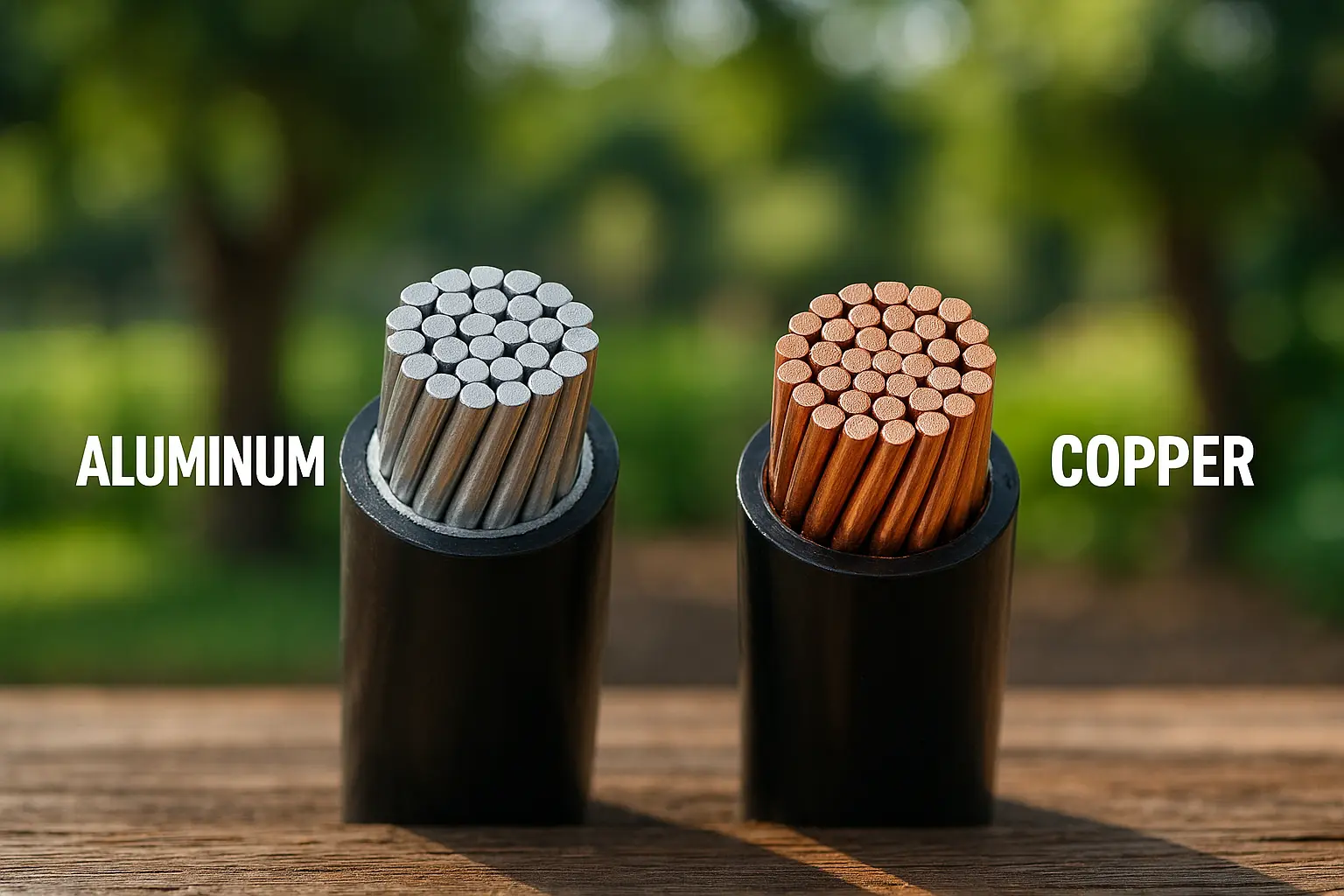
Aluminum Cable: A Reliable Choice for Modern Power Networks
Aluminum cable plays a critical role in today’s power transmission and distribution infrastructure. For electrical engineers, EPC contractors, and utility procurement buyers, selecting the right aluminum cable directly impacts network efficiency, lifecycle cost, and long-term reliability. Compared to traditional copper conductors, aluminum cables offer an optimal balance of conductivity, weight, and cost—making them the preferred solution for overhead lines and large-scale utility projects.
As a global manufacturer of overhead conductors and power cables, HNBF Power supplies aluminum cable solutions designed to meet international standards and demanding grid environments.
Why Aluminum Cable Is Widely Used in Power Transmission
Lightweight with High Conductivity
Aluminum cable provides excellent electrical conductivity relative to its weight. This lightweight nature reduces mechanical load on towers and poles, allowing for longer spans and lower structural costs in overhead transmission and distribution systems.
Cost-Effective for Large-Scale Projects
For utility-scale projects, aluminum cable is significantly more economical than copper. Lower raw material costs combined with easier handling and installation make aluminum conductors ideal for transmission lines, substations, and rural electrification projects.
Corrosion Resistance and Durability
Aluminum naturally forms an oxide layer that protects it from corrosion. When engineered correctly—especially in AAAC and ACSR designs—aluminum cable delivers long service life even in coastal, industrial, or high-humidity environments.
Types of Aluminum Cable Supplied by HNBF Power
AAC (All Aluminum Conductor)
AAC cables are commonly used in urban distribution networks where short spans and high conductivity are required. They are ideal for low-voltage and medium-voltage overhead lines.
AAAC (All Aluminum Alloy Conductor)
AAAC aluminum cable offers higher tensile strength than AAC, making it suitable for longer spans and harsher environmental conditions. It is widely used by utilities seeking better mechanical performance without steel reinforcement.
ACSR (Aluminum Conductor Steel Reinforced)
ACSR combines aluminum strands with a steel core, delivering superior strength for long-distance transmission lines. This aluminum cable type is a standard choice for high-voltage and extra-high-voltage overhead systems.
ABC and LV Aluminum Cables
HNBF Power also manufactures ABC (Aerial Bundled Cable), LV power cable, and concentric cable solutions, supporting safer and more compact distribution networks in urban and industrial zones.
Key Engineering Considerations When Selecting Aluminum Cable
Electrical Load Requirements
Engineers must calculate current-carrying capacity, voltage drop, and thermal performance to ensure the aluminum cable meets system demand.
Mechanical Strength and Sag Control
Span length, wind load, and ice conditions influence the selection between AAC, AAAC, or ACSR aluminum cable types.
Standards and Compliance
Reputable manufacturers like HNBF Power produce aluminum cables in compliance with IEC, ASTM, BS, and other international standards—critical for utility approvals and project specifications.
Why Utilities and EPC Contractors Choose HNBF Power
HNBF Power is a trusted supplier of aluminum cable solutions for transmission and distribution projects worldwide. With advanced manufacturing facilities, strict quality control, and extensive export experience, HNBF Power supports power utilities, EPC contractors, and infrastructure developers with consistent quality and technical reliability. Custom conductor designs, flexible order volumes, and project-focused support make HNBF Power a dependable long-term partner.
Frequently Asked Questions (FAQs)
Q1: Is aluminum cable suitable for high-voltage transmission lines?
Yes. ACSR and AAAC aluminum cables are widely used for high-voltage and long-distance transmission due to their strength and efficiency.
Q2: How does aluminum cable compare to copper cable?
Aluminum cable is lighter and more cost-effective, making it ideal for overhead and utility-scale projects, while copper is typically used for compact indoor applications.
Q3: What standards does aluminum cable follow?
Quality aluminum cables are manufactured according to IEC, ASTM, BS, and other recognized international standards.
Q4: Can aluminum cable be customized for specific projects?
Yes. HNBF Power offers customized aluminum cable designs based on electrical, mechanical, and environmental requirements.
Partner with HNBF Power for Aluminum Cable Solutions
Choosing the right aluminum cable is essential for safe, efficient, and cost-effective power networks. Whether you are planning a new transmission line, upgrading distribution infrastructure, or sourcing reliable conductors for utility projects, HNBF Power delivers engineered aluminum cable solutions you can trust.
Contact HNBF Power today to discuss your project requirements and receive customized aluminum cable solutions tailored to your power infrastructure needs.