PCOD (Polycystic Ovarian Disease) affects countless women today, influencing menstrual cycles, metabolism, skin health, energy levels, and even emotional well-being. Symptoms like irregular periods, weight gain, acne, mood swings, and fatigue can feel overwhelming—but PCOD is manageable with the right lifestyle approach.
One of the most effective natural tools for balancing hormones is yoga. Through mindful movement, breathwork, and relaxation, yoga helps the body heal from within. In this article, we explore how yoga supports PCOD management, along with insights from award-winning yoga instructor Radhika Bargava, founder of Trimuk Yoga.
About the Instructor: Radhika Bargava, Founder of Trimuk Yoga
Radhika Bargava is a well-known yoga instructor, traditional Hatha Flow practitioner, and certified health & nutrition coach. She is also the proud winner of the India Excellence Award 2024.
With years of experience teaching women dealing with PCOD, hormonal imbalances, and lifestyle challenges, Radhika offers a unique blend of yogic wisdom and modern wellness understanding. Her approach is compassionate, structured, and deeply aligned with women’s health needs.
Her teaching philosophy:
✨ “Healing PCOD is about learning to listen to your body, not push it.”
👉 Explore programs: https://trimukyoga.com
Understanding PCOD: What’s Going On in the Body?
PCOD happens when the ovaries produce many immature eggs, which can lead to small cysts and hormonal imbalances. This affects estrogen, progesterone, testosterone, and even insulin levels.
Common symptoms include:
- Irregular or delayed periods
- Weight gain and difficulty losing weight
- Acne or oily skin
- Hair thinning or hair fall
- Mood swings, anxiety, irritability
- Difficulty conceiving
- Fatigue and low energy
Sedentary lifestyle, stress, inflammation, and insulin resistance are major contributors—making yoga a naturally powerful solution.
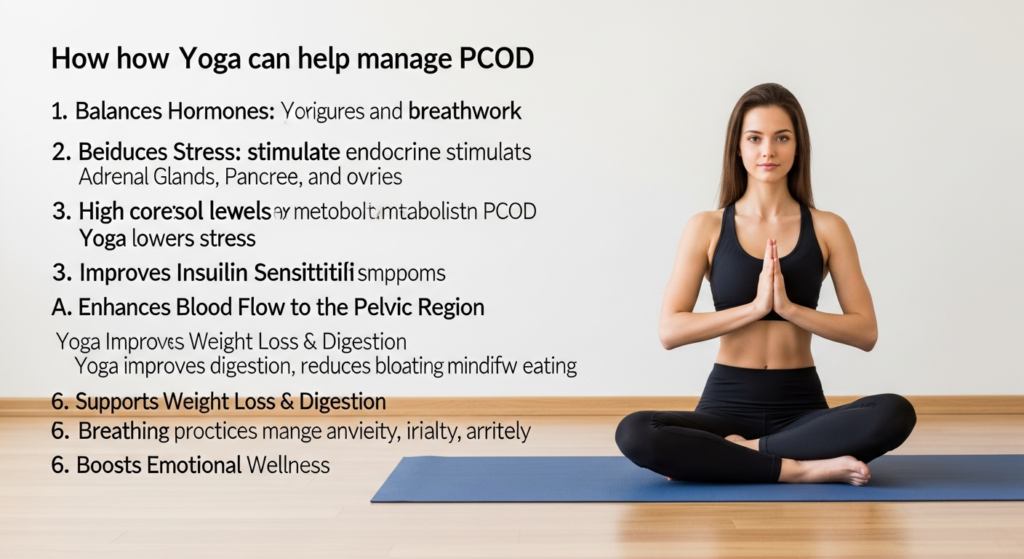
How Yoga Helps Manage PCOD
1. Balances Hormones
Postures and breathwork stimulate endocrine organs like the thyroid, adrenal glands, pancreas, and ovaries.
2. Reduces Stress
High cortisol worsens PCOD. Yoga lowers stress levels effectively.
3. Improves Insulin Sensitivity
Better metabolism = improved PCOD symptoms.
4. Enhances Blood Flow to Pelvic Region
Certain yoga poses nourish the reproductive organs.
5. Supports Weight Loss & Digestion
Yoga improves digestion, reduces bloating, and promotes mindful eating.
6. Boosts Emotional Wellness
Breathing practices help manage anxiety, irritability, and emotional fatigue.
Radhika often tells her students:
✨ “Small, consistent steps create the biggest hormonal changes.”
Beginner-Friendly Yoga Routine for PCOD
You can start with this simple, daily sequence:
1. Butterfly Pose (Baddha Konasana)
Enhances pelvic blood flow and reduces menstrual discomfort.
Hold for 1–2 minutes.
2. Cat–Cow Pose (Marjariasana)
Improves hormonal function and relieves back tension.
10–15 rounds.
3. Child’s Pose (Balasana)
Deep relaxation and stress reduction.
Hold for 1–3 minutes.
4. Cobra Pose (Bhujangasana)
Stimulates reproductive organs and boosts metabolism.
Hold 20–30 seconds.
5. Bridge Pose (Setu Bandhasana)
Activates thyroid & strengthens pelvic muscles.
Hold 30 seconds.
6. Reclined Twist (Supta Matsyendrasana)
Detoxifies abdomen and supports digestion.
Hold each side 30 seconds.
7. Anulom Vilom (Alternate Nostril Breathing)
Calms the mind and balances hormones.
5 minutes.

Lifestyle Tips for PCOD Relief
Insights inspired by Radhika Bargava’s women wellness experience:
- Avoid refined sugar and processed foods
- Choose whole grains, fruits, vegetables, and healthy fats
- Add anti-inflammatory foods like turmeric, flaxseeds, and nuts
- Maintain a regular sleep cycle
- Practice meditation or deep breathing daily
- Walk at least 20–30 minutes each day
- Stay hydrated
Yoga + lifestyle changes = long-term PCOD improvement.
Frequently Asked Questions
1. Can yoga cure PCOD?
Yoga doesn’t “cure” PCOD but helps manage and reduce symptoms naturally.
2. Is yoga safe for beginners?
Yes, the sequence above is perfect for beginners.
3. How long does it take to see results?
Most women notice changes within 6–12 weeks.
4. Can yoga regulate periods?
Yes, when combined with good diet and stress management.
Start Your Healing Journey
PCOD may be challenging, but with mindful practices like yoga, your body can gradually return to balance. Yoga helps regulate hormones, manage stress, support metabolism, and improve emotional well-being. With expert guidance from instructors like Radhika Bargava, the journey becomes empowering, supportive, and truly transformative.