When someone is struggling with intense mood swings, emotional instability, or unpredictable energy shifts, getting the right mental health support becomes essential. Bipolar disorder is a complex condition that affects how a person feels, thinks, and behaves and timely, effective treatment can make a life-changing difference. But when it’s time to seek professional help, many people wonder: Should I see a Bipolar Disorder Psychiatrist or a Psychologist?
Both professionals play important roles in mental healthcare, but their training, approach, and the types of treatment they provide are different. Understanding these differences will help you decide which specialist is right for you or your loved one.
This comprehensive guide breaks down the roles of psychiatrists and psychologists, how they support bipolar disorder treatment, and when to choose one over the other. With the right care from trusted mental health services like ExpertMinds, you can create a personalized treatment plan that supports long-term stability.
What Is Bipolar Disorder? A Quick Overview
Bipolar disorder is a chronic mental health condition characterized by extreme mood shifts, ranging from manic or hypomanic episodes to major depressive episodes. These mood changes can be intense, unpredictable, and disruptive.
Common Symptoms Include:
Manic or Hypomanic Episodes
- Increased energy or activity
- Euphoric or irritable mood
- Racing thoughts
- Reduced need for sleep
- Impulsive or high-risk behavior
Depressive Episodes
- Low mood or hopelessness
- Fatigue or lack of energy
- Difficulty concentrating
- Loss of interest in activities
- Thoughts of self-harm (in severe cases)
Because bipolar disorder affects both mood and behavior, treatment often requires a combination of medication, therapy, and lifestyle management. This is where understanding the difference between a Bipolar Disorder Psychiatrist and a psychologist becomes essential.
What Is a Bipolar Disorder Psychiatrist?
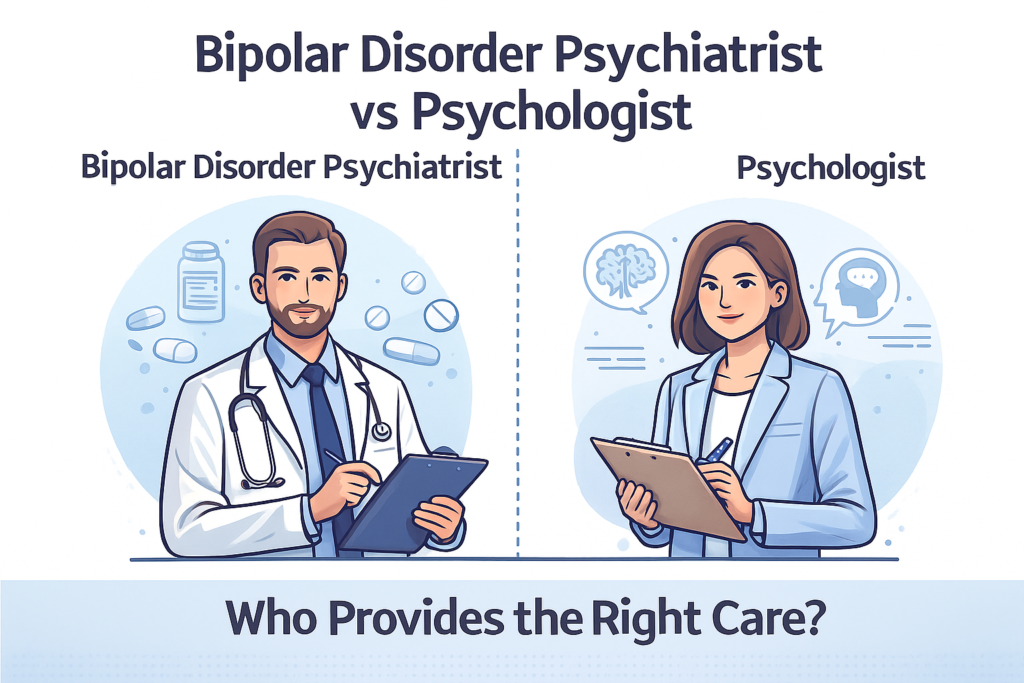
A Bipolar Disorder Psychiatrist is a medical doctor (MD or DO) who specializes in diagnosing, treating, and managing mental health disorders through medication, medical evaluation, and clinical monitoring. Psychiatrists undergo extensive medical training, allowing them to evaluate both the psychological and biological factors contributing to bipolar disorder.
What Psychiatrists Do:
1. Diagnose Bipolar Disorder Medically
A psychiatrist conducts detailed medical and psychiatric evaluations to determine the type of bipolar disorder:
- Bipolar I
- Bipolar II
- Cyclothymic disorder
- Other specified bipolar disorders
2. Prescribe Medication
Medication is often the foundation of bipolar disorder management. A psychiatrist may prescribe:
- Mood stabilizers
- Antipsychotics
- Antidepressants (used carefully)
- Anti-anxiety medication
- Sleep aids
These medications help control mood episodes, prevent relapse, and stabilize long-term functioning.
3. Monitor Physical and Mental Health
Psychiatrists track:
- Medication side effects
- Blood levels (for medications like lithium)
- Sleep patterns
- Behavioral changes
- Long-term symptoms
Because bipolar disorder impacts both the brain and body, this medical oversight is crucial.
4. Provide Psychoeducation
Psychiatrists help patients understand:
- How bipolar disorder works
- How medication helps
- How to manage triggers and mood episodes
- What lifestyle changes support stability
What Is a Psychologist?
A psychologist has a doctoral degree in psychology (PhD or PsyD) and specializes in therapy, behavioral interventions, and psychological assessments. While they cannot prescribe medication in most regions, they play a vital role in the therapeutic management of bipolar disorder.
What Psychologists Do:
1. Provide Psychotherapy
Therapy helps individuals manage their emotions, relationships, stress, and daily functioning. Therapies commonly used for bipolar disorder include:
- Cognitive Behavioral Therapy (CBT)
- Dialectical Behavior Therapy (DBT)
- Family-focused therapy
- Interpersonal and Social Rhythm Therapy (IPSRT)
- Psychoeducation therapy
2. Help Manage Triggers and Mood Patterns
Psychologists teach patients how to:
- Recognize early warning signs
- Develop emotional regulation skills
- Maintain stable routines
- Build healthy coping strategies
- Improve interpersonal communication
3. Offer Psychological Testing
Psychologists may conduct assessments to understand:
- Mood patterns
- Personality traits
- Cognitive functioning
- Co-occurring mental health conditions
These tests support accurate diagnosis and treatment planning.
4. Provide Long-Term Skill Development
While medication addresses mood instability, therapy builds long-term behavioral stability. Psychologists support patients in developing:
- Healthy lifestyle habits
- Stress-management skills
- Strong emotional resilience
- Improved communication techniques
Key Differences: Psychiatrist vs Psychologist for Bipolar Disorder
Understanding the difference between these two specialists helps you choose the right support.
| Category | Psychiatrist | Psychologist |
| Medical degree | Yes (MD/DO) | No |
| Can prescribe medication | ✔️ Yes | ❌ No |
| Focus | Biological + psychological | Psychological + behavioral |
| Typical treatment | Medication + monitoring | Therapy + skill development |
| Best for | Stabilizing mood symptoms | Managing emotions and improving daily functioning |
Both are essential, but for different reasons. This leads to an important question…
Do You Need a Bipolar Disorder Psychiatrist, a Psychologist, or Both?
The answer often depends on the severity, symptoms, and individual needs of the patient.
You Likely Need a Bipolar Disorder Psychiatrist If:
- You have intense manic or depressive episodes
- You need medication for mood stabilization
- Your symptoms are affecting your functioning
- You have co-occurring mental health conditions
- You’ve had hospitalizations due to mood episodes
Psychiatrists are crucial for managing the medical aspects of bipolar disorder.
You Likely Need a Psychologist If:
- You want to understand and manage emotional triggers
- You struggle with stress, relationships, or daily functioning
- You need help building healthy routines
- You want long-term therapy and emotional support
- You’re already taking medication and need additional coping skills
Therapy makes a significant difference in long-term recovery and stability.
Most Patients Benefit From Both
The most effective treatment for bipolar disorder combines:
- Medication (psychiatrist)
- Therapy (psychologist)
- Lifestyle management and routine building
Studies consistently show that individuals who follow an integrated treatment plan experience:
- Fewer mood episodes
- Better medication adherence
- Improved emotional stability
- Healthier relationships
- Greater quality of life
How Psychiatrists and Psychologists Work Together
Collaboration between both specialists leads to better outcomes. Here’s how:
1. Shared Treatment Planning
Both professionals can coordinate a plan that addresses:
- Medical needs
- Emotional health
- Lifestyle structure
- Crisis prevention
2. Monitoring Progress
Psychologists track behavioral and emotional changes, while psychiatrists track mood stability and physical health. Together, they provide a comprehensive view of the patient’s progress.
3. Crisis Intervention
If a therapy session reveals severe symptoms, the psychologist can promptly coordinate with the psychiatrist for medication adjustments or additional support.
4. Long-Term Management
Bipolar disorder is lifelong, and both specialists support sustained stability through coordinated care.
How to Choose the Right Specialist for Your Needs
Choosing between a Bipolar Disorder Psychiatrist and a psychologist depends on individual circumstances. Here are key factors to consider:
1. Severity of Symptoms
Severe mania, suicidal thoughts, or psychosis requires immediate psychiatric support.
2. Current Treatment Stage
- New diagnosis: Start with a psychiatrist
- Stabilized mood: Add or continue therapy
- Long-term management: Use both specialists together
3. Treatment Preferences
Some people prefer to avoid medication, however, for bipolar disorder, medication is often essential. In such cases, a psychiatrist provides the necessary guidance.
4. Availability of Services
If accessing in-person care is challenging, many psychiatrists and psychologists now offer:
- Telehealth sessions
- Online therapy programs
- Virtual medication management
Integrated mental health platforms like ExpertMinds provide convenient access to both.
Benefits of Seeing a Bipolar Disorder Psychiatrist First
Because bipolar disorder is a medical condition with complex neurological factors, it is often best to consult a psychiatrist first. Why?
✔️ Accurate Medical Diagnosis
Psychiatrists assess biological, genetic, and neurological markers.
✔️ Proper Medication
Medication balances brain chemistry and prevents severe symptoms.
✔️ Crisis Prevention
Psychiatrists can detect early signs of potential relapse.
✔️ Co-Occurring Condition Management
Conditions like anxiety, ADHD, and substance use disorders often accompany bipolar disorder and psychiatrists can treat them.
Benefits of Adding a Psychologist to Your Treatment Plan
A psychologist strengthens long-term stability by helping you build skills that medication alone cannot provide.
✔️ Emotional Awareness and Control
Learn to recognize mood shifts early.
✔️ Healthy Lifestyle Routines
Therapy encourages regular sleep, eating, and activity habits.
✔️ Stronger Relationships
Therapists help improve communication and conflict management.
✔️ Better Stress Response
CBT and DBT help reduce emotional vulnerability.
✔️ Ongoing Support
Psychologists offer consistent guidance through life’s challenges.
Final Thoughts
When deciding between a Bipolar Disorder Psychiatrist and a psychologist, remember that both specialists serve essential but different roles. A psychiatrist helps stabilize mood through medical treatment, while a psychologist supports long-term emotional well-being through therapy and behavioral strategies.
For most people, the best results come from combining both forms of care. With the right treatment team such as those available through trusted services like ExpertMindsyou can manage symptoms effectively, reduce the risk of relapse, and build a healthier, more stable life.
If you or a loved one is experiencing symptoms of bipolar disorder, reaching out for help is the first and most powerful step toward recovery.