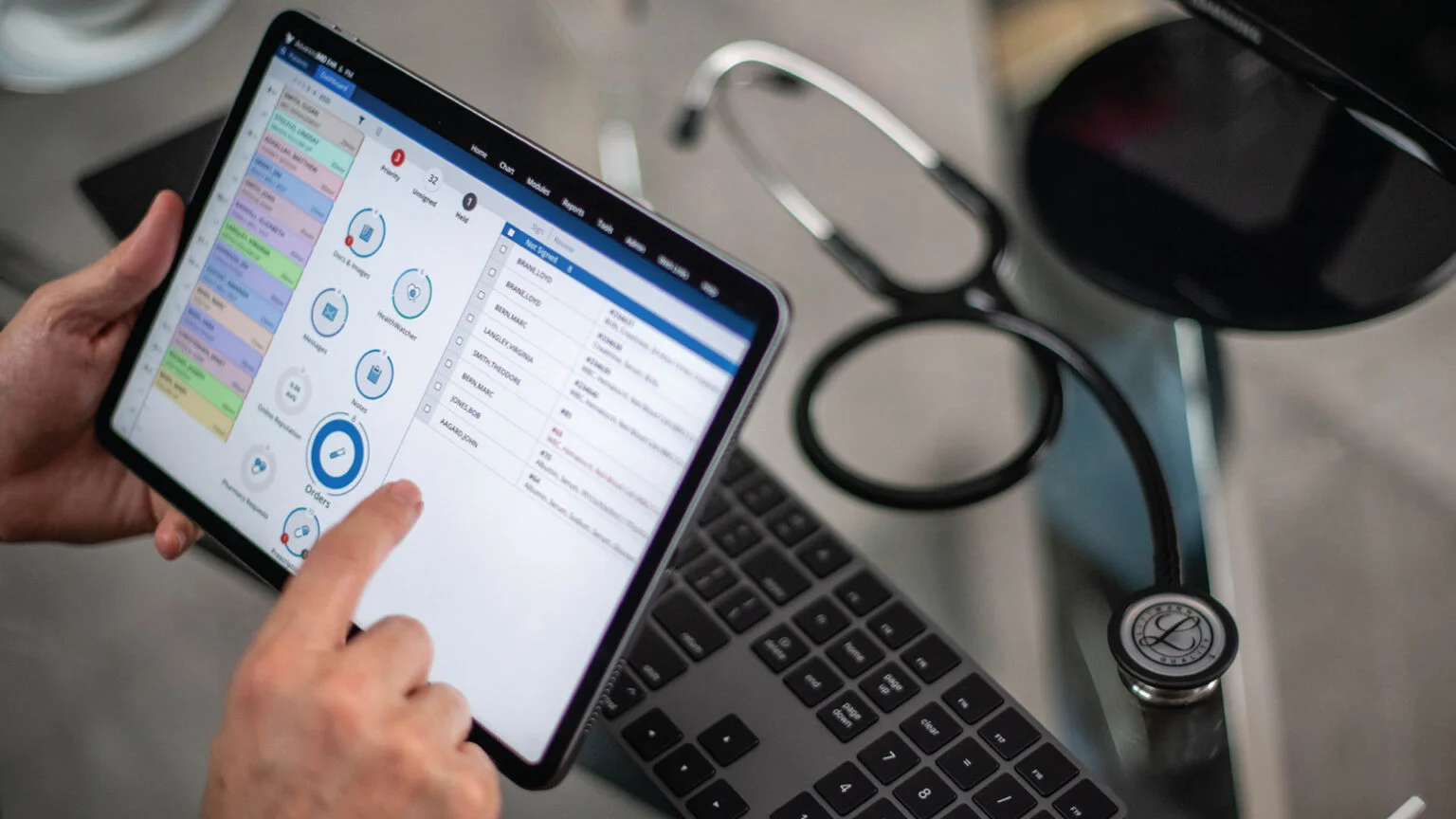
In an era where seconds can save lives and precision defines outcomes, healthcare’s heartbeat no longer comes only from stethoscopes it pulses through code, data, and digital intelligence. What was once “just software” has evolved into the new lifeline of modern healthcare, connecting doctors, patients, and systems like never before.
Today’s hospitals don’t just run on compassion, they run on connectivity.
The Silent Revolution in Hospital Corridors
Walk into a hospital today, and you’ll notice something different. The clipboards are gone, replaced by tablets. Nurses input vitals into digital dashboards. Doctors consult electronic records before making critical decisions.
Behind every diagnosis, test, and discharge note, there’s a network of healthtech systems that ensure accuracy, speed, and coordination.
This transformation isn’t about replacing humans, it’s about empowering them. From patient management software that minimises human error to AI-driven diagnostic tools that detect anomalies faster than ever, healthcare software is now the invisible force ensuring lives are not lost in the gaps of inefficiency.
From Data Chaos to Digital Clarity
For decades, hospitals were buried under paperwork. Files stacked in cabinets, handwritten prescriptions, and lost records were all too common. The shift to Hospital Management Software Pakistan (HMS) has changed that forever.
These systems don’t just store data, they organise life-critical information in real time. Doctors can now access complete patient histories in seconds, compare past lab results, and prescribe with context rather than guesswork.
And it’s not limited to large institutions. Even small clinics and diagnostic centres are embracing this digital wave. Cloud-based solutions are making high-quality healthcare management accessible and affordable across Pakistan and beyond.
Every click, every entry, and every digital record brings healthcare one step closer to precision and patient safety.
The Real-Time Healthcare Network
Modern healthcare runs on integration labs, pharmacies, clinics, and hospitals all talking to each other through software platforms.
For instance, imagine a patient getting a test done at a lab, like Dr. Essa Laboratory. The moment results are ready, they’re automatically updated in the doctor’s digital dashboard. There’s no waiting, no confusion, no misplaced reports.
This seamless flow of data enables faster decision-making and timely treatment a difference that can often mean the line between recovery and regression.
It’s not just convenient it’s life-saving.
Artificial Intelligence: The New Medical Assistant
AI is no longer a buzzword in healthcare, it’s a backbone. Machine learning algorithms now analyse radiology scans, detect early-stage diseases, and even predict patient deterioration before it happens.
But here’s the beauty of it: AI doesn’t replace doctors. It assists them. It augments their intuition with data-backed insights.
Think of it as a silent co-pilot tirelessly analysing, alerting, and learning.
From personalised treatment recommendations to predictive analytics, AI is redefining how hospitals operate and how patients heal.
In this new healthcare ecosystem, software is not a tool it’s a partner.
Patient Experience: Where Technology Meets Trust
Healthcare is personal and now, so is technology.
Today’s patients expect transparency, accessibility, and convenience. Through digital portals and mobile apps, patients can book appointments online, access lab reports, and consult doctors virtually.
This shift is more than a trend, it’s a redefinition of the healthcare experience. Patients are becoming active participants in their care journey, empowered by digital tools that put information at their fingertips.
And for healthcare providers, this digital engagement builds trust and loyalty two elements that no amount of advertising can buy.
The Lifeline in Crises and Beyond
The COVID-19 pandemic was a wake-up call for the entire healthcare industry. When physical systems collapsed under pressure, digital infrastructure kept hospitals running.
Telemedicine became the bridge between isolation and care. Online lab reporting systems ensured testing didn’t stop. Remote monitoring tools kept doctors connected with patients across cities.
Those who had adopted robust healthcare software before the crisis were better equipped to respond. And those who hadn’t? They quickly realized that in modern medicine, software is not optional it’s essential.
Beyond the Hospital Walls
The reach of healthcare software doesn’t stop at hospital boundaries. Public health organizations, insurance companies, and even fitness apps are now part of this interconnected digital health web.
Preventive care, early diagnosis, chronic disease management all rely on data-driven ecosystems that operate quietly in the background.
The future isn’t about isolated systems; it’s about interconnected health networks that anticipate needs before they arise.
The Road Ahead: Humanizing the Digital Core
As we move deeper into 2025 and beyond, the question isn’t whether healthcare will digitize it’s how human that digitization can remain.
The true power of healthcare software lies not in its complexity, but in its ability to simplify to free healthcare professionals from paperwork so they can return to what truly matters: care.
It’s not just software. It’s the heartbeat of a new healthcare era.
One where data saves time, precision saves lives, and technology saves humanity from inefficiency.
Healthcare’s future won’t be written on paper. It will be coded securely, intelligently, and compassionately.
Final Thought
So next time you see a doctor glance at a tablet or a nurse update your vitals digitally, remember: you’re witnessing more than technology.
You’re witnessing the new lifeline of healthcare a fusion of human compassion and digital intelligence that’s quietly rewriting the future of medicine.