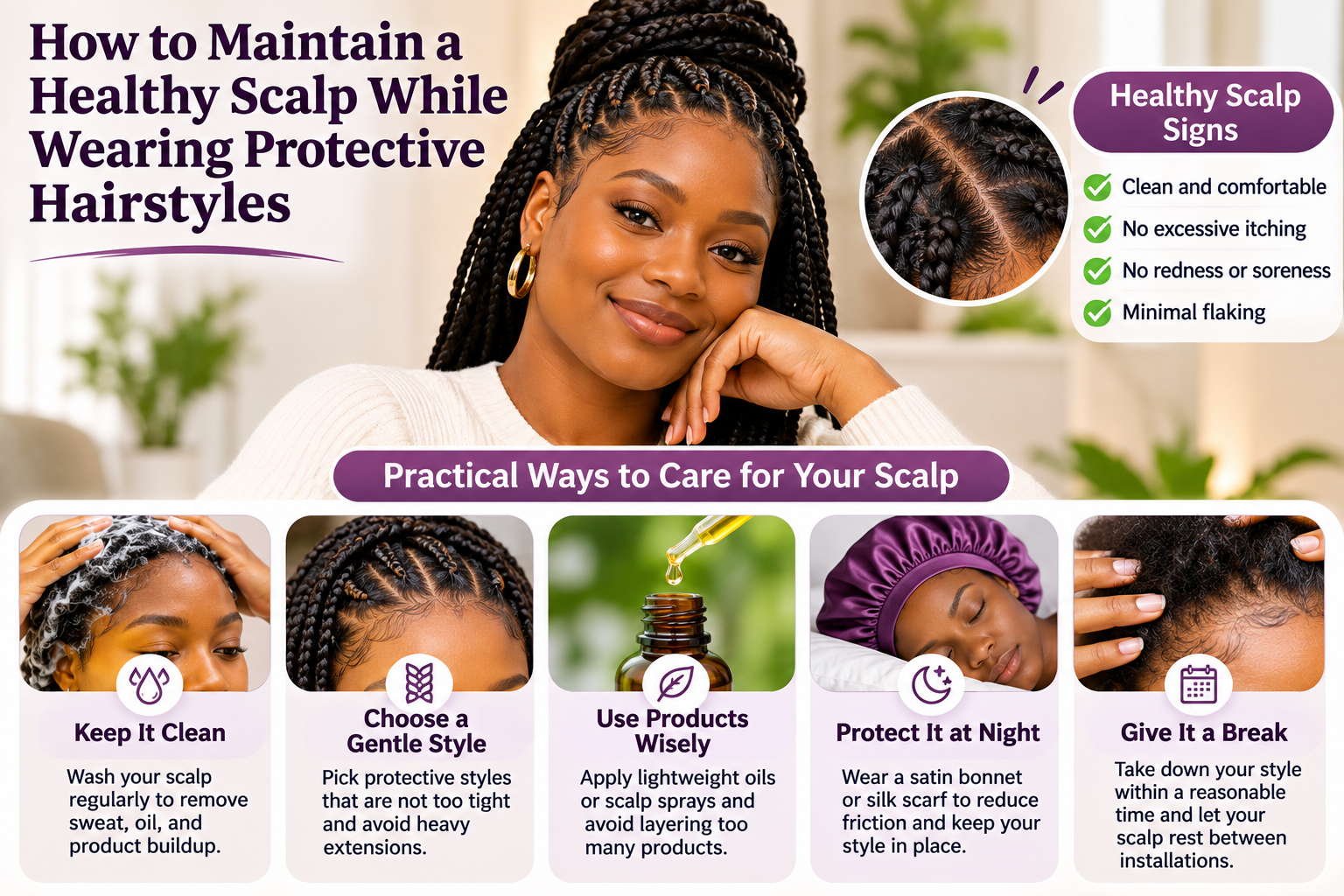
Braids, twists, and weaves can make natural hair easier to manage by reducing the need for daily combing, heat styling, and detangling. Once the hair is tucked away, however, it is easy to overlook the condition of the scalp. Sweat, dead skin cells, natural oils, and styling products continue to accumulate even when the hair itself requires little attention.
A protective hairstyle should give your natural strands a break without causing discomfort or interfering with basic scalp care. Problems such as persistent itching, tenderness, flaking, and thinning around the hairline deserve attention. Establishing a suitable care routine before and during the wearing period can help you maintain a comfortable scalp while enjoying the convenience of your chosen hairstyle.
Prepare Your Scalp Before Getting Your Hair Styled
Starting with a clean scalp makes maintenance easier once the hair has been braided or twisted. Wash thoroughly to remove residue from previous hairstyles, and gently detangle your natural strands before the appointment. Conditioning the hair beforehand can also help reduce unnecessary pulling during installation.
Take a moment to examine your scalp for redness, unusual flaking, sores, or tender areas. Covering an existing scalp problem with extensions may make it harder to monitor and manage. If you have persistent irritation or an untreated scalp condition, consider postponing your appointment until the underlying issue has been addressed.
Choose a Hairstyle That Does Not Pull on the Roots
Tight braids may appear neat and secure, but excessive tension can damage hair follicles. Heavy extensions, small braids, and tightly secured cornrows may place considerable pressure on the scalp. Pain during installation should never be considered necessary for achieving a longer-lasting hairstyle.
When comparing salon services listed under protective styles Dallas, consider whether the available hairstyles suit your natural hair density, scalp sensitivity, and existing hair condition. A comfortable installation should allow normal facial movement without pulling around the temples or forehead. Dermatologists warn that repeated tension from tight hairstyles can cause traction alopecia, which may eventually lead to permanent hair loss.
Establish a Regular Scalp Washing Routine
Wearing braids or twists does not eliminate the need for shampooing. Natural oils, perspiration, and environmental dirt can accumulate between the sections. A recent scientific review of Afro-textured hair care suggests that weekly cleansing with suitable products can help manage scalp buildup and support hair health.
Apply shampoo directly to accessible areas of the scalp and massage gently using your fingertips. Avoid scratching with your nails or rubbing the braids aggressively. Rinse thoroughly, paying attention to areas where extension hair may prevent water from reaching the scalp easily. Your washing schedule may need adjustment depending on physical activity, scalp sensitivity, and the type of hairstyle you are wearing.
Avoid Applying Too Many Products Between Washes
An itchy scalp often encourages people to apply additional oils, sprays, or moisturizing products. While certain products can help manage dryness, repeatedly layering them onto the scalp without cleansing can leave behind considerable residue.
Choose lightweight products that suit your scalp and natural hair. Moisturizing the strands and addressing a scalp condition are different matters, and one product may not serve both purposes. Persistent itching or flaking could be associated with dandruff, contact dermatitis, or another skin condition. Applying more oil without understanding the cause may do little to address the problem.
Allow Your Scalp to Dry Properly After Washing
Thick braids and densely installed extensions can take considerably longer to dry than loose natural hair. The outer sections may feel dry while moisture remains close to the roots. Wearing a head covering immediately afterward can further restrict airflow.
After washing, gently absorb excess water with a clean towel without rubbing or pulling the braids. Allow sufficient time for the scalp and hair to dry before going to bed. A hairdryer on a low or moderate heat setting may help with thicker sections. Avoid directing excessive heat toward the scalp, particularly if the skin is already sensitive or irritated.
Pay Attention to Your Hairline During Daily Styling
The hair surrounding the forehead and temples is particularly vulnerable to repeated pulling. Even loosely installed braids can place additional strain on these areas if they are frequently gathered into tight ponytails or high buns.
Alternate between comfortable hairstyles and avoid repeatedly pulling your braids in the same direction. Excessive brushing and frequent manipulation of the edges can also contribute to breakage. The British Association of Dermatologists advises reducing tension from braids, weaves, and other tight hairstyles to minimize the risk of traction-related hair loss.
Recognize Scalp Problems That Require Professional Attention
Not every form of hair loss results from tight styling. Central centrifugal cicatricial alopecia, for instance, is a scarring hair loss condition that commonly affects Black women and often begins around the crown. Persistent tenderness, burning sensations, or expanding areas of thinning should be evaluated by a dermatologist.
Someone using the search phrase hairstylist for alopecia black hair should look for a professional who understands textured hair, avoids excessive tension, and respects medical guidance concerning existing hair loss. A stylist can help identify suitable cosmetic options and gentler hairstyles, but diagnosing and treating an underlying scalp disorder requires medical expertise. Extensions should not be used to conceal worsening symptoms without investigating their cause.
Adjust Your Routine for Exercise and Nighttime Care
Regular exercise can increase perspiration around the scalp, particularly during warmer weather. Leaving sweat and product residue to accumulate between washes may contribute to discomfort. People who exercise frequently may need to cleanse their scalp more often than those with less physically demanding routines.
At night, a clean satin bonnet or silk scarf can help reduce friction against the hair. Make sure the covering fits comfortably without pressing tightly against the hairline. Wash reusable hair coverings regularly, and avoid sleeping with heavy braids secured into a tight bun. Small adjustments to these daily habits can reduce unnecessary tension and support easier maintenance.
Give Your Scalp a Break Between Hairstyles
Keeping the same hairstyle for an extended period can make scalp care and detangling increasingly difficult. As natural hair grows, the original attachment points shift, shed strands accumulate, and individual sections may begin to mat. The hairstyle may still look presentable even though the hair underneath requires attention.
The American Academy of Dermatology recommends limiting how long certain tension-producing hairstyles are worn and alternating them with gentler options. Remove extensions sooner if you experience discomfort, excessive buildup, or unusual thinning. Between installations, wear your natural hair loosely, cleanse and condition it thoroughly, and assess whether any areas need additional attention before your next appointment.