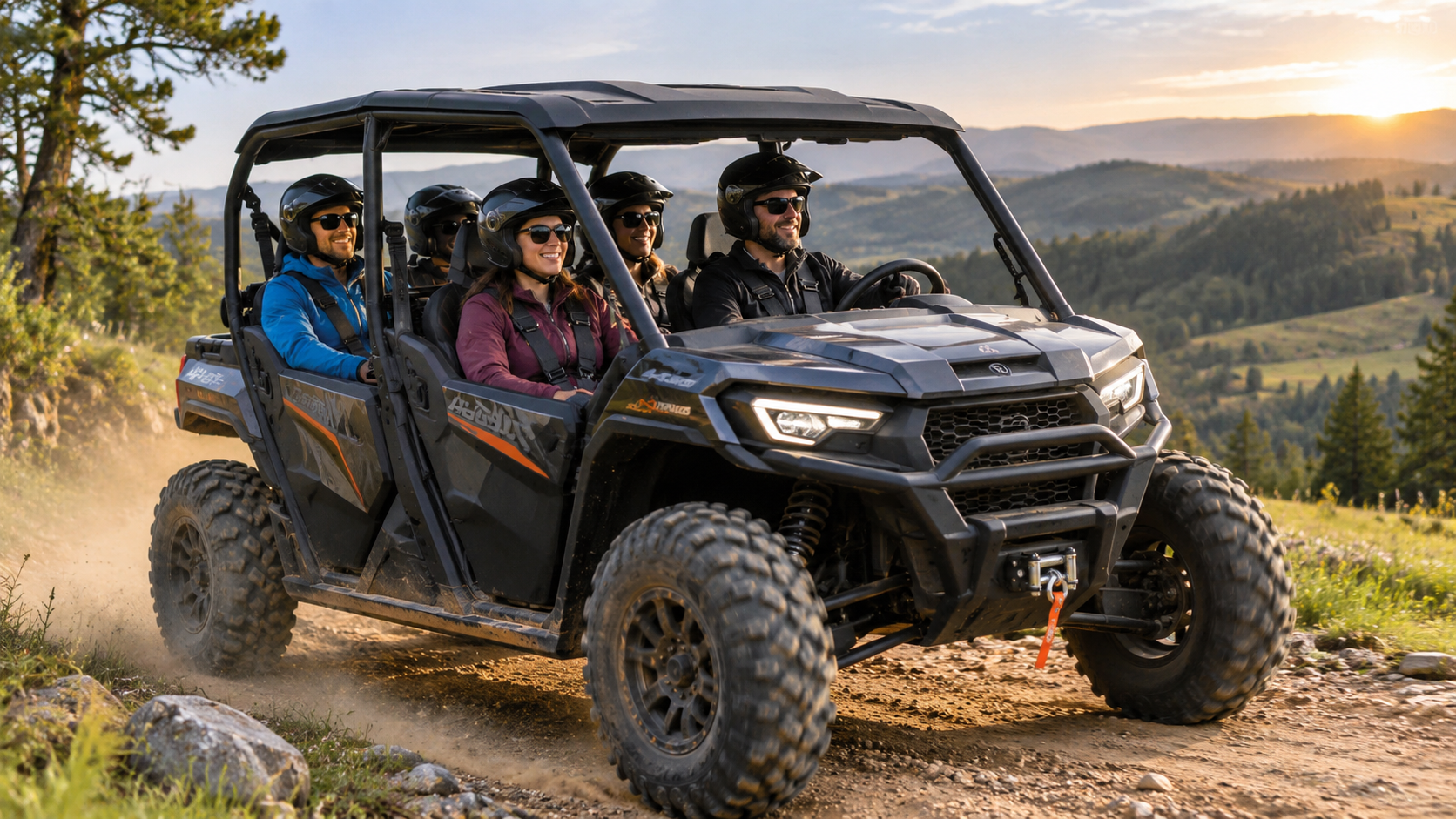
A 4 seater UTV is a versatile utility terrain vehicle designed to accommodate multiple passengers while offering practical functionality across different environments. From agricultural properties and ranches to designated recreational areas, these vehicles combine passenger capacity, cargo space, and durable construction.
Unlike traditional two-seater utility vehicles, four-seater UTVs feature an extended cabin that provides additional passenger accommodation. Manufacturers offer various models with different engine configurations, suspension systems, storage options, and comfort features.
Understanding the features, benefits, and applications of these vehicles can help adult buyers make informed decisions based on their specific requirements.
What Is a 4 Seater UTV?
A four-seater UTV, also known as a side-by-side, is an off-highway vehicle featuring seating for up to four occupants, including the driver. These vehicles typically feature a steering wheel, foot pedals, seat belts, and a rollover protective structure.
Depending on the manufacturer and model, a four-passenger UTV may include features designed for utility work, property transportation, or recreational applications.
The additional seating distinguishes these vehicles from conventional two-seater models, making them suitable for applications where multiple occupants need transportation.
Key Features of a 4 Seater UTV
Modern four-seater UTVs incorporate various features designed to improve functionality, passenger comfort, and vehicle reliability.
Spacious Passenger Cabin
One of the defining features of a four-seater side-by-side is its extended passenger cabin. Separate seating positions provide designated accommodation for each occupant, subject to manufacturer age, size, and safety requirements.
Engine and Drivetrain
Four-seater UTVs are available with different engine capacities and drivetrain configurations. Depending on the model, manufacturers may offer two-wheel-drive or four-wheel-drive systems designed for specific operating environments.
Advanced Suspension Systems
Suspension systems help manage uneven surfaces and vehicle movement. Different models feature suspension configurations suited to their intended utility or recreational applications.
Cargo and Storage Capacity
Many utility-focused UTVs include rear cargo beds, storage compartments, and manufacturer-rated carrying capacities. Available cargo space varies depending on vehicle dimensions and seating configuration.
Built-In Safety Features
Common safety features include seat belts, protective structures, passenger doors or nets, and designated handholds. These features complement rather than replace appropriate training, protective equipment, and manufacturer safety requirements.
Benefits of a Four-Seater UTV
A four-passenger UTV offers several practical benefits compared with smaller utility vehicles.
Additional Passenger Capacity
The extended seating configuration provides additional accommodation without requiring a separate vehicle for every passenger. This can be particularly valuable in commercial and agricultural environments.
Versatile Functionality
Four-seater UTVs serve various purposes, including property management, agricultural operations, commercial transportation, and designated recreational applications.
Practical Storage Options
Many models combine passenger accommodation with cargo storage, providing space for tools, equipment, and other work-related materials within manufacturer-rated limits.
Improved Passenger Comfort
Depending on the model, features such as adjustable seating, cabin enclosures, additional legroom, and climate control may contribute to passenger comfort.
Common Applications of a 4 Seater UTV
Four-seater utility terrain vehicles are manufactured for several applications across different industries and environments.
- Agriculture: Transportation of authorized workers and agricultural equipment.
- Ranch management: Property inspections and routine maintenance operations.
- Commercial properties: Personnel and equipment transportation across large facilities.
- Land management: Supporting professional property maintenance activities.
- Outdoor recreation: Use by qualified operators in designated and permitted environments.
The suitability of each vehicle depends on its specifications, manufacturer recommendations, and applicable regulations.
4 Seater UTV vs. 2 Seater UTV
Both vehicle configurations offer distinct advantages depending on their intended applications.
| Feature | 4 Seater UTV | 2 Seater UTV |
| Seating capacity | Up to four occupants | Up to two occupants |
| Vehicle dimensions | Generally longer | More compact |
| Passenger space | Additional seating | Limited seating |
| Vehicle weight | Generally heavier | Generally lighter |
| Maneuverability | Model dependent | Typically more compact |
| Purchase price | Generally higher | Generally lower |
| Applications | Group transportation and utility work | Individual and two-person operations |
The primary difference between these configurations is passenger capacity. However, vehicle dimensions, weight, storage space, and operating costs also vary between models.
Popular Four-Seater UTV Brands
Several established powersports manufacturers produce multi-passenger side-by-side vehicles. Their product ranges include utility-focused and recreational models with different specifications.
Popular manufacturers include Polaris, Can-Am, Honda, Kawasaki, and Yamaha.
Each manufacturer takes a different approach to vehicle design, passenger accommodation, engine technology, and suspension performance. Official manufacturer specifications provide the most reliable information about individual models, capabilities, and limitations.
Factors to Consider When Comparing Four-Seater UTVs
Adult buyers evaluating a four-seater UTV should consider several important factors beyond its appearance and passenger capacity.
Vehicle dimensions, intended applications, rated cargo capacity, warranty coverage, safety features, and maintenance requirements all contribute to the overall ownership experience.
Professional dealership support is another important consideration. An established service department can provide manufacturer-approved maintenance, genuine replacement parts, and technical assistance.
Additionally, buyers should understand applicable age restrictions, insurance requirements, local regulations, and manufacturer operating guidelines.
Maintenance and Long-Term Reliability
Regular professional maintenance plays an important role in maintaining the reliability and condition of a four-seater side-by-side.
Manufacturer-recommended servicing typically covers engine components, braking systems, tires, suspension, electrical systems, and drivetrain components.
Maintenance schedules vary depending on the manufacturer, model, operating conditions, and vehicle usage. Following the official maintenance schedule and arranging professional inspections can help identify mechanical concerns before they develop into more significant problems.
If you want read more interesting blog visit over website localhomeservicesblog