Introduction
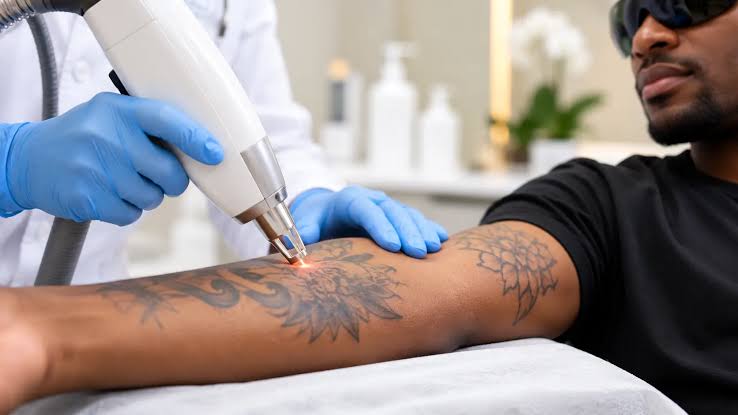
Tattoos are created by placing coloured ink pigments beneath the surface of the skin, where they remain for a long time. Although tattoos are often chosen for personal expression, artistic appearance, or meaningful memories, preferences can change over time. Some individuals may decide to remove an unwanted tattoo because it no longer represents their personality, lifestyle, or interests. Modern aesthetic technology offers different approaches to tattoo removal, with laser-based procedures being one of the commonly used methods. Laser tattoo removal in Abu Dhabi uses specialised laser energy to target tattoo pigments beneath the skin and gradually break them into smaller particles. These smaller pigment fragments can then be processed by the body’s natural immune system. Understanding how this process works helps explain why laser technology is used for removing unwanted tattoos and why multiple treatment sessions may be needed to achieve noticeable fading.
Understanding How Tattoo Pigments Remain in the Skin
Tattoo ink is deposited into the dermis, which is the deeper layer of the skin beneath the epidermis. This placement allows the pigment to remain visible for many years because the ink is positioned beyond the surface layer that naturally renews itself.
When tattoo ink enters the skin, the body’s immune system recognises the pigment particles as foreign material. Specialised immune cells, including macrophages, attempt to capture and remove these particles. However, many tattoo pigments are too large or difficult to eliminate completely. As a result, the pigment remains within the skin, creating the lasting appearance of a tattoo.
The size, chemical composition, and colour of the pigment influence how it responds to laser treatment. Some colours absorb particular laser wavelengths more effectively than others, making pigment characteristics an important consideration during tattoo removal.
How Laser Technology Targets Tattoo Pigments
Laser tattoo removal works through controlled pulses of concentrated light energy. The laser produces a specific wavelength designed to interact with selected tattoo pigments. When the energy reaches the targeted ink, the pigment absorbs the light and converts it into heat and mechanical energy.
This process creates a rapid reaction within the pigment particles, causing them to break into much smaller fragments. The surrounding skin is not the primary target because the laser settings and wavelength are selected to focus on the ink.
The technology relies on a principle known as selective photothermolysis, which involves delivering energy to a specific target while limiting its impact on surrounding structures. Different laser systems use different wavelengths to address particular pigment colours and characteristics.
The Process of Breaking Down Tattoo Ink
The breakdown of tattoo pigments happens through a series of stages. During the laser procedure, short pulses of energy penetrate the skin and interact with the ink particles. The absorbed energy produces rapid expansion within the pigment, creating a photomechanical effect.
This reaction breaks larger pigment particles into smaller fragments. Before treatment, the ink particles may be too large for the body’s natural clearance mechanisms to remove efficiently. After laser exposure, the smaller fragments become more accessible to immune cells.
The laser does not physically remove all the ink from the skin during the procedure. Instead, it changes the structure and size of the pigment particles so the body can gradually process them.
This explains why tattoo fading generally continues after a treatment session rather than happening entirely at the moment the laser is applied.
How the Immune System Helps Remove Broken Pigments
The body’s immune system plays an essential role in the tattoo removal process. Once laser energy breaks down the pigment into smaller fragments, specialised immune cells can interact with these particles more effectively.
Macrophages are among the important cells involved in this process. They identify and absorb foreign material, including fragmented tattoo ink. Following absorption, some pigment particles may be transported through the body’s natural clearance pathways.
The lymphatic system also contributes to the movement and processing of certain pigment fragments. This biological activity takes place gradually, which is why the appearance of a tattoo may continue to fade over several weeks following treatment.
The effectiveness of this natural process can vary depending on individual immune responses, pigment composition, tattoo characteristics, and the body’s ability to process the fragmented material.
Why Different Tattoo Colours Require Different Laser Wavelengths
Tattoo pigments are available in various colours, and each colour interacts differently with light energy. This means that a single laser wavelength may not be equally effective for every tattoo.
Black and dark blue pigments generally absorb a broad range of laser wavelengths. This characteristic can make them more responsive to certain laser systems.
Green, red, orange, and yellow pigments have different light absorption properties. Specific wavelengths may be selected to target these colours more effectively.
The colour combination within a multicoloured tattoo can make the removal process more complex because different pigments may require different laser settings.
Understanding pigment colour is therefore an important part of selecting an appropriate laser approach. The treatment strategy depends on the specific ink composition rather than simply the visible size of the tattoo.
The Role of Laser Pulse Duration
Laser pulse duration is another important factor in breaking down tattoo pigments. Modern laser systems can deliver energy in extremely short pulses, allowing the pigment to absorb concentrated energy within a brief period.
Short pulses create a rapid pressure change inside the ink particles. This produces a mechanical disruption that helps divide the pigment into smaller fragments.
Different technologies use different pulse durations to achieve pigment fragmentation. Some systems use nanosecond pulses, while picosecond lasers deliver energy in even shorter intervals.
Picosecond technology is designed to produce rapid energy delivery that can create strong photomechanical effects. The suitability of a particular system depends on the tattoo’s pigment characteristics, colour, and other individual considerations.
Why Multiple Laser Tattoo Removal Sessions Are Needed
Tattoo pigments are distributed at different depths and concentrations throughout the skin. A single treatment session may not affect every particle equally because some pigments absorb more energy than others.
After each session, the body needs time to process and clear the fragmented ink particles. Allowing sufficient time between treatments supports the natural clearance process and helps determine how the tattoo responds.
Multiple sessions are therefore commonly required to achieve progressive fading. The number of sessions varies according to tattoo age, ink density, pigment colours, tattoo depth, and individual biological responses.
Professional assessment helps establish realistic expectations based on the specific characteristics of the tattoo.
Factors That Influence Pigment Breakdown
Several factors can influence how effectively laser energy breaks down tattoo pigments. Ink colour is important because different pigments absorb different wavelengths of light.
Tattoo age can also influence the removal process. Older tattoos may have undergone some natural fading as the immune system gradually interacts with the pigment over time.
Ink density is another consideration. Tattoos containing concentrated layers of pigment may require a different treatment approach compared with lighter designs.
The depth of the ink, the size of the tattoo, and the chemical composition of its pigments can also affect the response to laser energy.
Individual skin characteristics and immune activity contribute to the overall process. These factors explain why two tattoos treated with similar technology may not fade at exactly the same rate.
What Happens to a Tattoo After Laser Treatment?
Following a laser session, the treated tattoo may initially appear similar to its original appearance or show temporary changes in colour. The actual fading process develops gradually as the body begins processing the fragmented pigments.
Over the following weeks, immune cells continue interacting with the smaller ink particles. As pigment fragments are gradually cleared, the tattoo may become lighter and less noticeable.
The visible changes depend on the original ink colour, pigment concentration, and individual response. Some tattoos fade significantly, while others may retain traces of their original design.
The gradual nature of this process highlights the importance of understanding that laser tattoo removal involves both advanced technology and the body’s natural biological functions.
Conclusion
Laser tattoo removal breaks down unwanted tattoo pigments through controlled pulses of concentrated light energy. The targeted ink absorbs the laser energy, producing rapid reactions that divide larger pigment particles into smaller fragments. These fragments can then be processed gradually by the immune system through natural clearance mechanisms. Different colours, ink compositions, tattoo depths, and individual characteristics influence how the pigments respond. Multiple sessions are often necessary because pigment breakdown and clearance take place over time. Understanding these processes provides a clearer picture of how modern laser technology helps reduce the appearance of unwanted tattoos.
Frequently Asked Questions
How does laser tattoo removal break down tattoo pigments?
Laser tattoo removal uses concentrated light energy that is absorbed by tattoo ink. This creates a rapid reaction that breaks larger pigment particles into smaller fragments, allowing the immune system to process them gradually.
Does laser tattoo removal remove ink immediately?
No. The laser breaks down the pigment particles during treatment, but the body gradually processes the fragments over the following weeks.
Why are multiple laser tattoo removal sessions required?
Multiple sessions are often needed because tattoo pigments are distributed at different depths and concentrations. The body also requires time to clear fragmented ink particles between treatments.
Can laser technology target different tattoo colours?
Yes. Different laser wavelengths are used to target specific pigment colours because each colour absorbs light energy differently.
What happens to tattoo pigments after laser treatment?
After fragmentation, immune cells interact with the smaller pigment particles. Some fragments are transported through the body’s natural clearance pathways.
Does tattoo ink colour affect the removal process?
Yes. Different colours have different light absorption properties, which influence how effectively laser energy can target and break down their pigments.
What is the difference between nanosecond and picosecond laser technology?
Nanosecond lasers deliver energy in billionths of a second, while picosecond lasers deliver it in trillionths of a second. Both technologies are designed to target tattoo pigments, but their pulse durations and interaction with ink particles differ.
How long does tattoo pigment breakdown take?
Pigment fragmentation occurs during laser exposure, while the body’s natural processing and clearance of the smaller particles continues over several weeks.
Does the immune system help with laser tattoo removal?
Yes. The immune system plays an important role by interacting with fragmented pigment particles and helping transport and process them.
Can all tattoo pigments be completely removed?
Complete removal is not guaranteed. Results depend on ink composition, colour, depth, density, and individual biological responses.